
Reviewed · MEKONG DELTA TOURS
Can Tho: Authentic Floating Market, Wild Canal system, Cocoa
Wake early, but not absurdly early. This $26 Can Tho morning tour combines the Cai Rang Floating Market with narrow Mekong canals, a family-run cocoa farm, a traditional noodle workshop, and plenty of local food in about five and a half hours.
I like the 6:45 AM meeting time, since it gets you to the market during its busiest period without asking you to leave bed at 4 AM. I also like the small-group limit of eight, along with the generous tasting program: noodle soup, coffee, coconut, chocolate, pineapple, mango, jackfruit, and other tropical fruit.
The main consideration is that Cai Rang is no longer an untouched trading world. It remains a working market, but tourism is now part of the scene. If you want a quiet rural outing, the market may feel busy and commercial. The later canal ride and village visits provide the calmer, more personal side of the Mekong Delta.
In This Review
- The highlights at a glance
- Why the 6:45 AM start works
- Cai Rang Floating Market before breakfast
- Narrow canals and the quieter Mekong
- How a Mekong family turns cocoa into chocolate
- Rice noodles made by hand
- A walk through tropical village life
- What the $26 price really covers
- Who should book this morning
- Practical advice before you go
- Should you book it?
- FAQ
- What time does the tour begin?
- How long does the experience last?
- Is Cai Rang Floating Market open at 4 AM?
- What food and drinks are included?
- Is the tour suitable for vegetarians or vegans?
- Where do I meet the guide?
- What should I bring?
The highlights at a glance
- Cai Rang at the right hour: Arrive around 7 AM, when fruit boats, breakfast sellers, coffee boats, and tour boats share the river.
- A real floating breakfast: Order noodle soup and strong Vietnamese coffee from vendors working directly on the water.
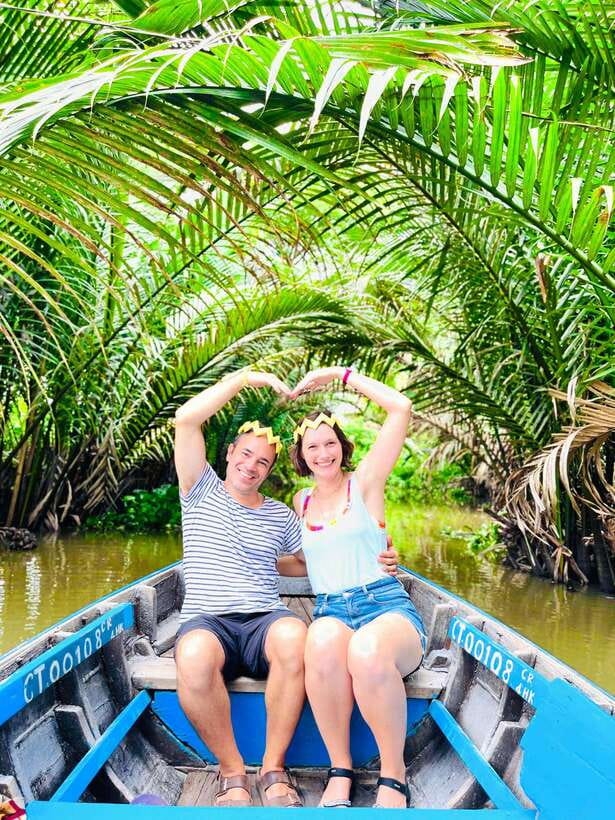
- Quiet sampan canals: Leave the open market behind for narrow waterways lined with water coconut and wild vegetation.
- Family-made cocoa: See how cocoa grown in the Mekong Delta becomes handmade chocolate.
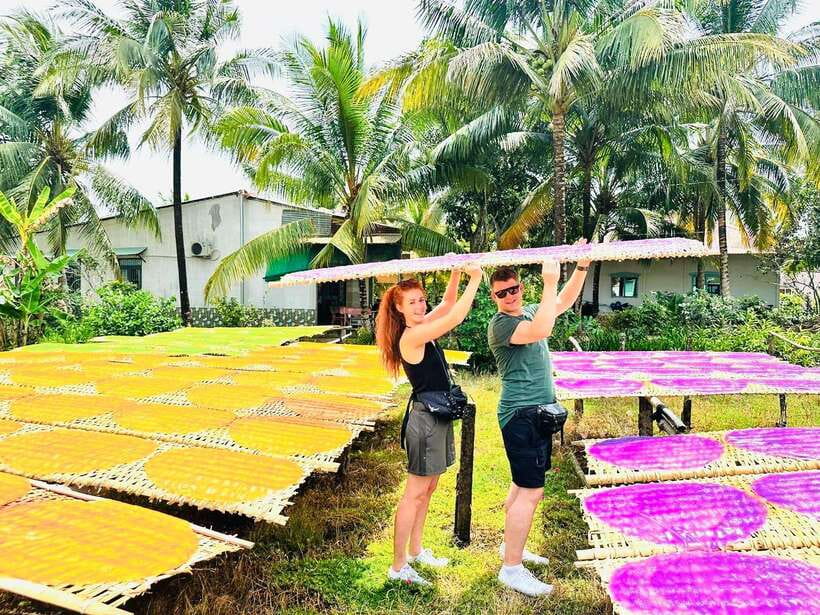
- A traditional noodle village: Watch rice noodles being produced and try making them yourself.
- A young local guide: Guides such as Sasa, Hannah, Clara, Lam, and Thuy are praised for clear English, energy, local insight, and good group photos.
Why the 6:45 AM start works
Your morning begins in front of An Binh Market, officially Chợ An Bình, on ĐT923 Street. The meeting point is useful because the boat departs directly from the market area instead of adding a long road transfer from central Can Tho.
That choice saves more than time. A number of Mekong tours require a very early hotel pickup, followed by an hour or more in a vehicle before reaching Cai Rang. Here, you meet at the river and get straight to the main event.
The timing also corrects an old piece of advice that still appears in guidebooks and online posts. Cai Rang is often described as a 4 AM market, but the market’s busiest period today is generally about 7 to 9 AM. Economic changes and modern transport have shifted the rhythm. You do not need to set an alarm for 4 AM to see it functioning.
The group size is capped at eight people. That matters on a small boat, where a large party can make it harder to hear the guide, move around, or get a clear view of the sellers. The exact guide varies, but the operation has used guides including Sasa, Hannah, Clara, Lam, Thuy, Tammy, and Ana. Their personalities differ, yet the strongest pattern is clear English, enthusiasm, and a willingness to explain local life rather than simply point at scenery.
More Mekong Delta Tours in Can Tho
- Can Tho: Floating Market & Mekong’s Legacy( About 6 Pax)
★ 5.0 · 1,438 reviews - Can Tho: A Real Mekong Tour, Floating Market, Cacao & Life’s
★ 4.9 · 574 reviews - Largest Floating Market, Wild Small Canal System & Organic cocoa
★ 5.0 · 564 reviews
Cai Rang Floating Market before breakfast
The first boat ride brings you into Cai Rang, the largest floating market in the Mekong area. The scene is less about rows of tiny boats selling trinkets and more about practical river commerce. Produce boats display pineapples, mangoes, rambutans, watermelons, and other fruit, often using tall poles to show what is for sale.
You will see boats that function as shops, cafés, and restaurants. Some prepare noodle soup on board. Others serve coffee, coconut drinks, or fruit. Your guide helps you order breakfast, so you can eat while surrounded by the movement of trade.
The meal is one of the tour’s best touches. A bowl of local noodle soup and Vietnamese coffee gives the market visit a purpose beyond sightseeing. You are not only watching people work. You are buying breakfast from the same river economy you came to see.
Vegetarian food is available, and bread is also included. If you have dietary concerns, tell the guide early. The supplied information confirms vegan options, but it does not specify every possible dietary substitution.
The market is photogenic, but it is not a museum piece. Tour boats are part of the traffic, and some sellers are clearly accustomed to visitors. One fair criticism is that Cai Rang can feel touristy, especially when several boats gather around food vendors. Still, it remains worth seeing because the river is still used for commerce, and a boat is the best way to understand its layout.
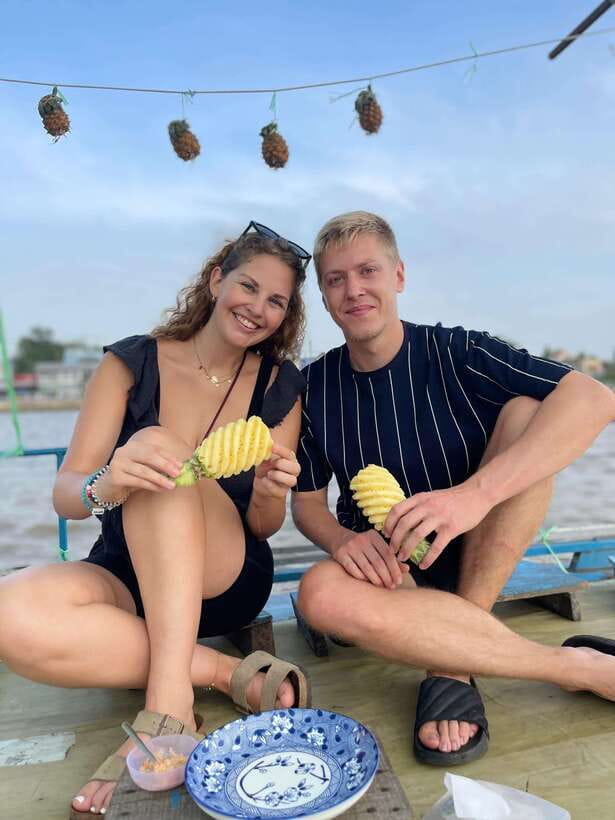
After breakfast, you continue among the trading boats and learn about the people who live and work on the water. Fresh pineapple is cut for you, a simple but memorable Mekong treat. The guide may also help with photographs, a useful service if you are traveling alone or want pictures that include more than an arm’s length of selfie stick.
Narrow canals and the quieter Mekong
The mood changes once the boat leaves the open market. You move into smaller canals, where the waterway becomes more enclosed and the pace slows.
The route passes through areas with wildweeds, water coconut, and thick tropical growth. This is the part of the outing that gives you time to sit quietly and watch. After the noise and movement of Cai Rang, the canal ride can feel almost meditative.
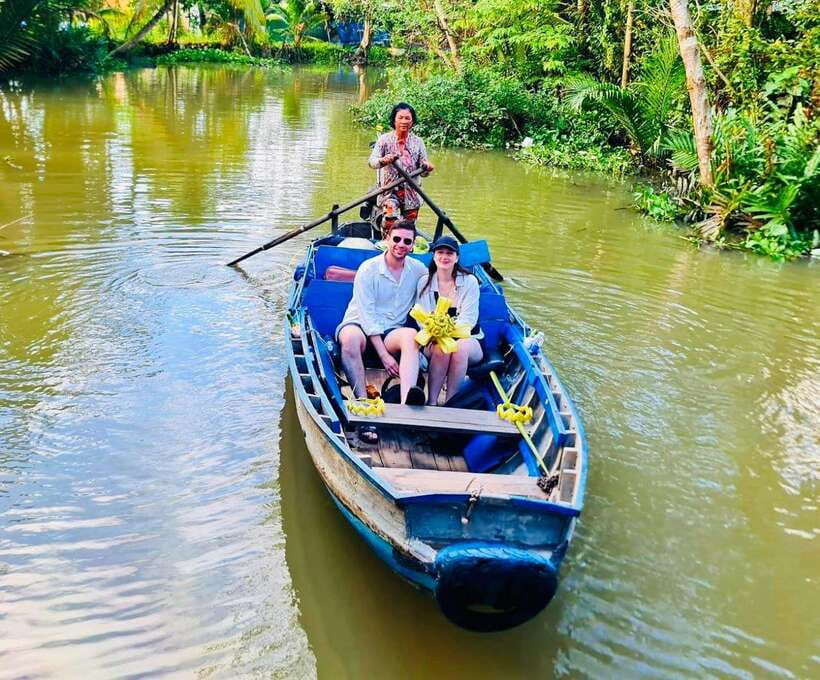
The boat used is a local sampan. The smaller craft suits the canals better than a large tourist boat, and the reviews repeatedly praise the drivers for careful handling. Rain is possible in the delta, and one account notes that a short shower was handled well. Raincoats are said to be provided, but you should still bring sandals, sunglasses, and a sun hat.
Do not expect a wildlife expedition. The description promises flora and fauna, but it does not list particular animals. The appeal is the water, vegetation, and glimpses of village life rather than a guaranteed animal sighting.
This section is also where the tour feels most balanced. You get the market’s activity, then a slow ride that lets you take in the setting without being rushed from one stop to another. Several people particularly valued that rhythm, saying the tour allowed enough time to enjoy each place.
How a Mekong family turns cocoa into chocolate
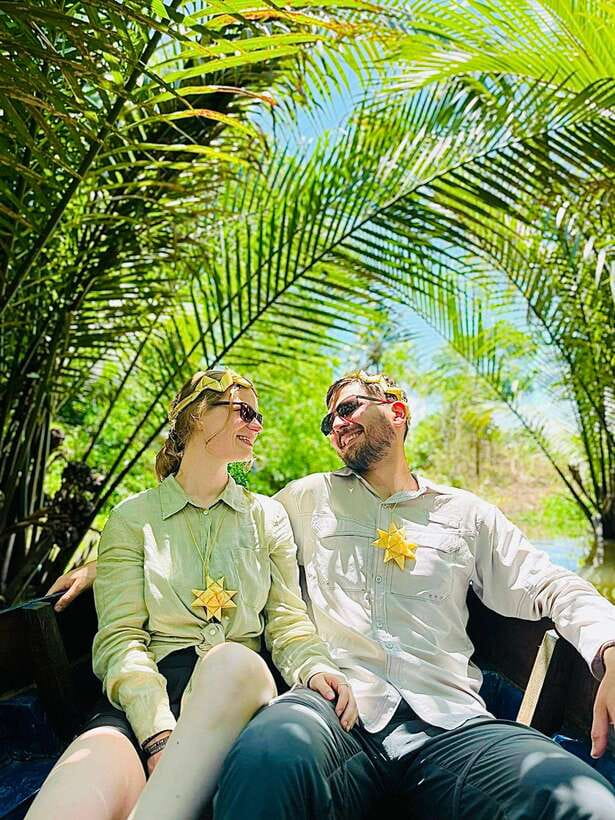
The cocoa farm is run by the Mười Cương family. Its story gives the stop more substance than a standard tasting visit. The owner’s father brought cocoa plants from Malaysia in 1960, introducing a crop that was unusual in this part of Vietnam.
At the farm, you learn about the process from plant to finished treat. The chocolate products are handmade and processed by the family, so this is a small-scale agricultural visit rather than an industrial factory tour.
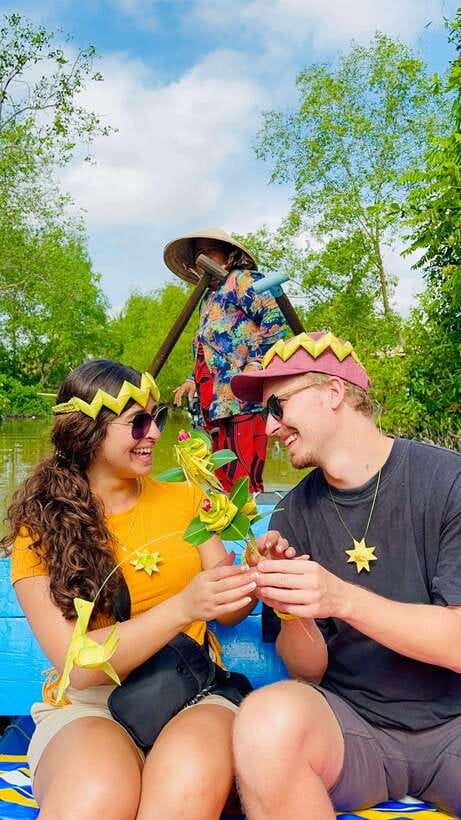
You can expect cocoa and chocolate tastings, with drinks included as part of the morning. The value here is in seeing how an unfamiliar crop adapted to the delta and how a family built a food business around it.
The stop is likely to appeal most to people who enjoy food production, farming, and family enterprises. If you want a long technical lesson on fermentation or commercial chocolate manufacturing, the information provided does not promise that level of detail. Think of it as an accessible introduction with samples.
The cocoa farm also helps break up the boat travel. You are not spending the entire morning on the river, and the visits give you several ways to understand the delta: trade, farming, food production, and village life.
More Mekong Delta Tours:
- The hidden Fabulous Floating Market and Small Canal
★ 5.0 · 253 reviews - Cai Rang floating market, Cacao & hidden small canal
★ 5.0 · 244 reviews - CAN THO: Floating Market & Mekong’s Legacy (About 6 Pax)
★ 5.0 · 235 reviews - Mekong Delta and Cai Rang Floating Market 5-Hours Tour
★ 5.0 · 183 reviews
Rice noodles made by hand
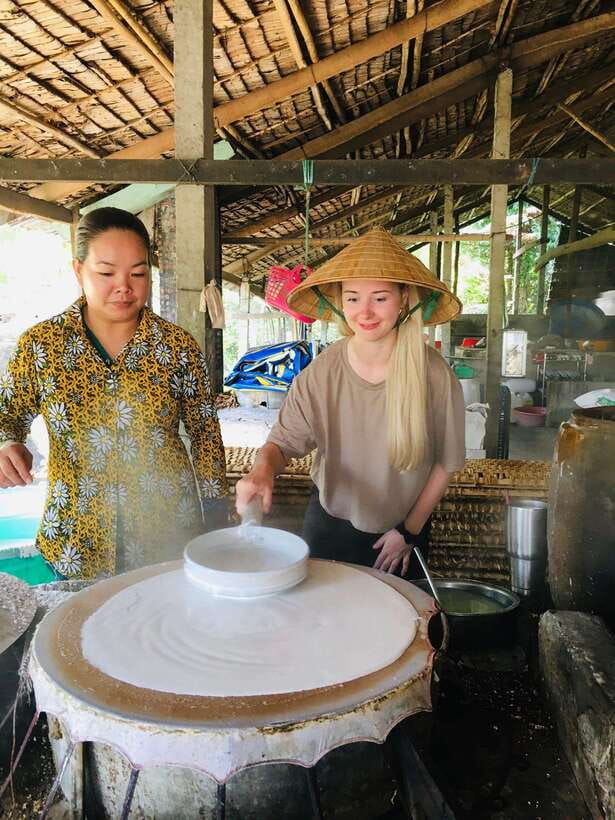
At Lò hủ tiếu Chín Của, you visit a traditional noodle-making village where families have passed down the craft through generations.
The important point is that this is presented as a working local activity, not just a display built for visitors. You learn how rice noodles are made and get a chance to try the process yourself. That hands-on element makes the stop easier to remember than a quick look at finished noodles.
The tour materials describe the stop as lasting about an hour. In practice, the exact pace can depend on the group, the production process, and the guide. You should expect a demonstration and participation, not a full cooking class.
This is one of the strongest stops for understanding the delta’s food culture. Rice is central to life in southern Vietnam, and noodles show how a basic crop becomes a daily food and a local trade. Guides often add context about the people who make the noodles and the way family skills continue across generations.
If you have limited interest in food production, this may be less exciting than the canals or market. For most people, though, it adds a useful layer to the morning and gives you a direct activity rather than another photo stop.
A walk through tropical village life
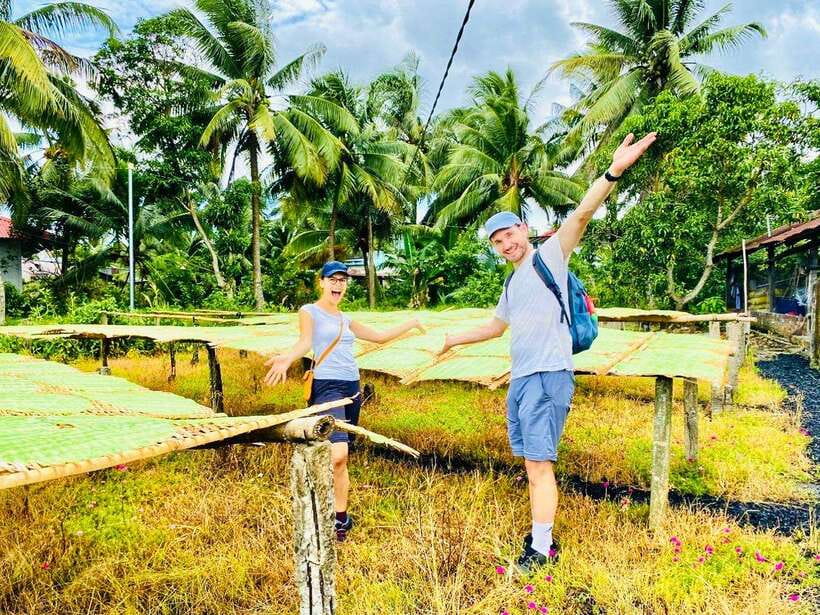
The route also includes a leisurely walk through local villages and gardens. You see tropical fruit trees and hear about cultivation, harvest times, and the biological traits of the plants.
The tasting is generous. Mango, jackfruit, star apple, pineapple, and other seasonal fruit may appear. Water coconut is another unusual taste mentioned in the experience, and it is the sort of small detail that makes the outing feel tied to the delta rather than interchangeable with a city food tour.
Your guide does more than name the fruit. Guides are expected to explain how local people grow and harvest it, which makes the walk more useful for anyone curious about daily life in the region.
This is also a good point for questions. The guides are local, university graduates, and described as having backgrounds in history, culture, economics, and geopolitics. That does not mean every guide gives the same talk, but the strongest accounts describe guides who can move beyond memorized facts.
Sasa receives especially warm praise for including solo visitors, taking photographs, and keeping conversation going among the group. Hannah is repeatedly described as friendly and well informed. Clara is noted for bringing family connections into the experience, while Lam is praised for humor and clear explanations. Your guide will determine much of the tour’s personality, but the format gives that person plenty of room to make the morning engaging.
What the $26 price really covers
At $26 per person, this is strong value if you want more than a short market cruise. The fee includes a local English-speaking guide, sampan transportation, breakfast, coffee, coconut, chocolate, fruit, and the scheduled stops.
The food alone helps the price. You are not paying for one drink and one sample, then buying lunch at every stop. The morning includes noodle soup or bread, Vietnamese coffee, pineapple, several tropical fruits, cocoa products, and other drinks.
You also receive a five and a half hour experience rather than a brief boat trip. The time is divided among the floating market, canals, noodle village, cocoa farm, and village walk. That variety suits you if you want a broad introduction to Can Tho in one morning.
There are tradeoffs. This is a group tour, not a private charter, and you cannot control how long the boat pauses at each location. The meeting point is at An Binh Market, so you must get yourself there for 6:45 AM. The tour information does not promise hotel pickup as a standard inclusion, though one booking experience included help arranging transfers.
The free cancellation up to 24 hours before departure and reserve-now, pay-later option make it easier to fit into a changing itinerary. Those are practical advantages, especially if weather or health affects your plans.
Who should book this morning
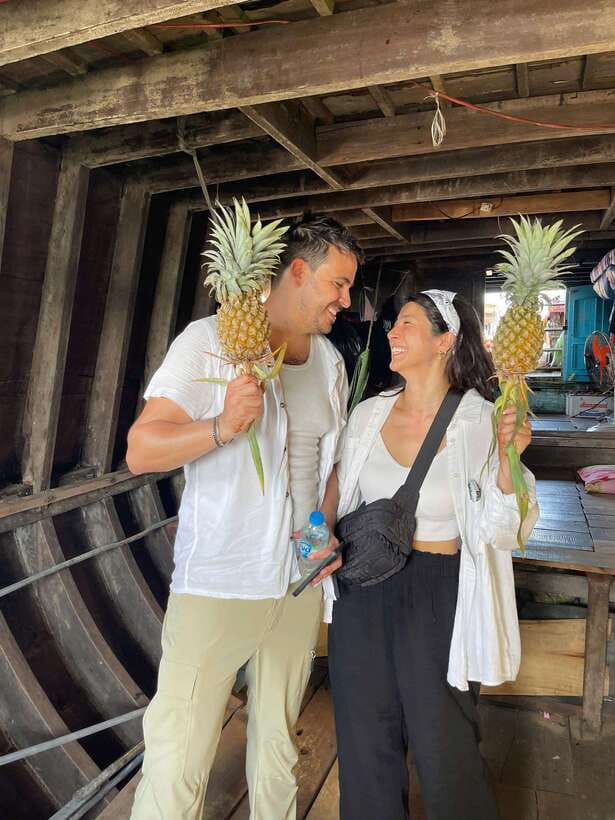
I would choose this tour if you want to see several sides of the Mekong Delta without spending a full day on the road. It suits first-time visitors to Can Tho, couples, solo visitors, food lovers, and anyone who prefers a small group.
It is also a good choice if you value conversation. The guide is a major part of the experience, and the most successful outings seem to come from guides who answer questions, help with photographs, and connect people in the group.
You may want another option if you dislike scheduled stops, shopping-related visits, or any tourist presence at a working market. The cocoa farm and noodle village are family-run production sites, but they are still established stops on a tour route.
The experience is not suitable for people over 70 or people with altitude sickness, according to the supplied restrictions. Altitude sickness is an unusual limitation for a lowland delta outing, so if it applies to you, confirm the rule before booking.
Practical advice before you go
Wear sandals or other footwear that can handle water and village paths. Bring sunglasses and a sun hat, since the boat and open market offer limited shade.
Use the exact meeting point name when navigating: An Binh Market, ĐT923 Street, An Binh Ward, Ninh Kieu District, Can Tho. Wait in front of the market gate. Arrive early enough to find the gate without turning the morning into a footrace.
Bring a light rain layer if you have one. Raincoats are provided, but tropical weather can change quickly. Keep your camera and phone protected when the boat is moving.
If you are vegan or vegetarian, mention it at the start. Vegan food is available, and breakfast options include noodle soup and bread.
Finally, keep your expectations realistic. Cai Rang is still a working market, but it is also a popular attraction. The quieter canals, family cocoa farm, noodle workshop, and village walk are essential parts of the experience because they show you more than the market alone.
Should you book it?
Book this tour if you want a well-priced, food-focused introduction to Can Tho with a sensible start time and a small group. The strongest reasons are the direct market departure, the varied route, the generous tastings, and the guides who bring warmth and useful local context.
Skip it if you want a private, completely quiet river experience or a long, specialist visit focused on just one subject. For most visitors, though, the combination is hard to beat at $26. You see the market at the right hour, eat breakfast on the river, glide through quiet canals, make noodles, taste cocoa, and finish with tropical fruit. That is a full morning with very little wasted time.
FAQ
What time does the tour begin?
The tour meets at 6:45 AM in front of An Binh Market, also called Chợ An Bình, on ĐT923 Street in Can Tho.
How long does the experience last?
The total duration is 330 minutes, or about five and a half hours.
Is Cai Rang Floating Market open at 4 AM?
The tour information says the old 4 AM advice is outdated. The market is generally at its busiest between 7 and 9 AM, which is why this tour starts at 6:45 AM.
What food and drinks are included?
The tour includes local breakfast with noodle soup and bread, coffee, coconut, chocolate, pineapple, mango, jackfruit, and other tropical fruit. Vegan food is available.
Is the tour suitable for vegetarians or vegans?
Yes. Vegan food is available, though you should tell the guide about your dietary needs at the beginning of the tour.
Where do I meet the guide?
Meet in front of the gate at An Binh Market, Chợ An Bình, ĐT923, An Bình, Ninh Kiều, Cần Thơ, Vietnam.
What should I bring?
Bring sunglasses, a sun hat, and sandals. Raincoats are provided, but a personal light rain layer may also be useful.
More Shopping Tours
- Cai Rang Floating Market – My Tho & Ben Tre – VIP Private Tour
★ 5.0 · 62 reviews - ‘Cai Rang’ Floating Market 2-Day Tour With Biking & Boating
★ 4.8 · 49 reviews - Can Tho: Mekong Delta and Cai Rang Floating Market Tour
★ 4.8 · 47 reviews - Can Tho: Floating Market, Canal, Cacao Farm & Mekong’ Life
★ 5.0 · 45 reviews
More Market Visits
- Cai Rang Floating Market Biking Cooking Class in Can Tho Rural
★ 5.0 · 172 reviews - Nature Reserve and Largest, Authentic Floating Market Experiences
★ 5.0 · 115 reviews - Cai Rang Floating Market Tour -Amazing Can Tho
★ 5.0 · 106 reviews - From HCM: Mekong Delta Can Tho Floating Market 2-Day Tour
★ 4.7 · 84 reviews
Just added around Can Tho
- Floating Market & Hidden Canals – Small Group Morning Boat Tour★ 5.0 · 34 reviews
- Can Tho: Floating Market, Cacao & Canals with French Guide★ 5.0 · 37 reviews
- Can Tho Floating Market and Fruit Garden Tour★ 5.0 · 40 reviews
- Can Tho: Floating Market, Canals, Nature Reserve & Forest★ 5.0 · 42 reviews
- Cai Rang floating market, see sunrise, CaCao orchard, small canal★ 5.0 · 44 reviews
- Can Tho: Floating Market, Canal, Cacao Farm & Mekong’ Life★ 5.0 · 45 reviews
- Can Tho: Mekong Delta and Cai Rang Floating Market Tour★ 4.8 · 47 reviews
- ‘Cai Rang’ Floating Market 2-Day Tour With Biking & Boating★ 4.8 · 49 reviews
Mekong Delta Tours, compared.
Cu Chi Tunnels and Mekong Delta Signature Tour
Read our review →
Mekong Delta Guided Tour from Ho Chi Minh City
Read our review →
Cu Chi Tunnels & Mekong Delta Tour with VIP Limousine Transfer
Read our review →
Cu Chi Tunnels and Mekong Delta Full Day Tour – Max 12
Read our review →
Mekong Delta, My Tho & Ben Tre Coconut Village
Read our review →
CuChi Tunnels&Mekong Delta-Boat,TukTuk,Coconut Village SmallGroup
Read our review →
Adventure Cu Chi Tunnels and Mekong Delta Tour From HCM
Read our review →Browse the lists this tour appears in