
Reviewed · HUE DAY TRIPS
Hue Customizable Tour with Imperial Citadel & Forbidden City
Hue rewards curious visitors. This flexible tour pairs local storytelling with the Nguyen Dynasty’s Imperial Citadel, Forbidden Purple City, and optional royal tombs. I love the choice between a focused 2.5-hour walking tour and a longer private-car day, and I like that guides such as Misa, Nhi, Nhien, Ha, Linh, Duy, and Hoa have earned praise for clear English and warm, engaging explanations. The main drawback is that entrance tickets are extra, and the private-car option includes a driver rather than a licensed tour guide.
You meet the walking guide at the four bronze cannons near Ngan Gate, not at your hotel. That matters on a hot or rainy day, when finding the correct side of the gate can take patience. The price begins at $12 per person, which is excellent for guided access to Hue’s central royal complex, but your final cost rises once you add admission, transport, food, or tomb visits.
In This Review
- Five things to know before booking Hue’s royal tour
- Why a guide helps inside Hue Imperial City
- The cannons and Flag Tower: beginning with power
- Ngo Mon Gate and Thai Hoa Palace: where the court performed power
- Hien Lam Pavilion and the Nine Dynastic Urns
- The Mieu and the Forbidden Purple City: royal life behind the ceremony
- The longer route through gardens, theater, and palace remains
- Choosing the private car option for an eight-hour Hue day
- Price, tickets, and what the $12 really buys
- What the strongest guide experiences have in common
- Who should book this Hue experience?
- Should you book the Hue Customizable Tour?
- FAQ
- How long does the walking tour last?
- Where does the walking tour meet?
- Is the Imperial City entrance ticket included?
- Does the private-car option include a tour guide?
- Can I visit royal tombs with the private car?
- Is hotel pickup included?
- Can I cancel the booking?
Five things to know before booking Hue’s royal tour
- The walking route lasts about 150 minutes and covers the Imperial City and Forbidden Purple City on foot.
- The four-cannon meeting point is specific: look for the guide holding an A4 sheet with your name near Ngan Gate.
- The private-car option is genuinely flexible, with choices including Thien Mu Pagoda, three royal tombs, the Imperial City, and Thuy Tien Abandoned Water Park.
- Entrance tickets are not included: the Imperial City ticket is listed at 200,000 Vietnamese dong per adult.
- Misa, Nhi, Nhien, Ha, Linh, Duy, and other local guides receive especially strong praise for history, English, humor, and a relaxed pace.
- The car option is transport with an English-speaking driver, not a full guided sightseeing tour.
Why a guide helps inside Hue Imperial City
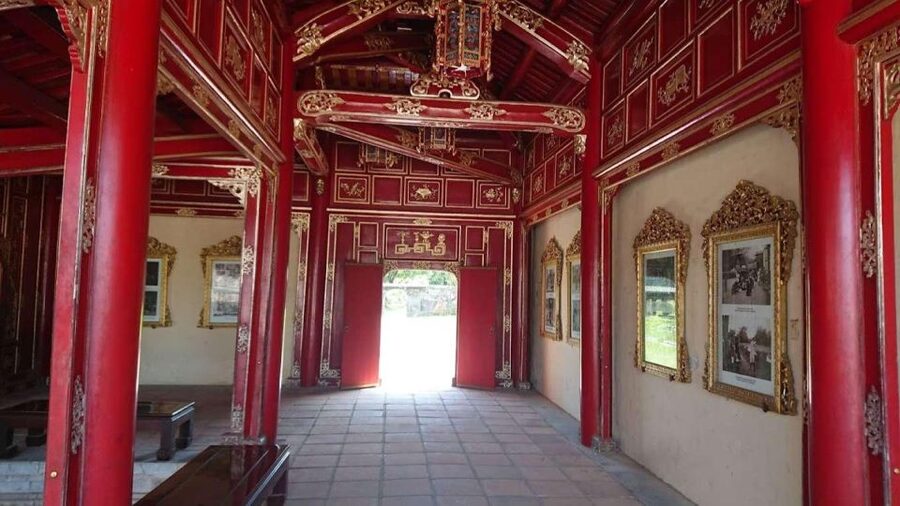
Hue’s Imperial City is much more than a handsome gate and a few palace halls. It is a carefully ordered royal center shaped by Confucian ideas, court ceremony, symbolism, feng shui, and Buddhist influence. Without context, you can admire the painted beams and tiled roofs, then leave without understanding who used each space or why the complex was arranged this way.
A good guide gives you a framework. The strongest feedback centers on guides who explain the Nguyen emperors, royal wives, concubines, eunuchs, court customs, and the meaning of animals and numbers in the architecture. Misa is repeatedly praised for clear explanations, gentle humor, interactive questions, and a talent for keeping people involved. Nhi receives similar credit for explaining the Nguyen rulers and making the visit lively for families.
The route also benefits from conversation. Guides such as Nhien and Ha have been praised for answering detailed questions rather than rushing from one building to the next. If you are interested in Vietnamese culture beyond basic dates, ask about daily life in the Forbidden Purple City and the difference between ceremonial spaces and private royal areas.
This is a walking tour, not a quick photo stop. Expect sun, open courtyards, uneven surfaces, and a fair amount of time outdoors. Several guides have adjusted the pace for heat or rain, with stops in shade and pauses to cool down. Still, carry water, wear practical shoes, and consider an early start. One visitor specifically recommended an 8:30 start in May, before the sun became too strong.
More City Tours in Hue
- Imperial City, Hue: Day Tour from Hoi An and Da Nang
★ 4.6 · 830 reviews - Hue: Imperial City Walk, Motorbike Tour & Private Car Options
★ 5.0 · 732 reviews - Hue :Exploring Royal City with Multi Options and Dragon Boat
★ 5.0 · 675 reviews
The cannons and Flag Tower: beginning with power
The walking tour starts near the Nine Holy Cannons, also called the Nine Dynastic Cannons. Hue artisans cast these nine bronze guns in 1803, during the second year of Emperor Gia Long’s reign. They are not merely military objects. Their scale, craftsmanship, and symbolic role show how the new Nguyen Dynasty presented itself as a legitimate imperial power.
The cannons were first placed near the entrance to the Imperial City at Ngo Mon Gate. During the reign of Khai Dinh, they were moved to their current position. Your guide will likely use this first stop to explain the Citadel’s defenses and the early Nguyen rulers.
From there, the route passes the Flag Tower, or Ky Dai. It occupies the middle of the southern Citadel wall and once carried the royal flag. This is a short stop, listed at about five minutes, so treat it as an orientation point rather than a long visit. It helps you see the Citadel as a fortified political center before you enter the ceremonial heart.
Ngo Mon Gate and Thai Hoa Palace: where the court performed power
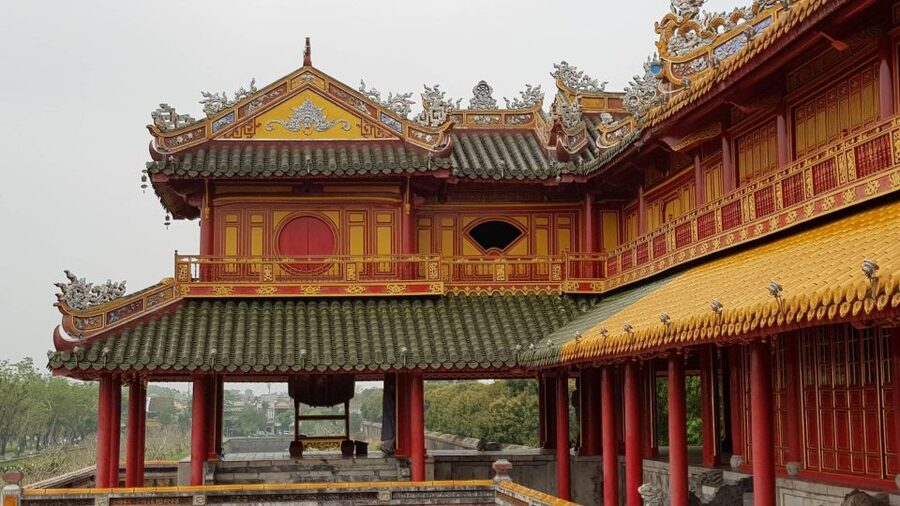
Ngo Mon, the Noon Gate, is one of Hue’s most recognizable structures. Built in 1833 under Emperor Minh Mang, it served as a ceremonial entrance and a place associated with troop movements and formal events. Its layered Vietnamese design makes it one of the best early photo stops, but the guide’s explanation gives the gate greater meaning.
The next major stop is Thai Hoa Palace, or the Palace of Supreme Harmony. This was the coronation site of all 13 Nguyen emperors, from Gia Long through Bao Dai. In a monarchy, this was not just another hall. It represented the center of government and the public face of imperial authority.
The listed time here is about 15 minutes, though the overall Citadel visit allows room for explanation and photographs. You may find the palace less grand than you expect in some areas because war damage and restoration have shaped what remains. That is part of the story. Hue’s surviving buildings are beautiful, but they are not untouched museum pieces.
Hien Lam Pavilion and the Nine Dynastic Urns
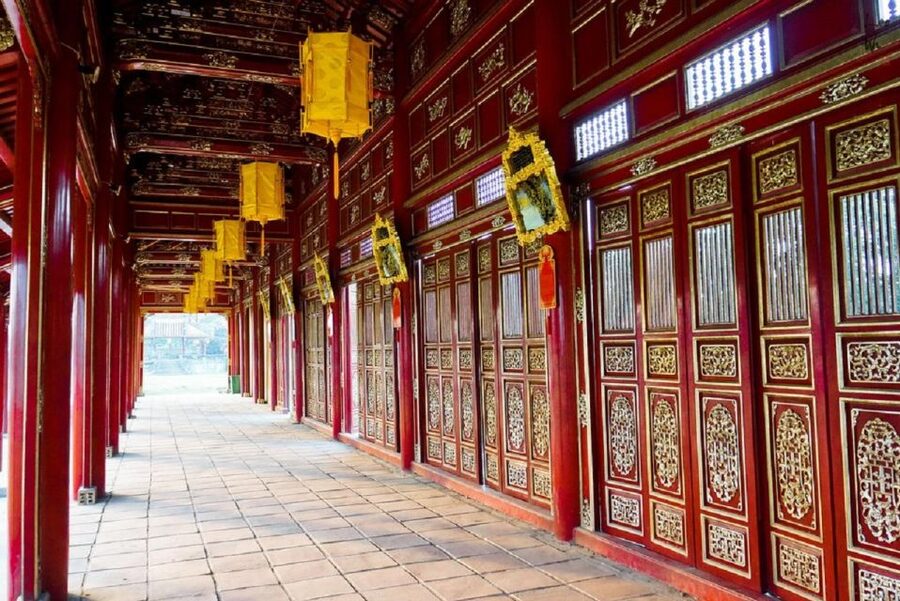
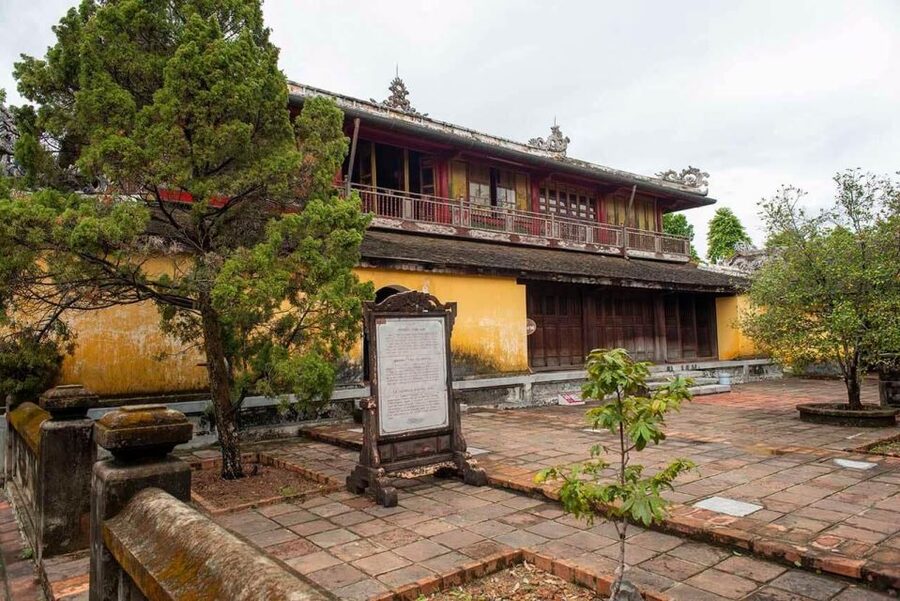
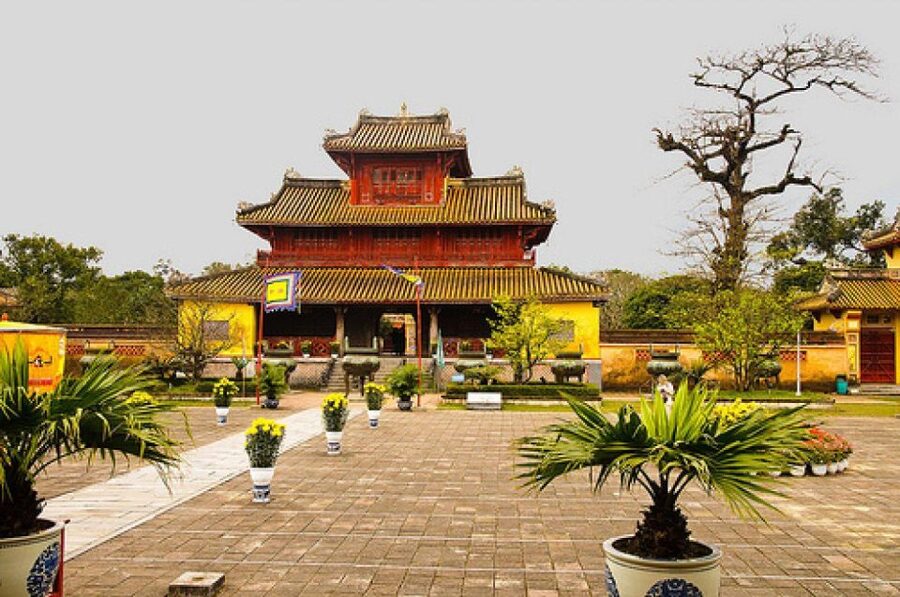
Hien Lam Pavilion stands near The Mieu Temple and the Nine Dynastic Urns. The pavilion is part of a memorial zone devoted to the dynasty’s founders and important officials. Its placement helps show how the Nguyen court linked imperial authority, ancestor worship, and public memory.
The Nine Dynastic Urns are among the most memorable objects in the complex. Emperor Minh Mang commissioned these enormous bronze urns in 1835, and they were completed in 1837. Each urn carries images connected with the country and the natural world. Their location in front of The Mieu gives them a ceremonial purpose, not simply a decorative one.
Your guide can make these details easier to read. Several tours are praised for explaining symbolic animals, numbers, and design features that are easy to miss when you are focused on taking photographs. If you enjoy visual details, this may be one of the best parts of the visit.
More Hue Day Trips:
- Hue to Hoi An ( Hoi An to Hue) Top Gear with Lefamily Riders Tours ( 1 way)
★ 5.0 · 3,156 reviews - Easy Rider private tour via Hai Van pass from Hue – Da Nang – Hoi An (1Way|Loop)
★ 5.0 · 1,542 reviews - Easy Rider From Hue Da Nang Hoi An Via Hai Van Pass With Mister T
★ 5.0 · 769 reviews - Hue to Dn/Hoi An: Hai Van Pass, beaches & Mt Monkey or vice versa
★ 5.0 · 743 reviews
The Mieu and the Forbidden Purple City: royal life behind the ceremony
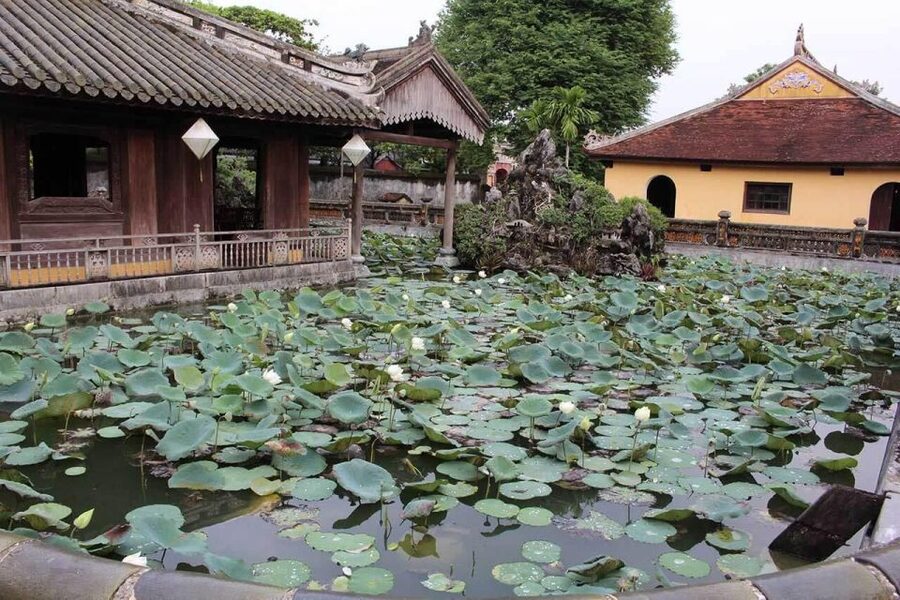
The Mieu Temple was built in 1821 by Minh Mang and is dedicated to ten Nguyen emperors. It provides a quieter counterpoint to Thai Hoa Palace. Here, the court honored its ancestors rather than conducting public ceremonies.
The Forbidden Purple City lies behind Thai Hoa Palace. Gia Long began it in 1804, and Minh Mang renamed it in 1822. This was the private center of royal life, associated with the emperors, queens, minor wives, concubines, and eunuchs of the Nguyen court.
The name can make the place sound mysterious, but the real interest is social and political. The Forbidden Purple City reveals how tightly court life was organized and how many people were connected to the emperor’s household. Ask your guide about who could enter different areas and how the palace community functioned.
Much of this section has been damaged, rebuilt, or restored. That can be disappointing if you expect a fully preserved palace city. On the other hand, the open spaces and remaining structures make the destruction visible, and a strong guide can explain what you are seeing without pretending that every building is original.
The longer route through gardens, theater, and palace remains
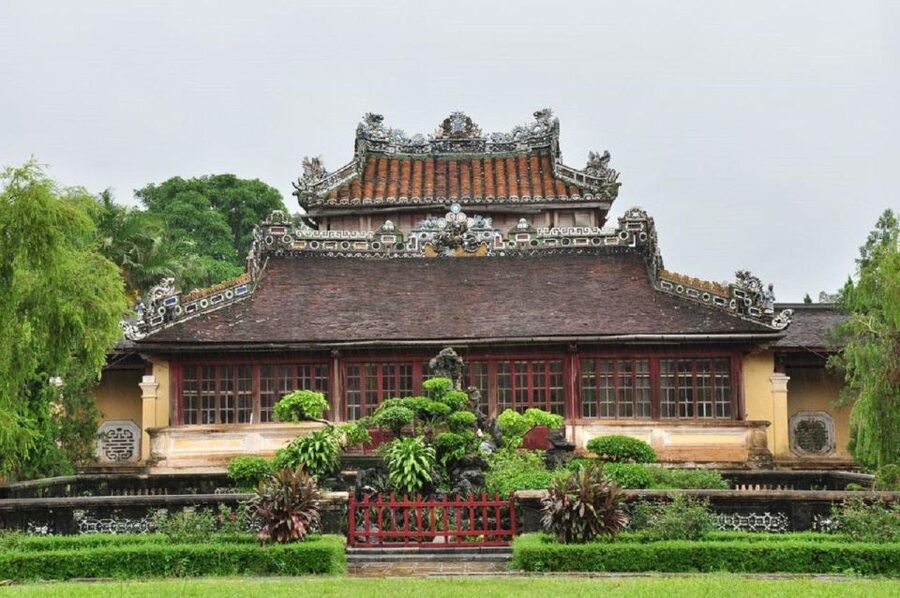
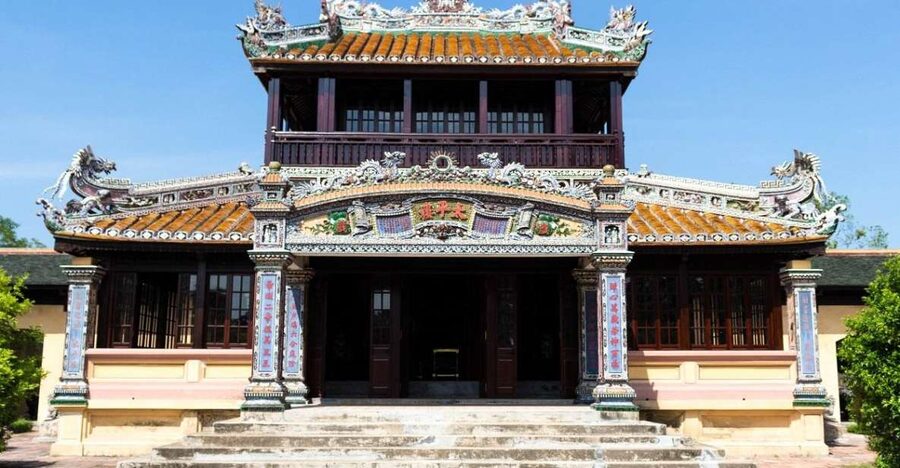
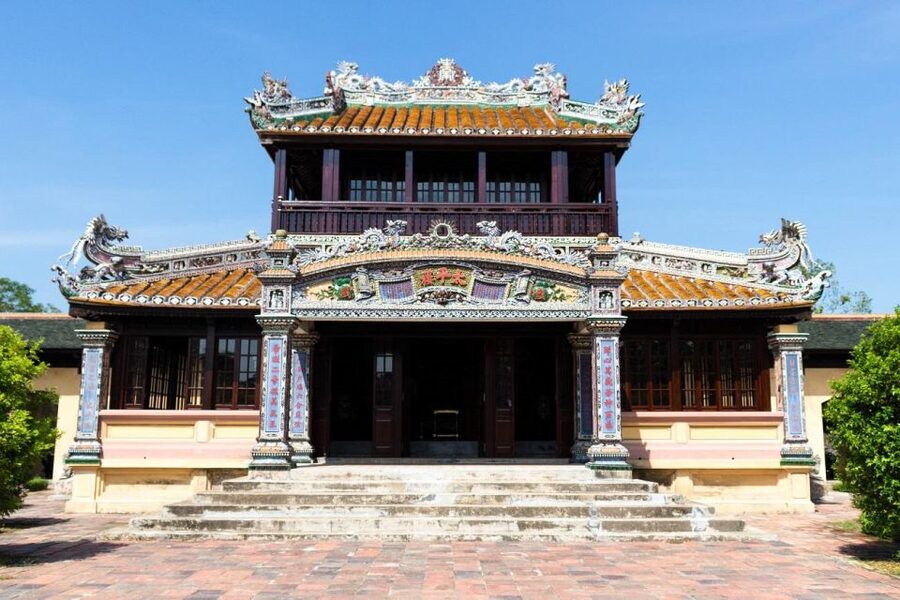
The detailed route includes more than the best-known monuments. Depending on the selected walking itinerary and current access, you may pass or stop at Kiến Trung Palace, Thai Binh Pavilion, Thieu Phuong Garden, Duyet Thi Duong Royal Theater, Trieu To Mieu, and Hien Nhon Gate.
Kiến Trung Palace is associated with the later Nguyen period and offers a look at changing royal tastes. Thai Binh Pavilion and Thieu Phuong Garden point toward the court’s private leisure spaces, where gardens, pavilions, and controlled views mattered as much as grand halls.
Duyet Thi Duong Royal Theater adds another side of palace life. The royal court was not only about ceremonies, decrees, and ancestor worship. Theater formed part of court culture, and this stop helps broaden the picture.
Trieu To Mieu continues the pattern of royal memorial buildings. Hien Nhon Gate, one of the Citadel’s entrances, can serve as the final architectural marker before the walking portion ends.
The stop list is extensive, but do not assume every listed point receives a full lecture. Some are brief photo stops or pass-by locations. The main two-hour Citadel visit is where the historical explanation is concentrated.
Choosing the private car option for an eight-hour Hue day
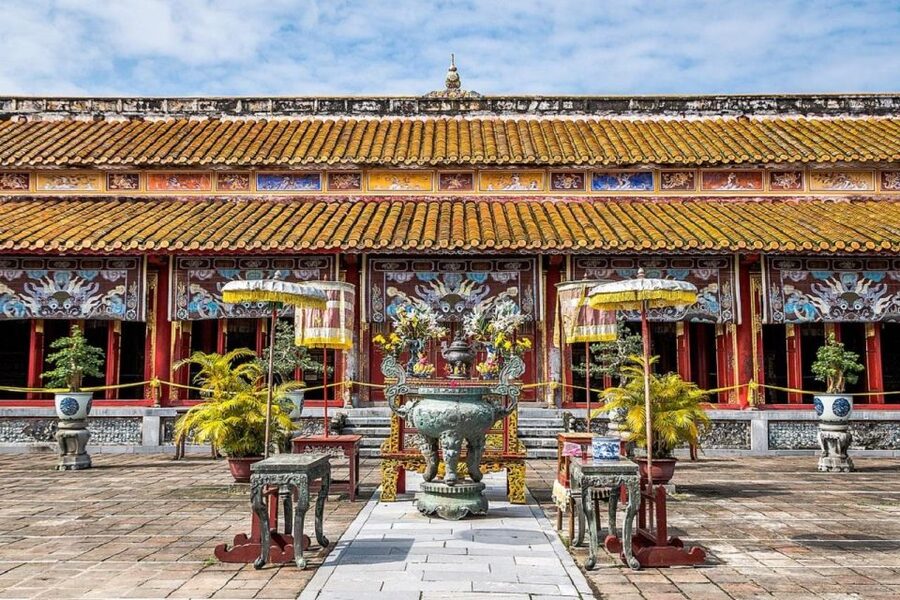
The private-car option makes more sense if you want to see several sites spread around Hue. An English-speaking driver can collect you from a city-center hotel, Hue Railway Station, or another agreed location and take you to the attractions you select.
The menu includes:
- Imperial City
- Thien Mu Pagoda
- Minh Mang Tomb
- Tu Duc Tomb
- Khai Dinh Tomb
- Thuy Tien Abandoned Water Park
This is useful when you have only one day in Hue or when walking between distant sites would waste time. The three royal tombs also show how differently the Nguyen emperors presented themselves. However, the driver is described as being there for communication and transport, not as a professional licensed guide. You should choose this option for flexibility and convenience, not for detailed commentary at every monument.
Confirm the route and pickup location before departure. City-center pickup is included for the private-car trip, along with certain train station and Phu Bai Airport arrangements. Locations outside the included areas may cost extra.
Price, tickets, and what the $12 really buys
At $12 per person, the walking option is strong value if your main goal is the Imperial City. You are paying for a local English-speaking guide, a structured route, and explanations that can turn a collection of damaged halls into a readable chapter of Vietnamese history.
The ticket is separate. Admission to the Imperial City is listed at 200,000 dong per adult. Combo tickets are also available at 420,000 dong for the Imperial City plus two tombs, or 530,000 dong for the Imperial City plus three tombs, with validity over two days. These combinations may be better value if you already plan to visit royal tombs.
Food and drinks are not included, though you can buy them during the wider private-car itinerary. The private-car price may vary by selected option, group size, and duration, so compare the total cost rather than focusing only on the starting price.
Free cancellation up to 24 hours before departure and reserve-now, pay-later terms add useful flexibility. The experience is available as a private or small-group activity, which matters if you want to ask questions or avoid a large crowd.
What the strongest guide experiences have in common
The most praised part of this experience is the guide, not the vehicle or the ticket arrangement. Misa is singled out for excellent English, warmth, humor, and careful pacing. Nhi is praised for detailed explanations and infectious energy. Nhien is noted for adapting the tour to an individual visitor, while Ha receives credit for making history accessible and recommending local food and coffee afterward.
Linh has been praised for storytelling, helping with photographs, and keeping the route comfortable in both rain and heat. Duy is described as friendly, engaging, and well informed. Hoa and Hung also receive strong marks for clear communication and an enjoyable style.
You should still remember that guides differ. The experience works best when you ask questions and tell the guide what interests you. If you want architecture, request more detail on buildings and symbols. If royal politics or family life interests you, say so early.
Who should book this Hue experience?
I would choose the walking option if you are visiting Hue for the first time, care about context, or want to understand the Imperial City rather than simply photograph it. It suits couples, solo visitors, families, and small groups. Children may enjoy the stories about emperors, symbols, and palace life, especially when the guide uses questions rather than a long lecture.
The private car is better for visitors who want several major sights in one day, need pickup, or prefer to limit long transfers. It is also practical after arriving by train or plane. Just keep your expectations clear: you get a driver, not a full guide at each attraction.
People who dislike walking in heat may find the 2.5-hour route tiring. The same applies during heavy rain, although guides have continued tours in wet conditions. If you want a slow, independent visit with no set explanations, book only if you are comfortable leaving the group after the guided portion and exploring on your own.
Should you book the Hue Customizable Tour?
Yes, if you want a low-cost introduction to Hue’s Imperial City with a local English-speaking guide. The walking option offers the best balance of price, focus, and useful historical context, and the repeated praise for guides such as Misa, Nhi, Nhien, Ha, Linh, and Duy gives the experience a strong human side.
Choose the private car when your priority is covering Hue’s Imperial City, pagoda, and royal tombs in one flexible day. Do not book it expecting a licensed guide inside every monument. Budget separately for admission and refreshments, meet carefully at the four cannons if walking, and start early when possible. For most first visits to Hue, that small amount of planning should pay off handsomely.
FAQ
How long does the walking tour last?
The Hue walking tour lasts about 150 minutes, or 2.5 hours. It focuses on the Imperial Citadel and Forbidden Purple City.
Where does the walking tour meet?
You meet the guide at the four bronze cannons near Ngan Gate, or Cua Ngan, at Hue Citadel. The guide will hold an A4 sheet with your name. There are five cannons on the opposite side, so check that you are in the correct area.
Is the Imperial City entrance ticket included?
No. The Imperial City admission ticket is not included and is listed at 200,000 Vietnamese dong per adult.
Does the private-car option include a tour guide?
No. The private-car option includes the vehicle and an English-speaking driver. It does not include a professional tour guide.
Can I visit royal tombs with the private car?
Yes. The private-car choices include Minh Mang Tomb, Tu Duc Tomb, and Khai Dinh Tomb, along with the Imperial City, Thien Mu Pagoda, and Thuy Tien Abandoned Water Park.
Is hotel pickup included?
Pickup and drop-off are included for private-car trips from city-center hotels in Hue or Hoi An, and from listed transport points such as Hue Railway Station and Phu Bai Airport. Locations outside the included areas may require an extra charge.
Can I cancel the booking?
You can cancel up to 24 hours in advance for a full refund. Reserve-now, pay-later booking is also available.
Just added around Hue
- Hue Morning Countryside Motorbike Tour★ 5.0 · 32 reviews
- 1 Day On 5-Star Halong Cruise With Highest Safety Equipments★ 4.7 · 34 reviews
- Hue Motorbike & Boat Tour to Countryside & Heritage Sites★ 5.0 · 35 reviews
- Hue to Hoi An Motorbike Tour★ 5.0 · 35 reviews
- Hue Bike Tour with Optional Fishing Activities in Local Village★ 5.0 · 36 reviews
- Hue Royal Tombs Tour: Visit Best Pagoda & King’s Mausoleums★ 5.0 · 36 reviews
- Hue city tour with private driver★ 5.0 · 38 reviews
- Hue: Perfume River Dinner Cruise with Traditional Show★ 4.0 · 38 reviews
Hue Day Trips, compared.

Hue to Hoi An ( Hoi An to Hue) Top Gear with Lefamily Riders Tours ( 1 way)
Read our review →
Easy Rider private tour via Hai Van pass from Hue – Da Nang – Hoi An (1Way|Loop)
Read our review →
Imperial City, Hue: Day Tour from Hoi An and Da Nang
Read our review →
Easy Rider From Hue Da Nang Hoi An Via Hai Van Pass With Mister T
Read our review →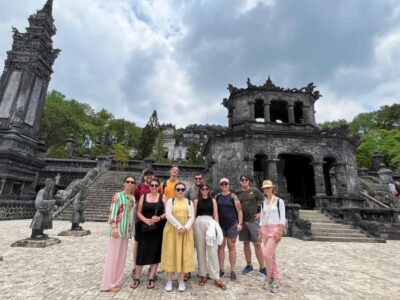

Hue to Dn/Hoi An: Hai Van Pass, beaches & Mt Monkey or vice versa
Read our review →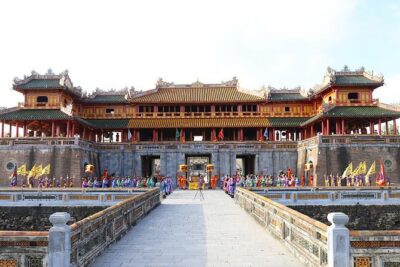
Imperial City Walk, Motorbike Tour & Private Car Options
Read our review →
Exploring Royal City with Multi Options and Dragon Boat
Read our review →Browse the lists this tour appears in