
Reviewed · WALKING TOURS
Hoi An walking Tour – Private Tour
Hoi An rewards slow walking. This private tour makes the old town easier to understand by linking its museum, merchant houses, assembly hall, and famous Japanese Covered Bridge. I like the small maximum of 10 people, and I like that guide Hai is praised for clear English, local knowledge, humor, and an easygoing manner. The main drawback is the short two to three-hour schedule, which leaves limited time for browsing, shopping, or lingering inside each site.
You’ll cover several of Hoi An’s key sights without trying to solve the old town on your own. Hai’s flexibility is a useful bonus if you want to adjust the pace or ask more questions, though you should confirm exactly what is included, since water and a simple banh mi lunch have been described as part of some outings but are not clearly listed in the main tour details.
In This Review
- Key points at a glance
- Why a guided walk helps in Hoi An
- Starting with the Hoi An History Museum
- Seeing 18th-century life at Quan Thang House
- Pausing at Phuc Kien Assembly Hall
- Crossing the Japanese Covered Bridge
- Entering Tan Ky Ancient House
- What Hai adds to the experience
- Timing, walking, and the free afternoon
- Is $69 a fair price?
- Who should book this Hoi An walk?
- Should you book it?
- FAQ
- How long does the Hoi An walking tour last?
- Where does the tour start?
- Is pickup available?
- What sights are included?
- How many people can join the tour?
- Can I cancel for a full refund?
Key points at a glance
- Fourth-generation local guide: Hai is described as a fourth-generation Hoi An resident with strong English and a personal connection to the town.
- Five major historic stops: The route includes Hoi An History Museum, Quan Thang House, Phuc Kien Assembly Hall, the Japanese Covered Bridge, and Tan Ky Ancient House.
- Private feel without a large crowd: The group is capped at 10 people, making questions and pace changes more practical.
- Comfortable walking pace: Short stops are built into the route for explanations and photos rather than one long lecture.
- Good orientation for first-time visitors: The museum provides context before you enter the old town’s merchant homes and religious buildings.
- Flexible afternoon: After the guided portion, you have free time to eat, shop, or revisit a place that caught your attention.
Why a guided walk helps in Hoi An
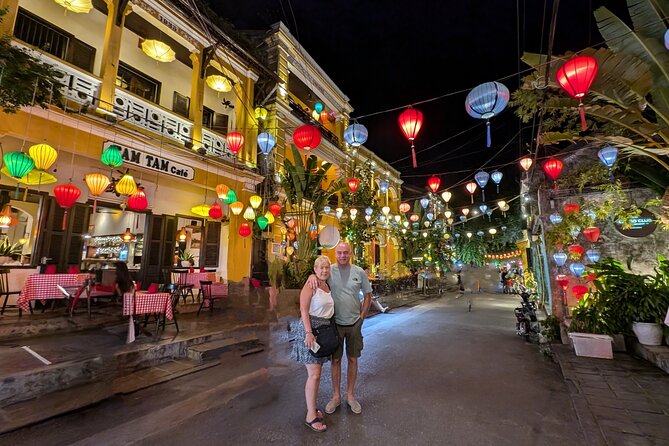
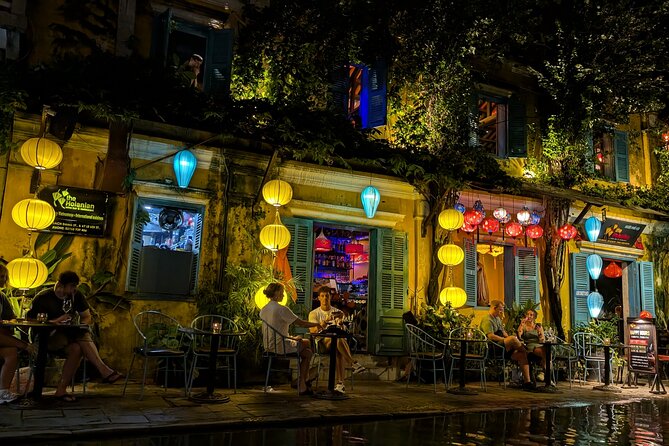
Hoi An’s old town is compact, but its story is not simple. Chinese, Japanese, Vietnamese, and later European trading connections shaped the streets, homes, religious buildings, and bridges you see today. Without context, it can look like a pleasant collection of old yellow buildings. With a good guide, the details begin to make sense.
That is the real value of this tour. You are not simply checking off famous stops. You are moving from a museum overview to private merchant houses, then to an assembly hall, a Japanese-built bridge, and another old home that shows how families lived and traded.
I especially like the order. Starting at the Hoi An History Museum gives you a basic timeline before the architecture begins. By the time you reach Quan Thang House and Tan Ky Ancient House, you have a better idea of why Hoi An’s homes were built around trade, family life, and visiting business partners.
The tour is private, but the listed maximum is 10 people. That is still a small group by tour standards. You should be able to hear the guide, ask questions, and keep a more relaxed pace than on a large coach outing. Several descriptions of Hai’s guiding style point to short stops, comfortable walking, and time for questions rather than a rushed march through the center.
More Walking Tours in Hoi An
- Evening Walking Food Tour, folk game and lantern boat
★ 5.0 · 665 reviews - Hoi An Ancient Town Walking Tour with a Local
★ 5.0 · 517 reviews - Hoi An Ancient Town – Walking Tour with Local Guide
★ 4.9 · 385 reviews
Starting with the Hoi An History Museum
The first stop is the Hoi An History Museum, a sensible place to begin. It is meant to give you an overview of the town’s historical development and cultural identity before you explore the buildings themselves.
I would pay attention here even if museums are not usually your favorite part of a trip. This is where the rest of the walk gets its framework. Hoi An was shaped by its role as a trading port, and the old houses and assembly halls make more sense once you understand that merchants and communities from different places lived and worked here.
The museum stop also helps you read the town rather than simply photograph it. Look for connections between commerce, religion, family life, and foreign influence. The tour description does not specify how long you spend inside, so the actual depth of this visit may depend on the day’s pace and your interests.
That uncertainty is worth noting. A two-hour version of the tour will naturally feel different from a three-hour version. If you want a detailed museum visit, ask Hai at the start how much time is planned for each stop.
Seeing 18th-century life at Quan Thang House
At 77 Tran Phu, Quan Thang House takes you into the world of Hoi An’s merchant families. Built in the 18th century, it was originally owned by a Chinese captain and merchant.
That detail gives the house a useful place in the wider story. This was not merely a local residence. It reflects the movement of people, goods, ideas, and money through Hoi An’s port. A guide can point out how the house served both domestic and commercial needs, though the exact interpretation will depend on what is open and what Hai chooses to explain.
The address on Tran Phu also matters for practical reasons. This is a walking tour through the central old town, so you are spending your time close to the places that define Hoi An rather than using transport to reach scattered sights.
Expect a traditional historic home rather than a large museum complex. The appeal is in the scale and the details. You can picture how a merchant household operated, how visitors may have been received, and how trade shaped the design of a home.
This is one of the places where a local guide earns the tour fee. On your own, you might walk past the entrance and see only another old facade. With Hai, you can ask how the house fits into Hoi An’s Chinese trading connections and how it compares with Tan Ky Ancient House later in the route.
Pausing at Phuc Kien Assembly Hall
The next stop is Phuc Kien Assembly Hall at 46 Tran Phu Street. It is dedicated to Thien Hau, the goddess of the sea, and was linked to the Fukien community.
This is an important change of mood from the merchant house. The assembly hall is not only an architectural sight. It shows how overseas Chinese communities maintained religious and social ties in Hoi An. For people whose livelihoods depended on the sea, a deity associated with safe voyages had a practical place in daily life.
Take time to notice the difference between a private home and a community building. The house tells you about family and business. The assembly hall tells you about shared identity, worship, and support among people from the same region.
The tour details do not promise a special ceremony or a long religious explanation, so do not expect a full cultural program. What you get is a focused visit to one of Hoi An’s significant historic buildings, with the benefit of being able to ask questions as you go.
I would also use this stop to slow down. The route contains several famous sights, and it would be easy to hurry from one to the next. The strongest descriptions of Hai’s tours emphasize an unhurried pace and frequent short explanations. That style should suit you if you prefer to understand a place rather than race through it.
More Walking Tours:
- Hoi An Street Food Walking Tour with Tastings
★ 5.0 · 317 reviews - Hoi An Walking Tour
★ 5.0 · 269 reviews - Cham Island: Underwater Walking & Snorkeling Tour
★ 4.4 · 112 reviews - Hoi An Street Walking Food Tours
★ 5.0 · 59 reviews
Crossing the Japanese Covered Bridge
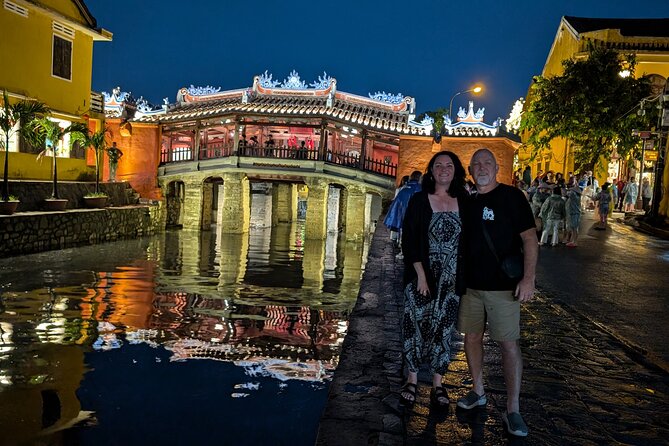
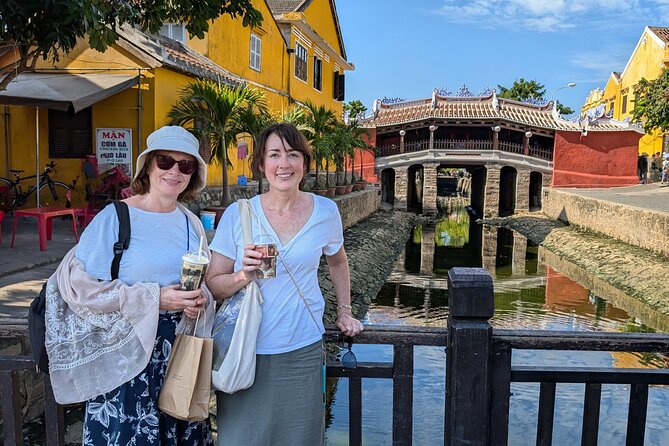
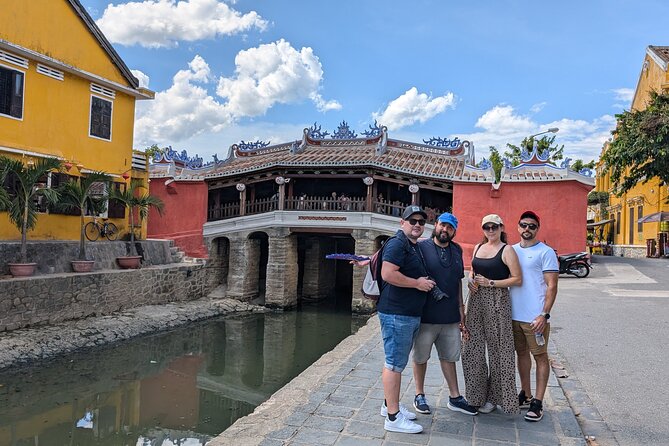
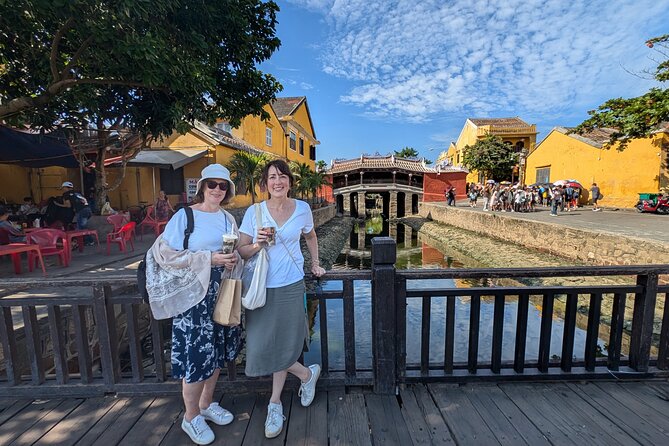
The Japanese Covered Bridge, also called the Pagoda Bridge or Chua Cau, is the tour’s most instantly recognizable sight. Japanese craftsmen built it when a larger Japanese merchant community was active in Hoi An.
It is easy to treat the bridge as a quick photo stop. Its real value is as a reminder that Hoi An once connected different trading communities in one compact port. The bridge’s Japanese association adds another piece to the town’s international story, following the Chinese connections you encountered at Quan Thang House and Phuc Kien Assembly Hall.
The bridge is one of the places where timing matters. It is a popular landmark, and the tour description does not promise a quiet visit or a private viewing. You may have to share the space with other people, so listen closely when Hai explains the structure and its place in Hoi An’s past.
Do not expect a long stop here. A walking tour usually works best when the guide gives you the key context, points out what to notice, and then keeps the route moving. If photography is important to you, tell Hai. His past guiding style is described as open to suggestions and changes, so he may be able to allow a little more time if the schedule permits.
Entering Tan Ky Ancient House
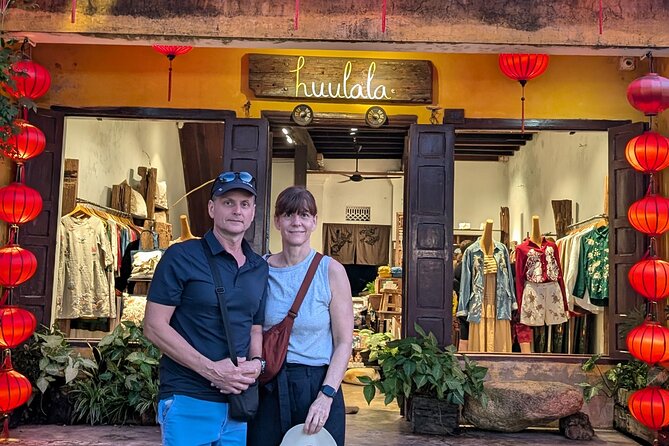
The final planned visit is Tan Ky Ancient House. The house is not the oldest in Hoi An, but its architecture is described as one of the town’s most typical.
That makes it a strong closing stop. After seeing Quan Thang House, you can compare two historic homes rather than viewing either one in isolation. Notice the ways the buildings balance household life and commercial activity. A guide can help you spot the features that make Tan Ky representative of Hoi An’s traditional architecture.
This stop is especially useful for visitors who want more than a list of dates. Architecture gives you a physical sense of how the town worked. Rooms, entrances, structure, and layout can suggest how families lived, welcomed customers, and adapted to Hoi An’s trading role.
The word typical is important here. Tan Ky may not satisfy you if you are looking only for the oldest or most dramatic building. Its strength is that it helps you understand the local building style. Think of it as a reference point for the other old homes you may see while wandering later.
By finishing at a house rather than another broad historical site, the tour brings the town’s story back to ordinary life. Hoi An’s past is not only about ports and merchants. It is also about people using these buildings day after day.
What Hai adds to the experience
The strongest feature of this tour appears to be the guide. Hai is described as a fourth-generation local, with excellent English, a friendly manner, and a strong grasp of Hoi An and Vietnamese history.
Those qualities matter more on a walking tour than a long list of attractions. You are close to the buildings, streets, and religious sites. A guide who can explain details clearly, answer questions, and adjust the pace makes the experience feel personal rather than mechanical.
Hai is also described as easy to talk to and open to changes. That could be useful if you have a special interest in architecture, local history, religion, or daily life. It may also help families, since a guide who can vary the pace is easier to manage than a fixed group itinerary.
The tone seems to include humor as well as facts. That is a welcome balance. Hoi An’s history has plenty of names, dates, and cultural references, and a little personality can keep the walk from becoming a classroom session.
Still, keep expectations realistic. A guide’s ability to adapt does not mean every extra request will fit into a two-hour schedule. Ask early, choose your priorities, and accept that a short tour can introduce the town rather than explain every corner of it.
Timing, walking, and the free afternoon
The tour lasts about two to three hours. That is long enough for a useful introduction and short enough to fit around other Hoi An plans.
You should wear comfortable shoes and be ready to walk through the old town at a steady but manageable pace. The tour is not presented as strenuous, and most people can participate, but the exact distance and number of standing stops are not specified.
Pickup is offered, and the meeting location is listed as Hoi An in Quang Nam. Since the details do not state how far pickup extends or give a precise meeting address, confirm the arrangement before setting out. The area is near public transportation, which gives you another way to reach the start if pickup is not convenient.
The free afternoon is one of the tour’s better practical features. You can use the morning or afternoon walk to get oriented, then return to a house or street that interested you. You might also use the extra time for food, shopping, or a slower look at the old town’s smaller details.
One note about food and water: an account of the experience describes water and lunch at a local restaurant, with a simple banh mi mentioned. Since those inclusions are not clearly stated in the main details, ask the provider before booking if they matter to your budget or schedule.
Is $69 a fair price?
At $69 per person, this is not the cheapest way to see Hoi An’s old town. It can still be good value if you care about interpretation and prefer a private experience to wandering independently.
The price pays for more than a route between five landmarks. You get a local guide, a planned sequence, the chance to ask questions, and a group capped at 10 people. Those benefits are most useful on your first day in Hoi An, when you want to understand the town before exploring on your own.
The value is weaker if you only want photographs of the Japanese Covered Bridge and a quick look at old houses. You can see central Hoi An independently, and the tour does not list premium transport, a meal, or an extended workshop as guaranteed inclusions.
For couples and families who want a personal introduction, $69 may be reasonable. Solo visitors should weigh the cost more carefully, since the price is per person. Before paying, clarify pickup, entrance arrangements, and whether lunch or water are included in your specific booking.
Who should book this Hoi An walk?
I would choose this tour if you want a clear introduction to Hoi An’s old town and prefer a guide who can explain the connections between Vietnamese, Chinese, and Japanese influences.
It should suit:
- First-time visitors who want orientation before exploring alone
- Couples and families who value a private guide
- History and architecture fans
- People who want a comfortable walking pace
- Visitors who appreciate flexible conversation rather than a scripted lecture
It may be less suitable if you want a full-day experience, extensive shopping time, a cooking class, or a food-focused route. The schedule is short, and the listed stops are all in the historic center.
Free cancellation is available up to 24 hours before the start time for a full refund. Changes made inside that 24-hour window are not accepted, and poor weather can lead to a new date or a full refund. Since the experience requires suitable weather, keep that rule in mind during rainy periods.
Should you book it?
Book this walk if you want Hoi An’s famous sights to come with context, especially if you can arrange the tour with Hai. His local background, strong English, humor, and willingness to adjust the pace are the qualities that give this outing its appeal.
I would not book it solely for access to the landmarks. The real benefit is having someone connect the museum, merchant homes, assembly hall, and bridge into one readable story. At two to three hours, it is best viewed as a well-paced introduction, followed by your own free afternoon in Hoi An.
FAQ
How long does the Hoi An walking tour last?
The tour lasts approximately two to three hours.
Where does the tour start?
The starting location is listed as Hoi An, Quang Nam, Vietnam.
Is pickup available?
Yes, pickup is offered. The exact pickup area or meeting address is not specified, so confirm it before the tour.
What sights are included?
The route includes Hoi An History Museum, Quan Thang House, Phuc Kien Assembly Hall, the Japanese Covered Bridge, and Tan Ky Ancient House.
How many people can join the tour?
The activity has a maximum of 10 travelers.
Can I cancel for a full refund?
Yes. You can cancel at least 24 hours before the experience start time for a full refund. Cancellations or changes made less than 24 hours before the start time are not accepted for a refund, and poor weather may result in a different date or a full refund.
Just added around Hoi An
- Hoi An bicycle tour to beautiful countryside★ 5.0 · 33 reviews
- Hoi An Countryside Discovery Tour By Motorbike – Local food★ 5.0 · 33 reviews
- Hoi An Ghosts, Death, Mystery Unveiled★ 5.0 · 33 reviews
- DaNang Airport Transfer to Hoi An by private car or vice versa★ 5.0 · 33 reviews
- Guided tour of Sampan distillery // Agricultural Rum Medalist★ 5.0 · 35 reviews
- Cooking class for lunch start at 12:00-3:00pm cooking yourself★ 5.0 · 35 reviews
- Hoi An city and Food tour★ 5.0 · 35 reviews
- HoiAn Walking Tours Night market, Colourful Lanterns, Boat Ride★ 4.5 · 36 reviews
Walking Tours, compared.

Private Street Food Evening Walking Tour in Ho Chi Minh City
Read our review →![[HOT] Hanoi Old Quarter Walking Street Food – Small Group Tour](https://5.vietnameseinsider.com/wp-content/uploads/hot-hanoi-old-quarter-walking-street-food-small-group-tour-400x267.jpg)
[HOT] Hanoi Old Quarter Walking Street Food – Small Group Tour
Read our review →
Super Niche Walking Street Food Tour in Ho Chi Minh City
Read our review →
Private Hanoi Street Food Walking Tour With Real Foodie
Read our review →

Hanoi Walking Street Food Tour with Train-Street Visit
Read our review →Browse the lists this tour appears in