
Reviewed · HUE DAY TRIPS
Hue Imperial City Walking Tour: Citadel & Forbidden City
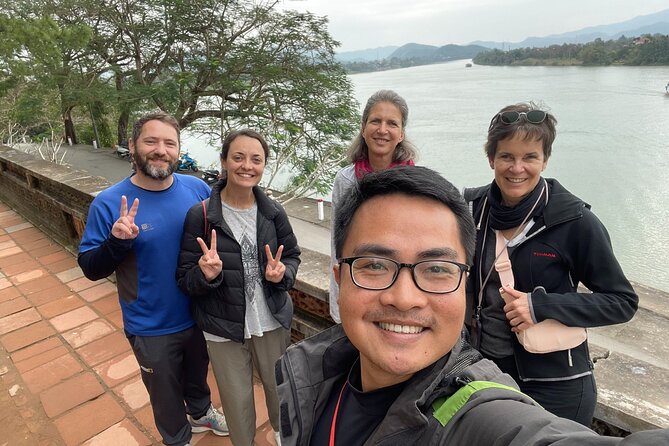
Hue’s walls reward a good storyteller. I like the small-group format, capped at eight people, and the way the tour links grand buildings to royal customs, family life, and the Nguyen emperors. I also like the focused route, which covers major sights without asking you to wander the huge compound alone. The main drawback is cost clarity: the $9 group price does not include the 200,000 VND entrance fee, and a longer combo ticket for Hue’s tombs may offer better value.
This two-and-a-half-hour walk is best for anyone who wants more than attractive ruins and photographs. Guides such as Matthew, Ngoc, Linh, Hoa, Florence, and Xi have received praise for clear English, strong storytelling, and help navigating the sprawling grounds. Still, guide quality can vary, and one unhappy guest found a guide distracted by her phone.
In This Review
- Key points to know before you book
- Why a guide helps inside Hue’s huge citadel
- Ngo Mon Gate sets the royal scene
- Thai Hoa Palace explains court ceremony
- Hien Lam Pavilion and the Nine Dynastic Urns
- The Mieu Temple preserves royal tradition
- Chương Đức Gate reveals palace boundaries
- The Forbidden Purple City gives the tour its name
- Kien Trung Palace shows Hue’s restoration work
- Thai Binh Pavilion and the royal gardens
- Hien Nhon Gate closes the loop on palace society
- Guide quality is the real variable
- Who will get the most from this two-and-a-half-hour walk
- Should you book the Hue Imperial City Walking Tour?
- FAQ
- How long does the Hue Imperial City walking tour last?
- What is the group size?
- Is the Imperial City entrance fee included?
- Does the private tour include admission?
- Where does the tour start?
- Where does the tour end?
- Can I cancel for a full refund?
- What happens if the weather is poor?
Key points to know before you book
- The group is limited to eight people, making it easier to hear the guide and ask questions.
- The 200,000 VND Imperial City ticket is extra for the group option.
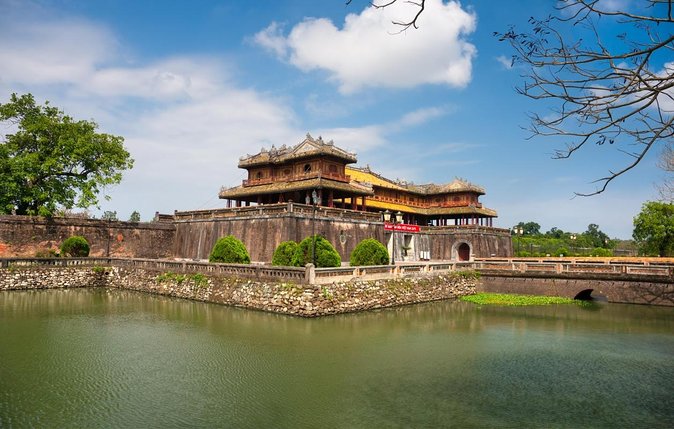
- The route covers 11 major stops, including Thai Hoa Palace, the Nine Dynastic Urns, Kien Trung Palace, and the Forbidden Purple City.
- Matthew is especially praised for historical storytelling, while Ngoc, Linh, Hoa, Florence, and Xi have also earned strong comments.
- The tour ends at Hien Nhon Gate, not at the starting point, so plan your next stop from there.
- You can cancel free of charge up to 24 hours ahead, but poor weather may cause a date change or full refund.
Why a guide helps inside Hue’s huge citadel
Hue’s Imperial City is not a single building. It is a broad walled complex with gates, ceremonial halls, temples, gardens, residences, and courtyards. You can walk through it independently, but the scale makes it easy to miss the meaning behind what you see.
A guide gives the place a clear order. Instead of treating every roof and wall as another photo stop, you learn which spaces were used for ceremonies, which were reserved for the royal family, and which buildings honored former emperors. That distinction matters in Hue, where function and rank shaped the entire court.
The tour is designed for a maximum of eight people. That is a useful middle ground. You still get the lower price of a shared outing, but you are less likely to disappear in a large crowd or lose the guide’s voice among the old walls.
The published price of $9 is attractive, but it is not the full group cost. Add the 200,000 VND admission ticket per person. The operator explains that the ticket is kept separate because you may prefer a combo ticket covering the Citadel and royal tombs. If you plan to visit several tombs, compare the available ticket options before entering.
The private tour option includes the Imperial City entrance ticket, though its price is not given here. That could suit families or couples who want more flexibility, but the group tour offers strong value if you are comfortable following a set route.
More City Tours in Hue
- Hue Customizable Tour with Imperial Citadel & Forbidden City
★ 4.9 · 937 reviews - Imperial City, Hue: Day Tour from Hoi An and Da Nang
★ 4.6 · 830 reviews - Hue: Imperial City Walk, Motorbike Tour & Private Car Options
★ 5.0 · 732 reviews
Ngo Mon Gate sets the royal scene
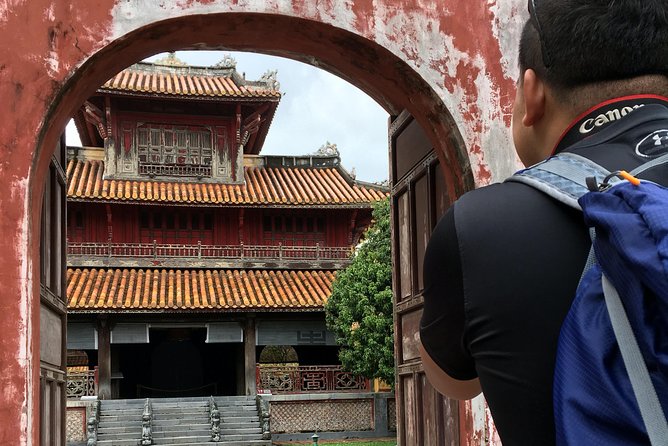
The walk begins at Hai Mươi Ba Tháng Tám in Hue, near the Imperial City. The first stop is Ngo Mon Gate, also called the Noon Gate, the grand entrance associated with royal ceremonies and major Nguyen Dynasty events.
The guide uses about ten minutes here to explain the gate’s symbolic role. This is a useful opening because it gives you the basic idea of the citadel as a carefully ordered royal world. Entry through a particular gate, access to a certain enclosure, and participation in a ceremony all reflected status.
Ngo Mon is also a good place to get your bearings. The gate helps you understand the layout before the route moves farther inside. Since the compound is large, that orientation is practical, not just academic.
You should expect a walking tour rather than a transport-assisted visit. Wear comfortable shoes and be ready for sun, heat, or damp conditions. The activity requires good weather, and guides have been praised for checking on people’s comfort during hot days.
Thai Hoa Palace explains court ceremony
Thai Hoa Palace receives the longest early stop, about 25 minutes. This was the principal hall for court sessions and coronations, so it is one of the most important buildings in the complex.
Here, the guide can explain how royal rituals worked and why the architecture feels formal and measured. The building is not simply an ornate hall. It was a stage for authority, with the emperor, mandarins, and ceremony each assigned a place.
This is where a strong guide can make the difference between looking at a decorated roof and understanding a political system. Matthew is often praised for placing the Nguyen emperors within the wider story of Vietnam, rather than treating the dynasty as an isolated chapter.
The stop is short enough to keep the walk moving, but long enough for questions. If you want more detail about palace residents, daily work, or ordinary people who supported the court, ask directly. One otherwise positive assessment noted that the tour could have said more about life for people living within the palace.
Hien Lam Pavilion and the Nine Dynastic Urns
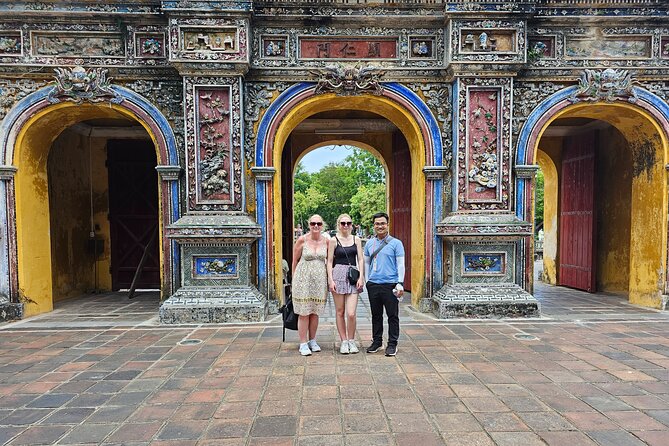
The route then shifts from royal ceremony to memory and legacy. Hien Lam Pavilion, built more than 200 years ago, honors the Nguyen emperors and preserves an original design that has survived the long, difficult history of the site.
The stop lasts about ten minutes. That is enough time for the guide to explain its cultural role and point out features you might overlook on your own. It also provides a change of pace after the formal grandeur of Thai Hoa Palace.
Nearby, the Nine Dynastic Urns offer one of the most striking displays in the Imperial City. Each bronze urn represents one Nguyen emperor, making the group a statement about dynastic power and continuity.
The guide explains the meaning behind the urns instead of leaving them as oversized metal objects. This is one of the tour’s strongest patterns: architecture becomes easier to understand once you know who commissioned it, who used it, and what message it was meant to send.
You have about ten minutes at the urns. That is enough for photographs and a concise explanation, though history fans may wish they had longer to examine the decoration.
More Walking Tours in Hue
- Hue Imperial Ancient City Walking Tour
★ 4.8 · 308 reviews - Hue Imperial City Walking Tour: Citadel & Forbidden City
★ 4.8 · 245 reviews - Hue Imperial City Walking Tour (Kids Half-Price)
★ 5.0 · 133 reviews - 3-Hours Hue Imperial Walking Tour with Guide with Lunch/ Dinner
★ 5.0 · 125 reviews
The Mieu Temple preserves royal tradition
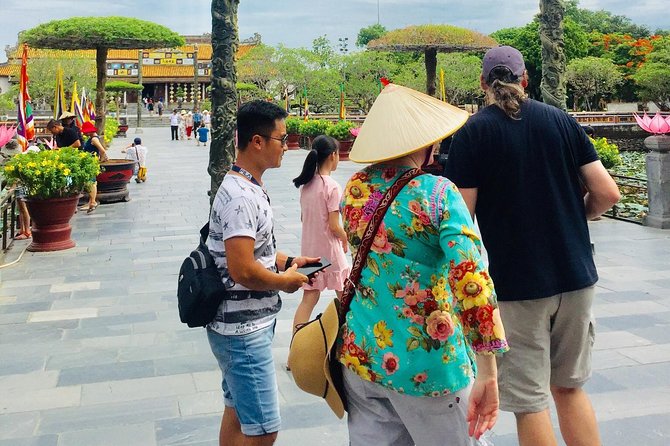
The Mieu Temple is the ancestral temple for past Nguyen kings. It is a sacred space tied to royal remembrance and continuing court tradition.
The guide explains how the temple helped preserve the dynasty’s connection with its ancestors. That makes this stop different from Thai Hoa Palace. The palace expressed living authority, while The Mieu focused on memory, ritual, and the proper honoring of former rulers.
The scheduled visit lasts about ten minutes. It is a compact stop, but it adds an important religious and family dimension to the route. You are not only seeing where emperors ruled. You are also seeing how the royal family presented its own past.
The Imperial City can feel like a sequence of grand facades if you move too quickly. Stops such as The Mieu help turn it into a story about people, obligations, and ceremony.
Chương Đức Gate reveals palace boundaries
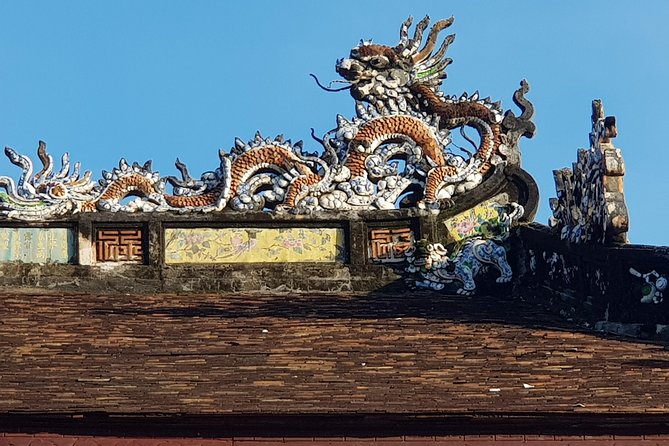
Chương Đức Gate is one of the four gates of the Imperial City and was reserved for women. That single detail helps explain how movement through the royal compound was controlled.
It is easy to pass a gate without asking who could use it. The guide brings out the social rules built into the city’s design. Palace space was divided by rank and gender, and those divisions shaped daily life for the royal family and court officials.
This ten-minute stop is especially useful if you are curious about the women of the Nguyen court. Guide Hoa has been praised for explaining what life and duty could mean for women under different emperors. Her approach points toward a part of palace history that is often less visible than the rulers themselves.
The Forbidden Purple City gives the tour its name
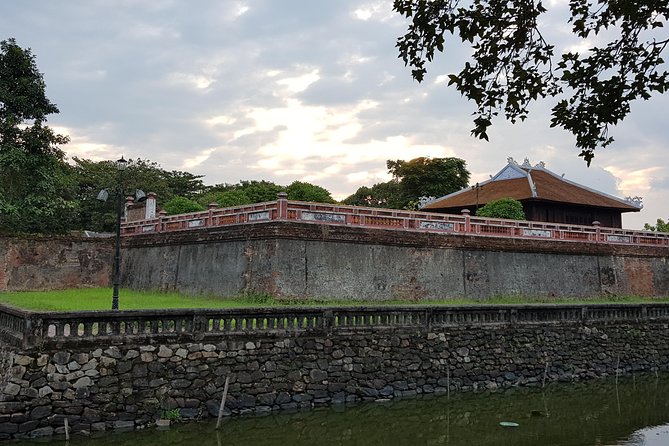
The route continues to the Forbidden Purple City, the third enclosure within Hue’s Imperial City. This was the private royal zone for the king’s family, including wives and children.
The name suggests secrecy and privilege, but the guide helps you see the place as a working royal household. Buildings here served the emperor and family rather than the public business of the court. The surviving structures, ruins, open spaces, and restored buildings all make more sense once you understand that change in function.
The scheduled visit is about 20 minutes. That is enough for an introduction to the enclosure and its role, but not enough to explain every structure in detail. You will likely want to stay afterward if you have a special interest in royal residences or palace life.
The Forbidden Purple City is also where a guide’s navigation skills matter. The area is broad, and some paths can feel confusing. Linh has been praised for helping people move around the large compound and for taking good photographs, a small but welcome service when you are traveling without a companion to handle the camera.
Kien Trung Palace shows Hue’s restoration work
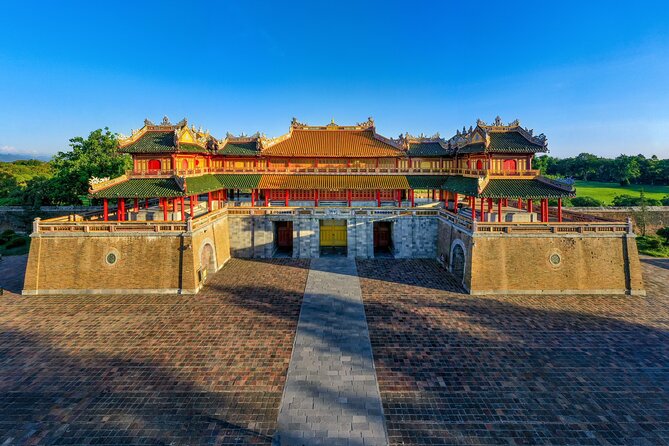
Kien Trung Palace is one of the most notable modern additions to the route. It was recently reopened after years of careful reconstruction, giving you a chance to see a restored imperial residence rather than only damaged or incomplete remains.
The stop lasts about 20 minutes, tied with Thai Hoa Palace for the longest visit. That extra time makes sense. You can look at the restored design while hearing about its place in the royal residential area.
Restoration always raises questions. A rebuilt palace cannot offer the same experience as an untouched historic structure, and the quality of the visit depends partly on how clearly the guide separates original fabric from reconstructed work. Ask about that distinction if it interests you.
Still, Kien Trung Palace adds a useful present-day layer to the tour. Hue’s Imperial City is not frozen in one period. It has been damaged, repaired, studied, and brought back into public view over time.
Thai Binh Pavilion and the royal gardens
Thai Binh Pavilion, or Thai Binh Lau, was a place where the king read books and enjoyed the scenery. It offers a quieter picture of palace life after the formal halls and ancestral temple.
This ten-minute stop helps you imagine the emperor away from court ceremonies. Reading and viewing the gardens may sound peaceful, but these private activities still happened within a highly controlled royal setting.
Next comes Thieu Phuong Garden, also called the Royal Garden. The restored garden is designed for the king and his family to stroll and enjoy the grounds.
The garden is a welcome change from bronze urns, ceremonial halls, and enclosed gates. It also gives you some of the tour’s best opportunities for photographs. The emphasis is on scenery, but the guide connects the garden to the habits and privileges of the royal household.
You may wish the schedule allowed longer here. Ten minutes passes quickly when there are restored paths and attractive views to examine. Treat the stop as an introduction, then return later if the grounds catch your interest.
Hien Nhon Gate closes the loop on palace society
The final stop is Hien Nhon Gate, the entrance used by mandarins. It offers a fitting ending because the route has already introduced royal ceremonies, family areas, ancestral worship, and private gardens.
This gate brings attention back to the officials who helped operate the Nguyen court. The emperor was the visible center, but the palace depended on mandarins, servants, guards, artisans, and many others.
The tour ends at 46 Dinh Cong Trang, rather than the starting address. Check the route on a map before booking your next activity. The end point may be convenient for continuing through Hue, but it is not the same as being returned to where you began.
Guide quality is the real variable
The strongest praise is aimed at the guides, not just the buildings. Matthew receives repeated approval for his clear English, patience, historical detail, and ability to make the Nguyen emperors feel like real people. Several people describe him as a strong storyteller who answers questions fully and keeps an eye on comfort.
Ngoc is praised for passion and an engaging account of the dynasty. Linh receives credit for navigation and photography. Hoa brings attention to women’s roles, while Florence and Xi are praised for sharing areas and details that independent visitors might miss.
That said, you should keep expectations realistic. A shared tour can vary depending on the guide assigned and the group on your date. One three-star assessment described a friendly guide who gave too little information and spent time on her phone. That appears to be the exception among the supplied feedback, but it is worth noting.
If your guide moves too quickly or leaves a question unanswered, ask. The small group makes that possible. This tour works best when you participate rather than simply walk behind the guide.
Who will get the most from this two-and-a-half-hour walk
I would choose this tour if you are visiting Hue for the first time, care about history, or dislike trying to decode large monuments alone. It is also a good choice if your time is limited and you want the main Imperial City highlights organized into one route.
Families can benefit from the family-friendly upgrade, though the standard experience already received positive feedback from a parent and a 12-year-old child. The walk lasts about 150 minutes, so younger children need to manage a sustained visit in a large outdoor complex.
Private tours may suit you if you want to set the pace or ask very detailed questions. The standard group option is better for keeping the price low. With a maximum of eight people, it should feel more personal than a large coach outing.
I would be less enthusiastic if you want a slow architectural study of every building. The route covers many stops, and most receive only ten minutes. You will get a well-planned introduction, not an exhaustive examination of the entire Imperial City.
Book at least a day ahead if your plans are firm, since changes or cancellations made within 24 hours are not refundable. The experience depends on good weather, so poor conditions can lead to another date or a full refund.
Should you book the Hue Imperial City Walking Tour?
Yes, if you want the Imperial City to make sense rather than simply look impressive. The $9 advertised price becomes a higher total after the 200,000 VND entrance fee, but the small group, clear route, and strong guide record make it a fair buy.
I would book it early in a Hue visit, then use any remaining time to revisit the buildings that caught your attention. Choose the group option for value, compare combo tickets if you plan to see the royal tombs, and ask for a guide who can explain both palace ceremony and everyday life.
Skip it only if you prefer complete independence, already know the Nguyen Dynasty well, or want to spend an entire day exploring at your own pace. For most first-time visitors, a guide adds the context that turns Hue’s walls into a living royal story.
FAQ
How long does the Hue Imperial City walking tour last?
The tour lasts approximately 2 hours and 30 minutes.
What is the group size?
The group tour has a maximum of eight participants.
Is the Imperial City entrance fee included?
No. The group option requires a separate entrance fee of 200,000 VND per person.
Does the private tour include admission?
Yes. The Imperial City entrance ticket is included with the private tour option.
Where does the tour start?
The meeting point is on Hai Mươi Ba Tháng Tám, Thuận Hoà, Hue.
Where does the tour end?
The tour ends at 46 Dinh Công Tráng, Ward, Hue City.
Can I cancel for a full refund?
Yes, if you cancel at least 24 hours before the experience start time. Cancellations within 24 hours are not refunded.
What happens if the weather is poor?
The activity requires good weather. If it is canceled because of poor weather, you will be offered another date or a full refund.
More Walking Tours
- Half-Day Guided Street Food Walking Tour at Hue
★ 5.0 · 116 reviews - Hue Imperial City Tip-Based Walking Tour (Group Tour)
★ 5.0 · 59 reviews - Eat like a local with a local – Walking Tour
★ 4.9 · 57 reviews - Hue Food Tour by Walking or Cyclo or Motorbike with Driver
★ 5.0 · 46 reviews
More Hue Day Trips
- Hue to Hoi An ( Hoi An to Hue) Top Gear with Lefamily Riders Tours ( 1 way)
★ 5.0 · 3,156 reviews - Easy Rider private tour via Hai Van pass from Hue – Da Nang – Hoi An (1Way|Loop)
★ 5.0 · 1,542 reviews - Easy Rider From Hue Da Nang Hoi An Via Hai Van Pass With Mister T
★ 5.0 · 769 reviews - Hue to Dn/Hoi An: Hai Van Pass, beaches & Mt Monkey or vice versa
★ 5.0 · 743 reviews
Just added around Hue
- Hue Morning Countryside Motorbike Tour★ 5.0 · 32 reviews
- 1 Day On 5-Star Halong Cruise With Highest Safety Equipments★ 4.7 · 34 reviews
- Hue Motorbike & Boat Tour to Countryside & Heritage Sites★ 5.0 · 35 reviews
- Hue to Hoi An Motorbike Tour★ 5.0 · 35 reviews
- Hue Bike Tour with Optional Fishing Activities in Local Village★ 5.0 · 36 reviews
- Hue Royal Tombs Tour: Visit Best Pagoda & King’s Mausoleums★ 5.0 · 36 reviews
- Hue city tour with private driver★ 5.0 · 38 reviews
- Hue: Perfume River Dinner Cruise with Traditional Show★ 4.0 · 38 reviews
Hue Day Trips, compared.

Hue to Hoi An ( Hoi An to Hue) Top Gear with Lefamily Riders Tours ( 1 way)
Read our review →
Easy Rider private tour via Hai Van pass from Hue – Da Nang – Hoi An (1Way|Loop)
Read our review →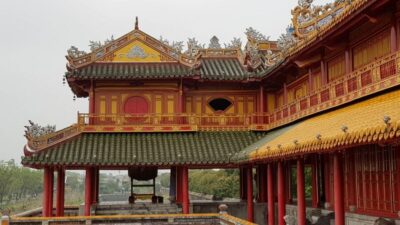
Hue Customizable Tour with Imperial Citadel & Forbidden City
Read our review →
Imperial City, Hue: Day Tour from Hoi An and Da Nang
Read our review →
Easy Rider From Hue Da Nang Hoi An Via Hai Van Pass With Mister T
Read our review →

Hue to Dn/Hoi An: Hai Van Pass, beaches & Mt Monkey or vice versa
Read our review →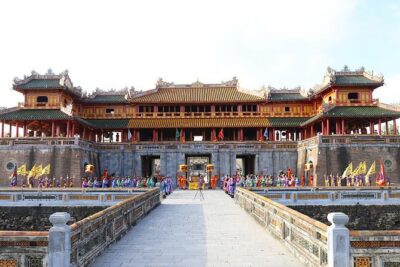
Imperial City Walk, Motorbike Tour & Private Car Options
Read our review →Browse the lists this tour appears in