

Reviewed · VIETNAM WAR HISTORY TOURS
Vietnam War: Uncovering Hanoi’s Untold Stories
Hanoi tells its war story away from the monuments. This three-hour walking tour brings you into everyday neighborhoods, the Cho Gioi market area, a former communal housing project, the Kham Thien B52 memorial, and a quieter section of Train Street. I like the way it links national history with ordinary lives, and I like that the guide treats the walk as a conversation rather than a classroom lecture. The main drawback is that this is not a tour of major military museums, so anyone expecting a long list of war sites may find the focus more social than battlefield-oriented.
The $28 price feels fair for the time, guiding, coffee or tea, and short taxi ride. I would book it early in your Hanoi stay because the background about the divided country, planned economy, and postwar life can help you understand many other places you see later. Bring water, comfortable shoes, and patience for Hanoi traffic and weather.
In This Review
- Key points at a glance
- Why this Hanoi walk feels different
- Starting at 24B Chua Vua Street
- Cho Gioi and the market economy
- Communal housing and life after division
- Kham Thien B52 Memorial and the Christmas bombings
- A short taxi ride, then a quieter Train Street
- The guide makes or breaks the three hours
- Is $28 good value?
- Who should book this experience?
- Should you book the Hanoi war stories walk?
- FAQ
- How long does the experience last?
- Where does the tour start?
- Where does the tour end?
- What places are included?
- Is food or a drink included?
- What should I bring?
Key points at a glance
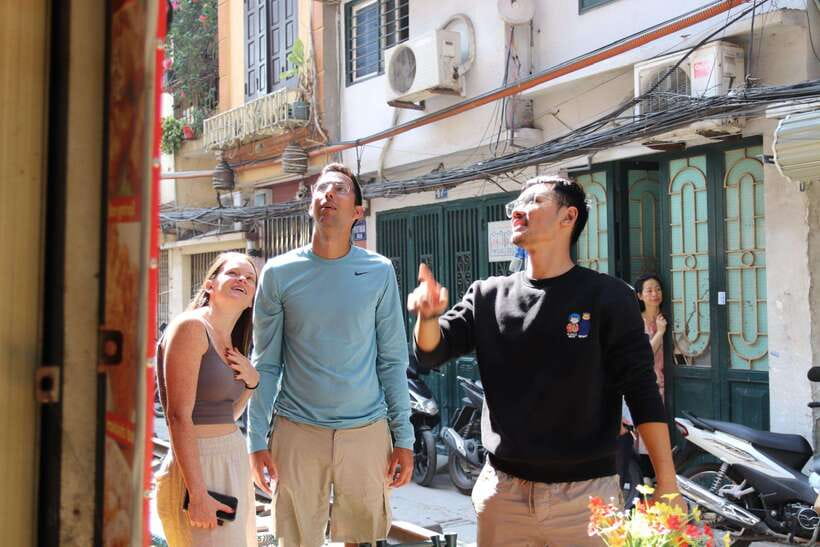
- Cho Gioi reveals a working side of Hanoi: Walk through a local market district often described as a black market or sky market, far from the usual sightseeing route.
- The communal housing visit adds human scale: You may see how planned-economy housing shaped daily life, not just hear dates and political slogans.
- Kham Thien connects the war to one Hanoi neighborhood: The B52 memorial and Christmas bombing site make the air war personal and specific.
- The guide is the heart of the experience: Kien, Dung, Cong, and Quang have each led highly praised departures, with Kien especially noted for clear English, humor, and thoughtful answers.
- Train Street provides a relaxed finish: Coffee, tea, snacks, or other refreshments may follow the serious history, with the chance to watch a train pass.
- Twenty percent supports local causes: Part of the profit goes to the Vietnam Association for Victims of Agent Orange/Dioxin and Blue Dragon Children’s Foundation in Hanoi.
Why this Hanoi walk feels different
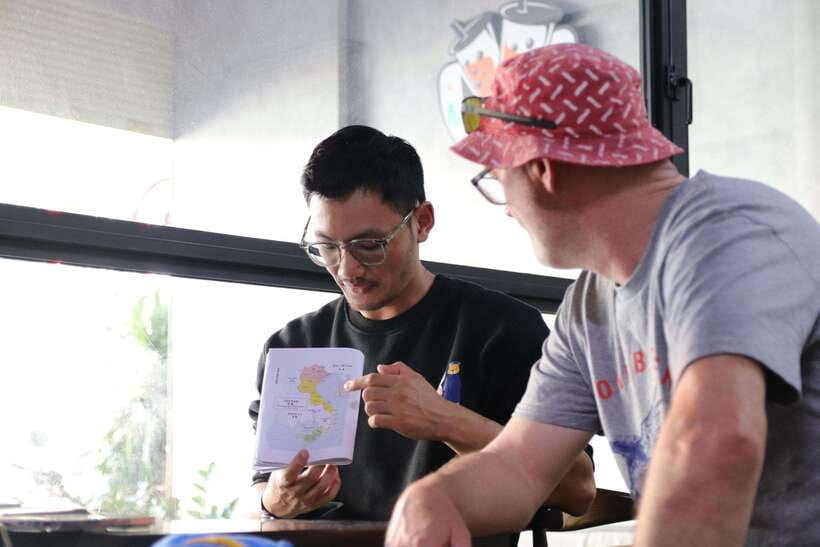
Many Hanoi history tours stay with grand buildings, famous leaders, and formal memorials. This one takes a narrower and more useful view: what happened to local families when Vietnam was divided, how the planned economy affected daily choices, and how the war continued to shape life after reunification.
That focus gives the tour its value. You are not simply told that the North followed communism and the South followed an anti-communist system. You are encouraged to consider how those political divisions affected people on both sides, including families, workers, children, and people living through shortages and major changes after the war.
The guide’s role matters here. Kien is often praised for superb English, an easy manner, humor, and a strong command of both national and local history. Dung is described as passionate and well informed, while Cong and Quang have also led engaging tours. Your guide will depend on the departure, but the experience clearly depends on having someone who can explain difficult subjects without turning the walk into a speech.
I especially like the stated aim of making the tour a conversation. You can ask about the war, current Hanoi, the planned economy, family experiences, or the meaning of the memorials you see. That makes the subject easier to approach, especially if your previous understanding came mostly from Western films or schoolbooks.
More Vietnam War History Tours:
- (Private) Hanoi War Sites Tour
★ 5.0 · 105 reviews - Hanoi: War Site Museums Tour
★ 4.8 · 43 reviews - Adventure Cu Chi Tunnels: Vietnam War Underground Network AM/PM
★ 5.0 · 2,726 reviews
Starting at 24B Chua Vua Street
The meeting point is at 24B Chua Vua Street, about 2.5 kilometers from Hoan Kiem Lake and roughly 3.5 kilometers from Hanoi’s Old Quarter. Look for Trường Trung học cơ sở Đoàn Kết, a secondary school. A coffee shop and second-hand bicycle shops are nearby, which should help you recognize the spot.
This is not a hotel pickup in the center, so allow time to reach it. The start is part of the practical trade-off for getting away from the main tourist zone. If you are staying around the Old Quarter, a short taxi ride to the school is likely the simplest option, though the tour itself includes only a short taxi ride later in the walk.
Wear shoes that can handle uneven pavements and side streets. Hanoi’s weather can change quickly, and the tour operates in rain or shine. Check the forecast the day before and carry an umbrella or raincoat if needed. Breathable clothing is a sensible choice, particularly in warmer months.
Cho Gioi and the market economy
The first major section takes you through the Cho Gioi area, often referred to during the walk as the black market or sky market. This is one of the strongest parts of the experience because it places economic history in a real neighborhood rather than behind glass.
Here, your guide explains how people lived under the planned economy and how informal buying and selling became part of daily life. The setting gives the subject texture. Instead of only hearing about shortages, regulation, and limited choice, you walk through an area connected with practical trade and local commerce.
The market is also a useful reminder that Hanoi is not a museum. People are working, shopping, moving goods, and going about their day while you learn about the past. You should be respectful, keep the group together, and avoid treating local residents as scenery.
The route may take you into corners that you would probably skip on your own. That is a major reason to choose this tour over a standard city walk. A visitor can pass through Hanoi’s main streets for days without finding these areas, and a guide gives you context that a casual wander cannot provide.
There is a small caution here. Market streets can be crowded, confusing, or noisy, and the experience is more about observation and explanation than polished presentation. If you want air-conditioned rooms and carefully displayed exhibits, this section may feel rough around the edges. I see that as part of its purpose, but it is worth knowing before you book.
Communal housing and life after division
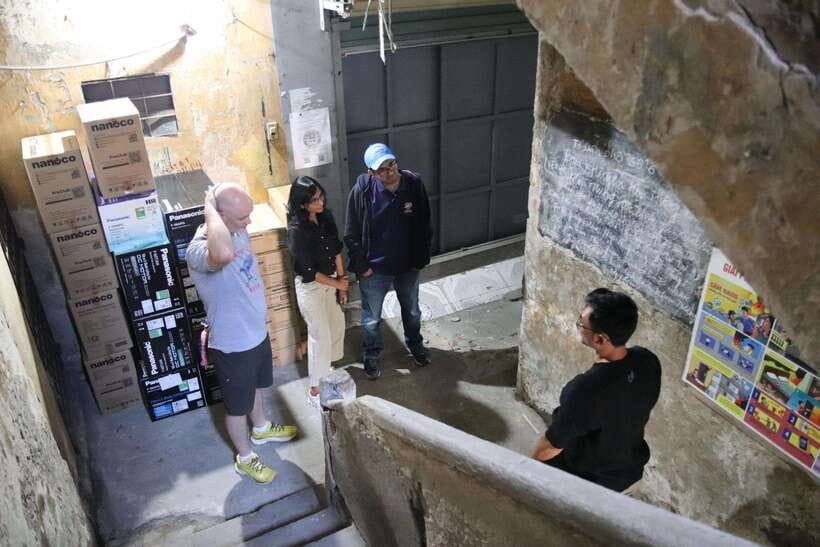
One of the most memorable elements is the chance to see inside or around a communal housing project associated with the planned-economy period. Access can depend on the group and local conditions, so do not treat it as a guaranteed private interior visit. Still, the stop adds something that many war tours miss: the daily structure of life after political change.
Housing projects tell you about more than architecture. They raise questions about shared space, family life, work, privacy, and the ways people adapted to state planning. Your guide can connect those physical surroundings with the choices available to ordinary residents.
This is also where the tour’s North and South perspective becomes important. The history of Vietnam cannot be reduced to one simple story, and the human consequences of division continued through reunification. A good guide can explain those tensions in a way that is direct but not needlessly argumentative.
The walk is a strong fit for anyone who wants the history of Vietnam linked to present-day culture. It also works well for families with older children and teenagers. One family group found the subject engaging for a young child, and another praised the tour as suitable for teenagers. The guide’s storytelling helps keep the material moving.
A few more Hanoi trips worth weighing up
- Hanoi Jeep Tour: Food, Culture and Fun by Vietnam Army Jeep
★ 5.0 · 15,222 reviews - Full-Day Ninh Binh Highlights Tour from Hanoi
★ 5.0 · 7,761 reviews - Hanoi: Ha Long Bay Day Cruise – Swimming, Meal, Kayaking
★ 4.7 · 7,415 reviews - Hanoi: Water Puppet Show Tickets
★ 4.6 · 7,029 reviews
Kham Thien B52 Memorial and the Christmas bombings
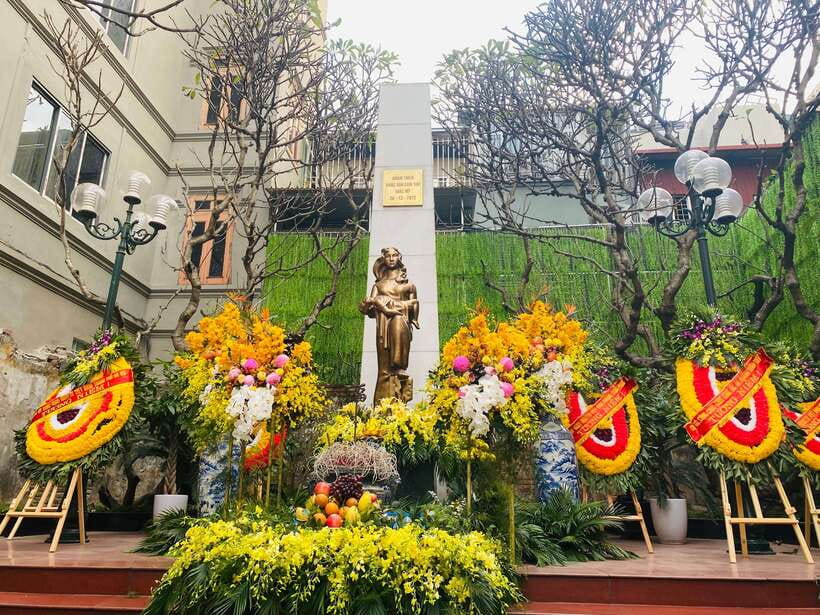
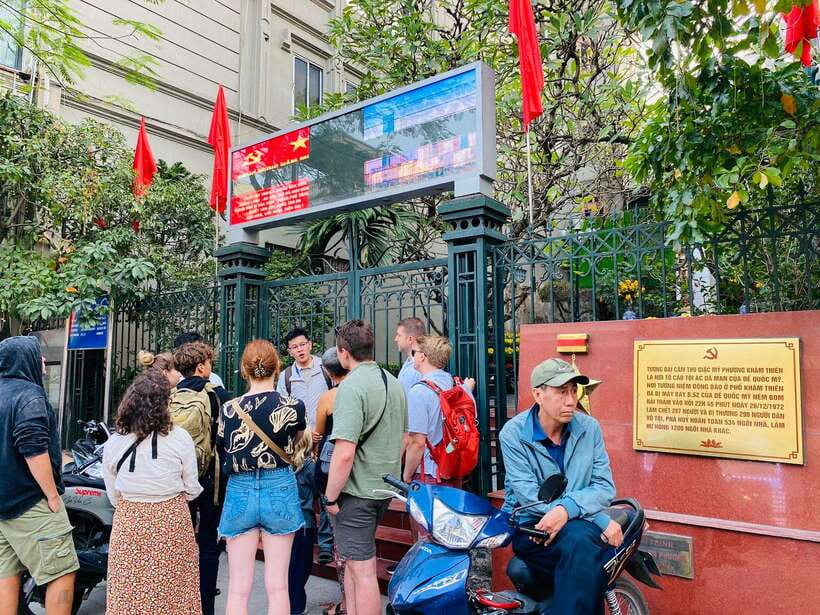
The Kham Thien stop gives the war a clear local address. The memorial recalls the destruction caused by the December 1972 Christmas bombings, when Hanoi was heavily attacked during the final phase of the air war.
This is not just another monument to photograph. The point is to understand what happened to a neighborhood and the people who lived there. Your guide explains the site and the human cost, helping you move from broad military history to the fate of local residents.
The memorial also gives the tour emotional weight. The earlier market and housing sections explain systems and daily life. Kham Thien shows how warfare could suddenly reach homes, streets, and families. You may find this stop sobering, particularly after hearing about the personal experiences connected with the area.
Some participants have expected more war-related sights and felt the tour offered fewer formal military locations than anticipated. That is the clearest limitation of the itinerary. Kham Thien is central, but this is not a museum crawl or a tour of bunkers, aircraft, and battle equipment. If you want that, pair this walk with the Vietnam Military History Museum, the B-52 Victory Museum, or Hoa Lo Prison, visited separately.
A short taxi ride, then a quieter Train Street
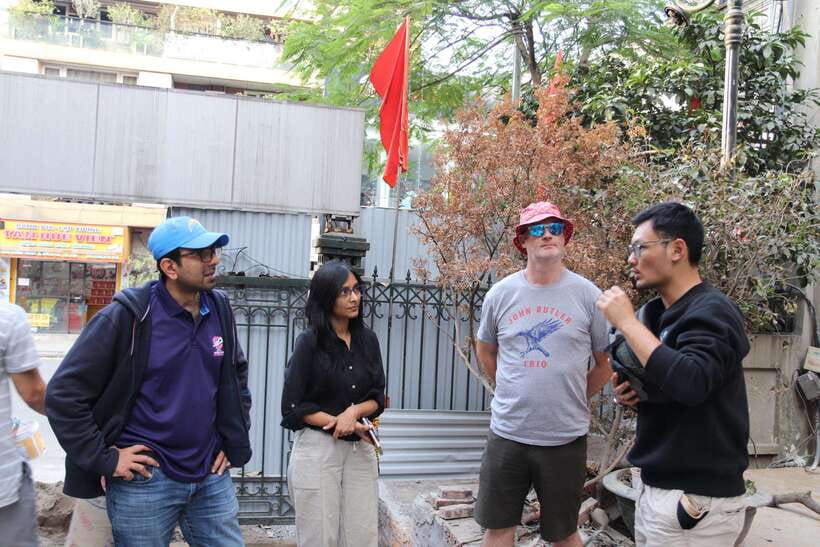
The route lasts about three hours and includes a short taxi ride halfway through. That small transfer breaks up the walking and lets the guide connect two different parts of Hanoi without making you trek across the city.
The final stop is Hanoi Train Street. This famous railway corridor can be crowded with tourists in some sections, but the tour aims for a quieter stretch. You can sit for coffee or tea, and some departures have included snacks, cold drinks, beer, or lunch. The exact refreshments may vary, so consider the included coffee or tea the dependable part.
Train Street works well at the end because it lets the conversation continue in a less formal setting. You can ask follow-up questions, compare what you have seen, and watch local life around the tracks. If a train passes during your visit, the moment adds a memorable finish, but the timing of a train is not something you should assume is guaranteed.
The contrast is useful. You begin with political history and the practical realities of local neighborhoods. You finish with one of Hanoi’s most recognizable modern attractions, but from a less crowded section and with a better sense of how the city’s past still shapes its present.
The guide makes or breaks the three hours
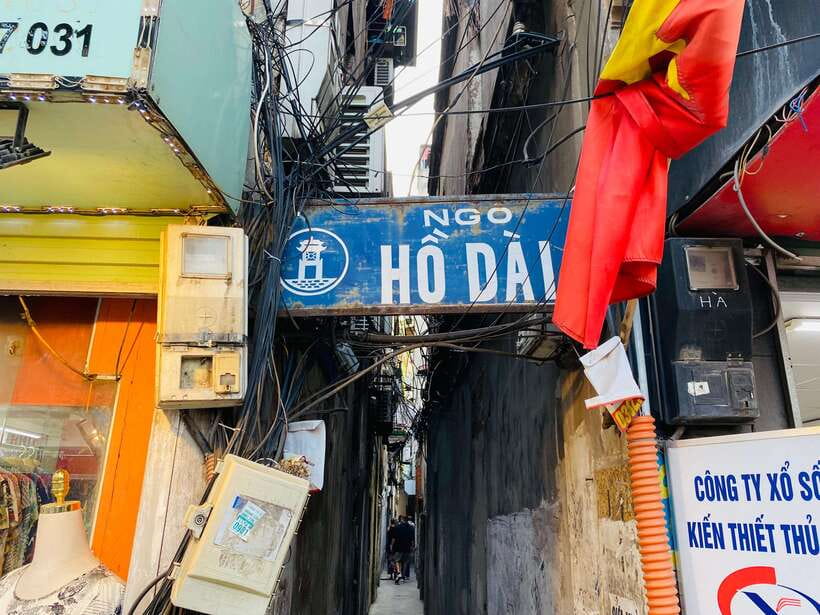
This tour asks a lot of the guide. The subject covers colonial-era politics, the world wars, the conflict between North and South, the Cold War, reunification, planned economics, and current life in Hanoi. Facts alone are not enough. The explanation needs to be clear, balanced, and connected to the places around you.
Kien receives especially strong praise for his storytelling and communication. He has lived in the United States and Ireland, which helps explain why his English is described as excellent. He is also praised for answering questions, using humor, and explaining complicated political issues in an approachable way.
Dung is described as passionate and full of information. Cong is praised for a friendly approach and strong answers, while Quang is noted for enthusiasm and care for Vietnam’s people and future. These details matter because the guide may be the main reason the walk feels personal rather than generic.
The strongest guides appear to speak as local people showing you their neighborhood. That tone is different from memorizing a timeline. You get room to ask why things are the way they are, how the past affected families, and what has changed in modern Hanoi.
Is $28 good value?
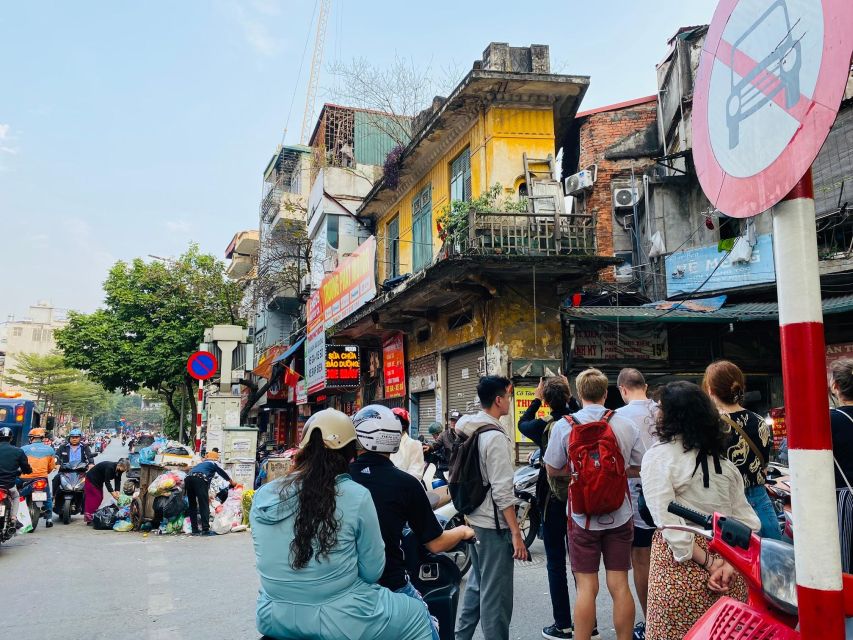
At $28 per person, the tour offers a solid return if you care about modern Vietnamese history and local life. The price includes the guide, stories from local perspectives, coffee or tea, and the short taxi ride. The three-hour length also makes it easy to fit around other Hanoi plans.
The value is not in the number of attractions. You are paying for access, interpretation, and the chance to enter areas you might not comfortably find or understand on your own. A map can take you toward a market or Train Street, but it cannot explain the connection between a neighborhood, the planned economy, the bombing memorial, and present-day Hanoi.
The charitable element adds another reason to consider it. Twenty percent of the profit is donated to the Vietnam Association for Victims of Agent Orange/Dioxin and Blue Dragon Children’s Foundation in Hanoi. That does not replace checking the organization and booking terms yourself, but it gives the activity a social purpose beyond sightseeing.
I would not choose this tour solely for the included drink or taxi. I would choose it for the guide and the local setting. If your main goal is to see as many official attractions as possible, a conventional city tour may offer more stops for the same time.
Who should book this experience?
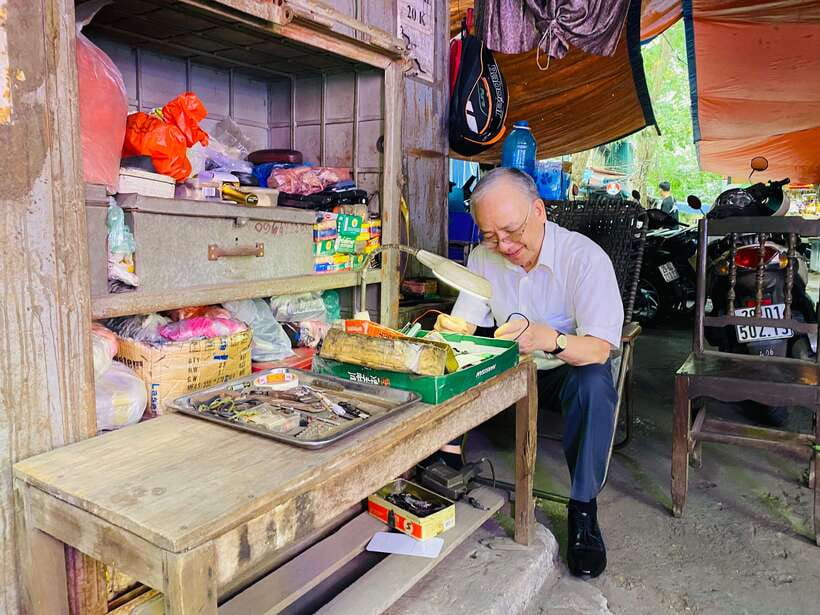
I recommend it most strongly for:
- People who want to understand Vietnam beyond the usual war narrative
- History fans interested in the Cold War, division, reunification, and planned economies
- First-time visitors who want cultural context early in their Hanoi stay
- Solo visitors who enjoy conversation and questions
- Families with older children or teenagers
- Anyone who prefers local streets and working neighborhoods to formal sightseeing
It may be less suitable if you have vertigo or epilepsy, both of which are listed as reasons not to take part. You should also think twice if three hours of walking, market streets, weather exposure, and serious historical discussion do not appeal to you.
The tour is in English. It operates rain or shine, and the end point is back at the original meeting point. You can cancel up to 24 hours ahead for a full refund, and the reserve-now, pay-later option helps if your Hanoi schedule is still changing.
Should you book the Hanoi war stories walk?
Book it if you want a thoughtful introduction to Hanoi’s recent past and the lives behind the headlines. The best parts are the Cho Gioi market area, the communal housing context, the Kham Thien memorial, and the open conversation with a strong guide.
Do not book it expecting a full military tour. You will not spend three hours moving from one famous battlefield exhibit to another. Instead, you will see how war, political division, economic policy, and reunification affected ordinary neighborhoods.
For many people, that is the better lesson. Start this walk near the beginning of your Hanoi visit, then use what you learn at Hoa Lo Prison, the military museums, and the city’s larger monuments. At $28, it is a practical, personal way to give those later sights more meaning.
FAQ
How long does the experience last?
The walking experience lasts about three hours and includes a short taxi ride halfway through.
Where does the tour start?
It starts at 24B Chua Vua Street, in front of Trường Trung học cơ sở Đoàn Kết. The meeting point is about 2.5 kilometers from Hoan Kiem Lake.
Where does the tour end?
The experience ends back at the original meeting point on Chua Vua Street.
What places are included?
The route includes the Cho Gioi area, the Kham Thien B52 memorial, and Hanoi Train Street. It may also include a look at communal housing connected with the planned-economy period.
Is food or a drink included?
Coffee or tea and a short taxi ride are included. Some departures have also included snacks, cold drinks, beer, or lunch, but those extras should not be assumed.
What should I bring?
Wear comfortable shoes and breathable clothing. Since the tour runs in all weather, check the forecast and bring an umbrella or raincoat if rain is expected.
Just added around Hanoi
- Private Ninh Binh Full Day (Bich Dong -Tam coc -Mua cave- Biking)★ 5.0 · 32 reviews
- Hanoi: Make 6 Iconic Coffees in a Heritage Home with Locals★ 5.0 · 32 reviews
- Retro Hop-on-hop-off Bonbon City Tour: Classic Package★ 4.0 · 32 reviews
- 15-Day Vietnam Itinerary All in One | Travel Package 2026-2027★ 5.0 · 32 reviews
- 10-Day Vietnam Discovery from North to South | Best Packages★ 5.0 · 32 reviews
- Verdure Lotus Classic Cruise in Halong Bay & Lan Ha Bay (2D1N)★ 4.0 · 32 reviews
- Full-day Guided Meditation Experience in Ha Noi★ 5.0 · 33 reviews
- Private Transfers Hanoi <=> Halong One Way by Limousine Vehicles★ 5.0 · 33 reviews
Vietnam War History Tours, compared.
Cu Chi Tunnels Half-Day Tour: Vietnam War Underground Network
Read our review →
Cu Chi Tunnels Half-Day Tour: Big Group Vietnam War Experience
Read our review →
DMZ Tour with Vinh Moc Tunnels and Khe Sanh Base
Read our review →

DMZ & Vinh Moc Tunnels – Private Historical Tour from Hue
Read our review →
Long Tan and Nui Dat – Australian Battlefield one-day tour from Ho Chi Minh City
Read our review →
Explore DMZ in Private: Vinh Moc & Khe Sanh from Hue
Read our review →Browse the lists this tour appears in