Reviewed · HANOI TOURS
Hanoi: Artisan Tour with Incense, Hat-Making, or Ceramics
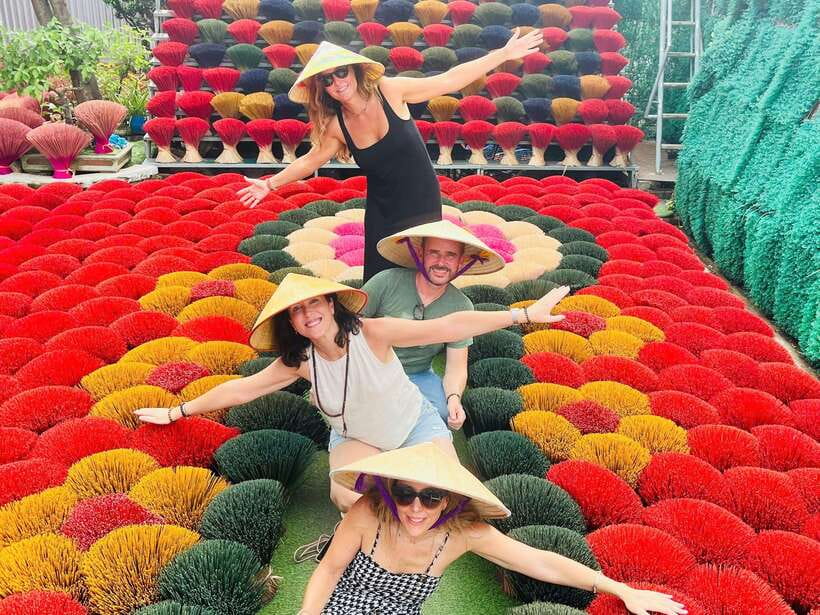
Hanoi’s best souvenirs are made by hand. This tour takes you beyond the city center to Quang Phu Cau, Chuong, and Bat Trang, where incense, conical hats, and ceramics are still part of daily work. I especially like the hands-on craft sessions and the chance to see real production rather than a staged display. The colorful incense yards are also made for photography.
The main drawback is the long road time and the slightly cramped bus noted by one participant. The half-day choices do not include lunch, and the optional Train Street drop-off leaves you to arrange your own ride back. Still, the guides, including Phong, Lilly, Lana, Louisa, and Lou Lou, receive strong praise for being friendly, patient, and helpful with photos.
In This Review
- Key things to know before you book
- Why these villages make a better Hanoi outing
- Quang Phu Cau and the art of incense
- Chuong Conical Hat Village and your included souvenir
- Bat Trang Ceramics Village and a chance to shape clay
- Choosing between the half-day and full-day plans
- Transport, guides, and the rhythm of the day
- Train Street as an optional final stop
- Price, inclusions, and small extra costs
- Who will enjoy this tour most
- Should you book Hanoi’s artisan village tour?
- FAQ
- How much does the artisan village tour cost?
- How long does the tour last?
- Where does hotel pickup take place?
- Is lunch included?
- Which villages can I visit?
- Can I make my own craft?
- Do I get to keep a conical hat?
- Is Train Street included?
- Can I cancel the booking?
Key things to know before you book
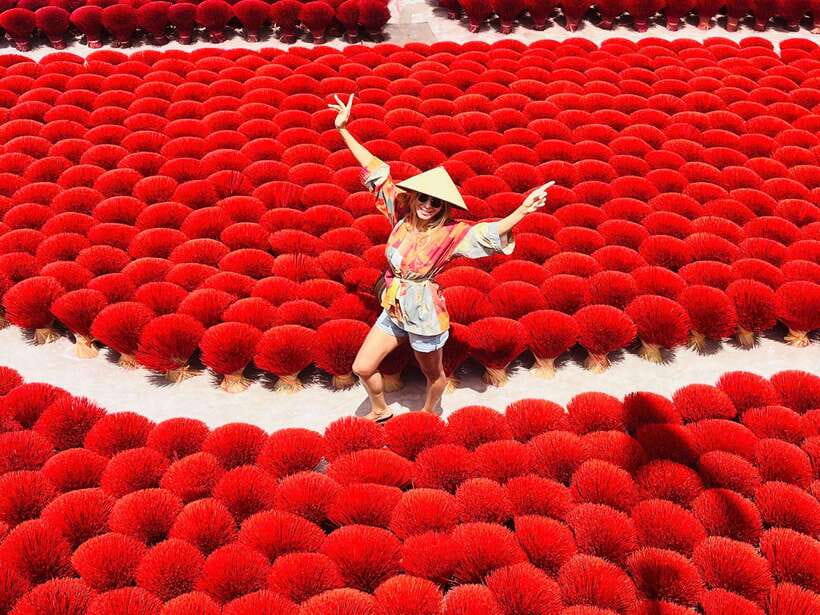
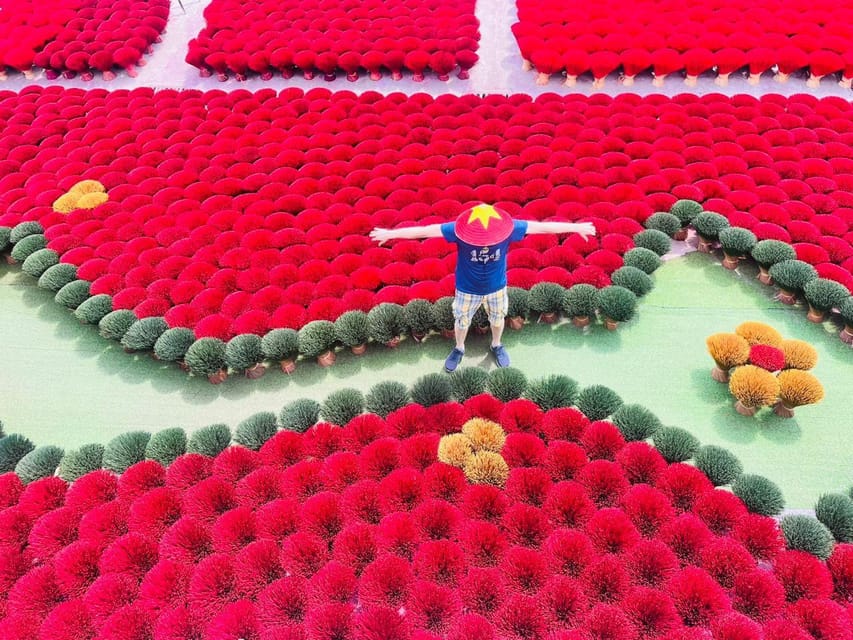
- Quang Phu Cau is the photo highlight: Bundles of incense sticks are arranged in bright patterns while you learn how they are made.
- Chuong adds a personal souvenir: You can help make and decorate a Vietnamese conical hat, which is included for each person.
- Bat Trang is the most hands-on stop: You can shape a cap, vase, or bowl with help from a local guide.
- The full-day plan covers three craft villages: It includes a home-cooked lunch and runs about 8:00 AM to 4:30 PM.
- Train Street is an optional finish: You may be dropped there, but you pay for your own coffee and arrange your own return.
- The tour is a strong value at $15 per person: The price includes transport from Hanoi’s Old Quarter, an English-speaking guide, entry fees, water, and lunch on the full-day option.
Why these villages make a better Hanoi outing
Hanoi gives you plenty of temples, lakes, museums, and street food. Those are worthwhile, but this excursion offers a different view of northern Vietnam. You see the work behind familiar objects: incense used in homes and religious settings, the conical hat recognized across the country, and ceramics shaped by hand in Bat Trang.
I like that the tour connects ordinary objects with the people who make them. You are not only looking at finished goods in a shop. You get to watch production, hear about local craft traditions, and take part in selected activities.
The setting also changes the pace of your day. Quang Phu Cau and Chuong are outside central Hanoi, and the journey takes about 70 minutes by bus before the village visits. That road time is part of the bargain. You trade a few hours in the city for a closer look at rural craft work.
The overall rating is 4.7 from 78 reviews, and the praise is fairly consistent. The strongest points are guide service, cultural explanation, friendly village visits, and the chance to make something yourself. The less positive note is practical rather than serious: the bus can feel tight, and the half-day option has no meal break.
A few more Hanoi trips worth weighing up
- Hanoi Jeep Tour: Food, Culture and Fun by Vietnam Army Jeep
★ 5.0 · 15,222 reviews - Full-Day Ninh Binh Highlights Tour from Hanoi
★ 5.0 · 7,761 reviews - Hanoi: Ha Long Bay Day Cruise – Swimming, Meal, Kayaking
★ 4.7 · 7,415 reviews
Quang Phu Cau and the art of incense
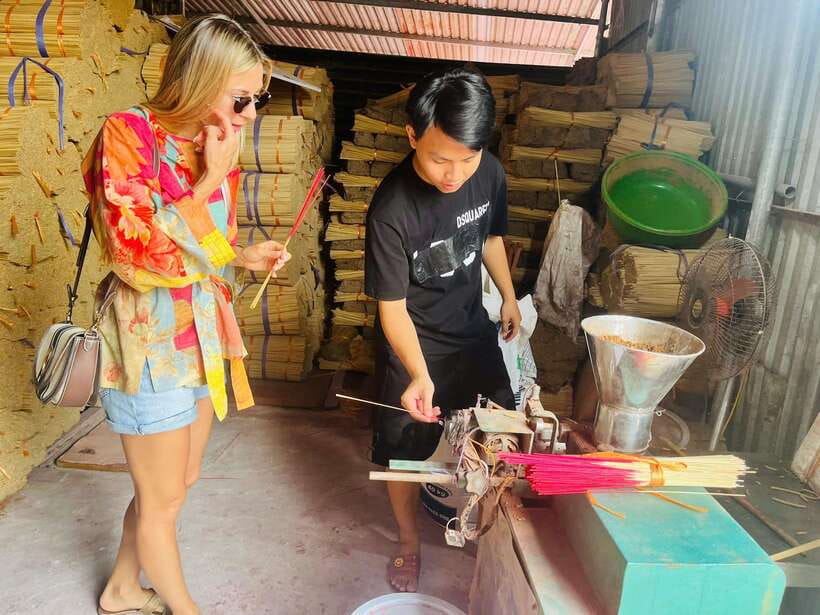
The first major stop is Quang Phu Cau, the incense-making village. You spend about 90 minutes visiting workshops and learning how incense is produced.
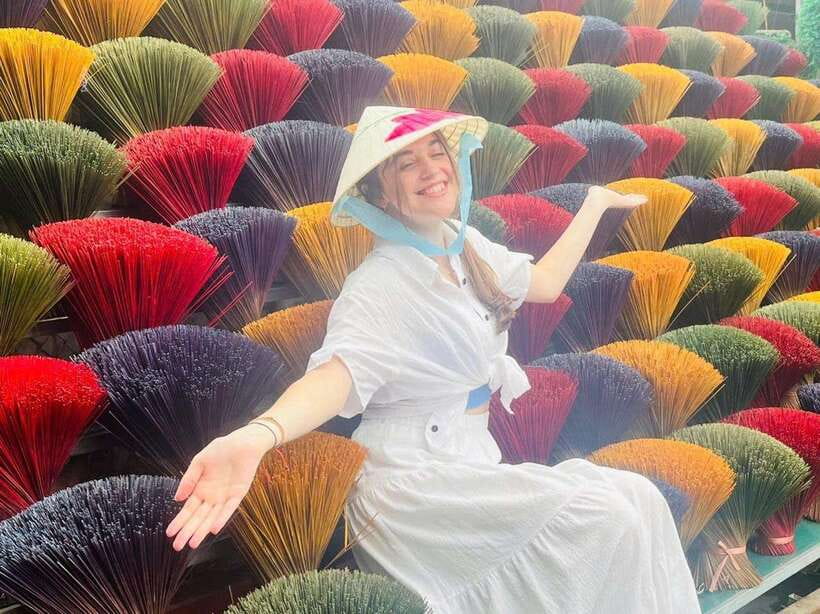
This is likely to be the most visually striking part of the outing. Incense sticks are arranged in colorful displays, creating strong patterns for photographs. You can stop at several places to take pictures, and the guide explains what you are seeing rather than simply giving you time to wander.
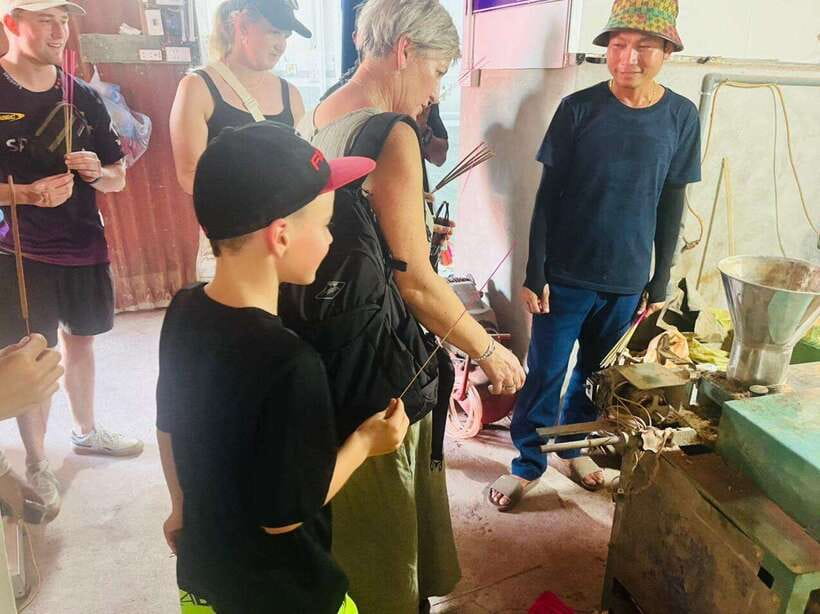
I particularly like the balance here. The visit is not presented as a polished show designed only for tourists. One participant described it as a real production visit with insight into incense-making and no forced sales presentation. That matters if you prefer to see working craft communities instead of a shop disguised as a cultural stop.
The village also gives you a useful lesson in design. Everyday incense is carefully prepared, bundled, and displayed before it reaches homes or places of worship. The colors and repeated shapes make excellent photographs, but the process behind those pictures is the real reason to come.
You should wear comfortable shoes. The program includes walking through the village and workshops, and the ground may not feel as easy as a paved city sidewalk. Bring a phone or camera with enough battery, since this is the stop where you may take the most pictures.
The activity may include making incense yourself, depending on the selected schedule and the way the visit is organized. The descriptions and past experiences point to a hands-on element, but the exact amount of personal participation can vary. I would treat the workshop as an opportunity, not a guaranteed private lesson.
Chuong Conical Hat Village and your included souvenir

From the incense village, the bus continues to Chuong Conical Hat Village. The journey between the craft areas is short, with the hat village about 15 minutes from the incense stop.
The conical hat, or nón lá, is one of Vietnam’s most recognizable objects. At Chuong, you see how artisans work on this familiar item and learn why careful shaping and decoration matter. The visit lasts about 90 minutes on the village-focused itinerary.
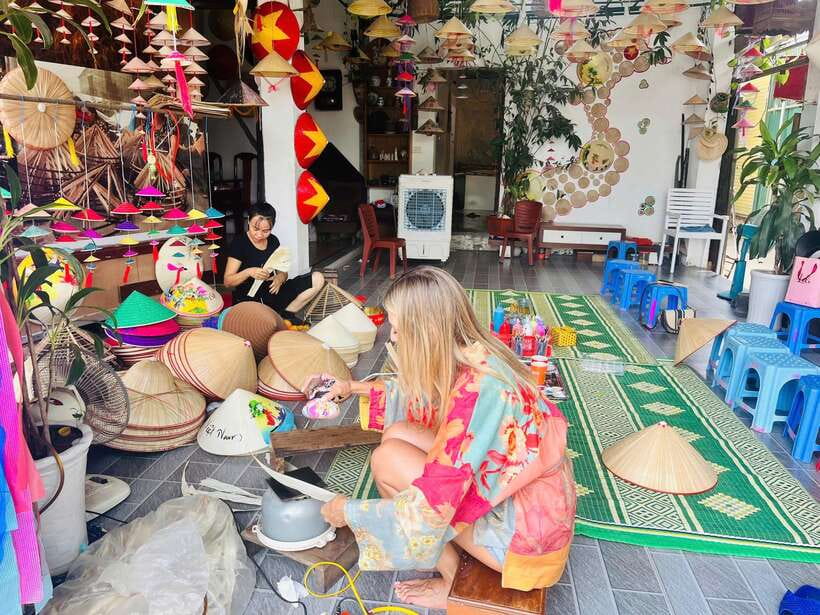
This stop offers more than a photo opportunity. You can take part in making and painting your own hat with help from the guide. Each person receives one conical hat, so you have a practical souvenir rather than another small object that disappears into your luggage.
That hands-on time is especially useful for families, couples, and solo visitors. Lilly was praised for patiently explaining the process and helping solo participants take pictures. Lana also received strong praise for explaining the village and giving participants time to make incense and decorate their hats.
The hat session may not turn you into a professional craft worker in one afternoon. You are taking part in a guided activity, not completing every stage of commercial production. Still, it gives you a better feel for the skill involved and turns a familiar symbol into something personal.
The main consideration is pace. On the full-day plan, you visit three villages, so the time at each place is limited. If you want a quiet, detailed workshop with long stretches of independent work, the half-day conical hat and incense option may suit you better than trying to fit all three villages into one day.
Bat Trang Ceramics Village and a chance to shape clay

Bat Trang is the ceramics option and the final village on the full-day itinerary. The visit lasts about 100 minutes, including a photo stop, guided visit, workshop, and time at an ancient house and ceramic artist’s workshop.
The village gives you a different type of craft experience. At Quang Phu Cau and Chuong, you mainly follow the work of artisans and take part in selected tasks. At Bat Trang, you can try making your own cap, vase, or bowl with guidance.
The word cap appears in the activity description, so it may refer to a small ceramic form or another craft item. The safe expectation is that you will be offered a guided ceramic-making activity, with the exact object depending on the session.
I like the way this stop adds context. You do not only handle clay and look at finished products. You visit an old house and workshop, speak with a ceramic artist, and hear about the village’s story. That conversation helps explain how local artwork connects with place and working tradition.
Bat Trang also appeals to people who prefer a quieter craft setting. The incense village is visually dramatic, while ceramics offers a slower, more tactile activity. If colorful photographs are your priority, Quang Phu Cau may be your favorite. If you want to make something yourself, Bat Trang may be the strongest stop.
The full-day program gives you about 100 minutes here after lunch and the first two villages. That is enough for an introduction and a short workshop, but not enough to inspect every ceramic product or spend a long time shopping. Keep your expectations practical and enjoy the variety.
A completely different sort of day out of Hanoi:
- Hanoi: Water Puppet Show Tickets
★ 4.6 · 7,029 reviews - Hanoi Motorbike Tour: Food, Culture and Fun by Vintage Motorbike
★ 5.0 · 6,699 reviews - Hanoi: Guided Food Tour with Train Street Visit
★ 4.9 · 6,239 reviews - Hanoi Cooking Class: Culture, Local Market & Meaning CSR Impact
★ 5.0 · 5,147 reviews
Choosing between the half-day and full-day plans
You have three useful choices.
The first half-day plan visits Quang Phu Cau and Chuong. It runs for about six hours, with a morning departure around 7:45 AM and return around 1:30 PM, or an afternoon departure around 11:45 AM and return around 5:30 PM. This is the best choice if you want the strongest cultural contrast without giving up your entire day.
There is no lunch on this option. Eat before departure or carry a snack, especially for the afternoon departure. The timing makes this plan easy to fit around other Hanoi activities, but you should not expect a full meal break during the village visits.
The second half-day plan goes to Bat Trang, with pickup around 8:00 AM or 12:00 PM. It focuses on ceramics, the old house and workshop, the artist conversation, and your own clay activity. Choose this if you care more about making a vase, bowl, or similar item than photographing incense displays and hats.
The full-day itinerary runs from about 8:00 AM to 4:30 PM. It covers incense, conical hats, and ceramics, with a home-cooked lunch at a local artisan’s house or riverside restaurant. You receive the broadest picture of traditional village craft, but the day is more structured and leaves less time for lingering.
For most first-time visitors, I would choose the full-day plan if the $15 price applies to your selected option. Transport, admission, guide service, water, lunch, and a conical hat make that unusually good value. If you dislike full days on a bus or have several Hanoi sights still waiting, choose the shorter incense and hat route.
Transport, guides, and the rhythm of the day
Pickup is available from hotels in Hanoi’s Old Quarter, with two listed pickup location options in Hoàn Kiếm. If you stay outside the Old Quarter, tell the operator in advance rather than assuming door-to-door service.
The bus journey to the first village takes about 70 minutes. One person found the bus a little cramped, so I would not book this expecting spacious coach seating. The driver was praised for handling the roads well, and the transfer gives the guide time to explain Hanoi, Vietnam, and the villages along the way.
Guide service is one of the tour’s strongest points. Phong was praised for his help and clear explanations. Lilly was patient with solo participants and took pictures. Lana was described as friendly and well informed, while Louisa and Lou Lou were praised for their energy, cultural explanations, and ability to keep the ride interesting.
A useful detail is the absence of pressure to buy things during the production visits. That makes the experience feel more comfortable. You can admire the finished work and decide for yourself if you want to purchase anything, though personal shopping is not included in the price.
The tour is offered in English, and private groups are available. The supplied information does not specify the standard group size, so you should ask if the size of the group matters to you.
Train Street as an optional final stop
Some schedules finish with drop-off at Hanoi’s famous Train Street. This can be a convenient way to combine a village outing with one of the city’s best-known photo stops.
The arrangement is important: the Train Street stop is optional, coffee and other purchases cost extra, and you are responsible for getting back to your hotel. You may take a taxi after your visit. Do not treat the drop-off as a return transfer to your Old Quarter hotel.
If you want a simple end to the day, return directly to your hotel instead. If Train Street is already on your Hanoi plan, the drop-off can save some backtracking. Just leave room in your budget for a drink and transport afterward.
Price, inclusions, and small extra costs
At $15 per person, the tour offers a lot for the money. The base inclusions are hotel pickup and drop-off in the Old Quarter, a comfortable bus, an English-speaking guide, entrance fees, one bottle of water, and a conical hat for each person. The full-day option also includes a home-cooked lunch.
Drinks beyond the included water and personal spending are extra. There is also a $5 per-person surcharge on New Year, Lunar New Year, Christmas, and national holidays.
The value is strongest when you choose the full-day itinerary and use the craft activities. You are paying not only for transport, but for access to several working villages, a guide who gives cultural context, lunch, and a souvenir. The half-day option remains good value, but remember that you must handle food yourself.
Free cancellation is available up to 24 hours before departure, and you can reserve now and pay later. The tour is not suitable for pregnant women or wheelchair users, and pets are not allowed.
Who will enjoy this tour most

I would recommend it to you if you want to see a side of Hanoi beyond central streets and major monuments. It works especially well for families, photographers, solo visitors who appreciate help with pictures, and anyone who likes making a small souvenir.
The full-day route suits people who want a broad introduction to village crafts. The incense and hat half-day suits you if you want a shorter outing with strong photo opportunities. The Bat Trang half-day is better if ceramics are your main interest.
I would think twice if you have limited mobility, dislike bus transfers, or need a very relaxed schedule. The tour involves several stops, walking, and fixed departure times. The bus may feel tight, and the full-day route covers a lot of ground.
Should you book Hanoi’s artisan village tour?
Book this tour if you want real craft production, simple hands-on activities, and strong value outside Hanoi. The guides are a major strength, the villages offer different kinds of experiences, and the included hat gives you a useful keepsake.
Choose the half-day incense and hat route for the best balance of time and variety. Choose Bat Trang if clay work matters most. Choose the full day if you want all three villages, lunch, and the clearest picture of how these traditional crafts fit into local life.
The only real cautions are the bus comfort, the lack of lunch on half-day schedules, and the need to arrange your own return after Train Street. For the low advertised price, those are manageable trade-offs.
FAQ
How much does the artisan village tour cost?
The advertised price is $15 per person. A $5 per-person surcharge applies on New Year, Lunar New Year, Christmas, and national holidays.
How long does the tour last?
The available choices range from about five to six hours for a half-day visit, or from 8:00 AM to 4:30 PM for the full-day itinerary.
Where does hotel pickup take place?
Pickup is offered from hotels in Hanoi’s Old Quarter area, including Hoàn Kiếm. If you stay outside that area, you should inform the operator in advance.
Is lunch included?
Lunch is included only with the full-day tour. The half-day options do not include lunch, so eat beforehand or bring a snack.
Which villages can I visit?
The options include Quang Phu Cau Incense Village, Chuong Conical Hat Crafting Village, and Bat Trang Ceramics Village. The full-day plan visits all three.
Can I make my own craft?
Yes. At Chuong, you can help make and decorate a conical hat. At Bat Trang, you can try making a cap, vase, or bowl with help from a guide.
Do I get to keep a conical hat?
Yes. One conical hat per person is included.
Is Train Street included?
Train Street is an optional drop-off point. Coffee and other personal expenses are not included, and you must arrange your own return to your hotel.
Can I cancel the booking?
You can cancel up to 24 hours in advance for a full refund. The tour also offers a reserve-now, pay-later option.
Just added around Hanoi
- Hanoi: Make 6 Iconic Coffees in a Heritage Home with Locals★ 5.0 · 32 reviews
- Private Ninh Binh Full Day (Bich Dong -Tam coc -Mua cave- Biking)★ 5.0 · 32 reviews
- 15-Day Vietnam Itinerary All in One | Travel Package 2026-2027★ 5.0 · 32 reviews
- Retro Hop-on-hop-off Bonbon City Tour: Classic Package★ 4.0 · 32 reviews
- 10-Day Vietnam Discovery from North to South | Best Packages★ 5.0 · 32 reviews
- Verdure Lotus Classic Cruise in Halong Bay & Lan Ha Bay (2D1N)★ 4.0 · 32 reviews
- Full-day Guided Meditation Experience in Ha Noi★ 5.0 · 33 reviews
- Private Transfers Hanoi <=> Halong One Way by Limousine Vehicles★ 5.0 · 33 reviews
Hanoi Tours, compared.

Hanoi Jeep Tour: Food, Culture and Fun by Vietnam Army Jeep
Read our review →
Full-Day Ninh Binh Highlights Tour from Hanoi
Read our review →
Ha Long Bay Day Cruise – Swimming, Meal, Kayaking
Read our review →
Hanoi Motorbike Tour: Food, Culture and Fun by Vintage Motorbike
Read our review →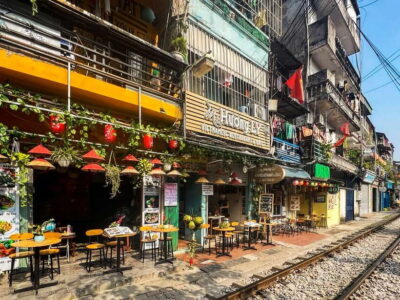
Hanoi Cooking Class: Culture, Local Market & Meaning CSR Impact
Read our review →