
Reviewed · COOKING CLASSES
5 Traditional Dishes Hanoi Cooking Class with Market Trip
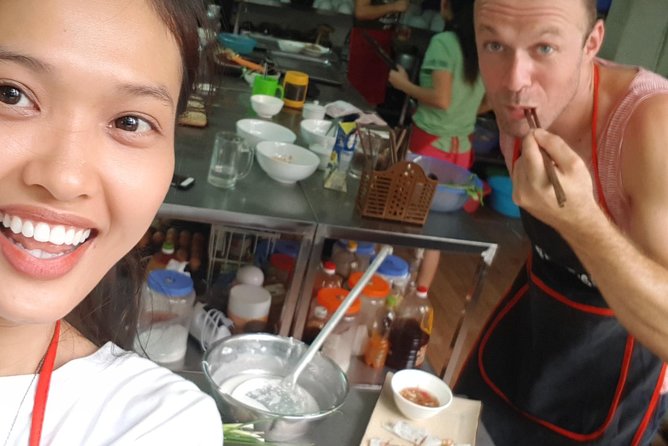
Hanoi puts dinner on your cutting board. This three-hour class combines a market visit with hands-on cooking, giving you five traditional dishes to prepare and eat. I like the local shopping stop, where you learn what the herbs, spices, and produce actually look like, and I like the small maximum of 10 people. The main consideration is pace: five dishes in roughly three hours means some preparation and cooking are handled for you.
The menu is a fine introduction to northern Vietnamese food: beef pho, bun cha, fried spring rolls, papaya salad, and egg coffee or chocolate. Guides such as Perla, Vy, Emmy, Lynn, Coco, Sunny, and Bella have been praised for clear English, humor, patience, and good adjustments for allergies. Still, this is a group class, so you may share tasks with a partner rather than cook every part alone.
In This Review
- Key points at a glance
- Why this Hanoi cooking class works so well
- Meeting at 8 P. Gia Ngư in Hanoi’s Old Quarter
- The market visit: learning ingredients before recipes
- Five dishes, five different lessons
- Pho bo, Hanoi’s beef noodle soup
- Bun cha, the Hanoi barbecue pork noodle dish
- Nem ran, or fried spring rolls
- Papaya salad
- Egg coffee or chocolate
- How hands-on is the class?
- Sitting down to eat your own work
- Vegetarian and dietary needs
- The cookbook, certificate, and lasting value
- Who should book this experience?
- Should you book the Hanoi cooking class?
- FAQ
- How long does the Hanoi cooking class last?
- Where does the class begin?
- Where does the experience end?
- Is hotel pickup included?
- What dishes will I learn to cook?
- Are vegetarian options available?
- How many people can join the class?
- What is included in the price?
- Can I cancel for a full refund?
Key points at a glance
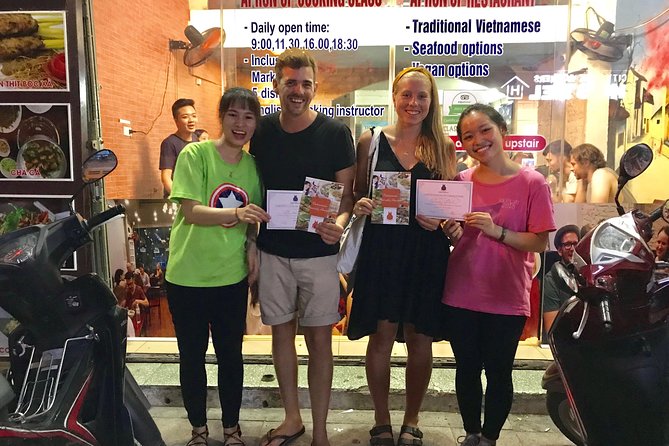
- Five Hanoi dishes in about 3 hours 15 minutes: You prepare pho bo, bun cha, nem ran, papaya salad, and egg coffee or chocolate.
- Market shopping comes first: Meet your English-speaking chef in Hanoi’s Old Quarter, then visit the city’s largest market to select ingredients.
- Small group format: The class caps attendance at 10 people, with some sessions running closer to six.
- Vegetarian options are available: Vegetarians and people who do not eat red meat can learn adapted versions of the dishes.
- You eat what you make: The class ends with a shared meal, coffee or tea, and complimentary Vietnamese rice vodka.
- Useful take-home extras: You receive a cookbook and certificate, giving the class value beyond one meal.
Why this Hanoi cooking class works so well
Cooking classes can be hit or miss. Some are mostly demonstrations, while others leave you chopping one onion and calling it a culinary education. This Hanoi experience aims for a useful middle ground: you shop for ingredients, take part in preparation, cook several dishes, and sit down to eat the results.
I like that the class begins away from the cooking table. Vietnamese food relies heavily on fresh herbs, vegetables, noodles, fish sauce, spices, and carefully balanced sauces. Seeing the ingredients at a local market gives you a better sense of how the food is built. You are not just handed a bowl of prepared items with no explanation.
The price is $35.07 per person, which is strong value for more than three hours of instruction, a market trip, five dishes, a full meal, rice vodka, a cookbook, and a certificate. You also avoid paying separately for lunch during the session. For a visitor who wants both food and a cultural activity, it offers more substance than a standard restaurant meal.
The trade-off is that the class moves quickly. Five dishes is an ambitious target, and several cooking stations may be active at once. Some preparation is done in advance, and one participant specifically noted that the barbecue pork was cooked for the group. You still take part, but this is not a private, slow-paced lesson where every step is yours from start to finish.
More Cooking Classes in Hanoi
- Hanoi Cooking Class: Culture, Local Market & Meaning CSR Impact
★ 5.0 · 5,147 reviews - Vietnamese Food Cooking Class in Hanoi with Market Experience
★ 5.0 · 778 reviews - Hanoi: 5 Local Dishes Cooking Class with Meal & Market Visit
★ 5.0 · 420 reviews
Meeting at 8 P. Gia Ngư in Hanoi’s Old Quarter
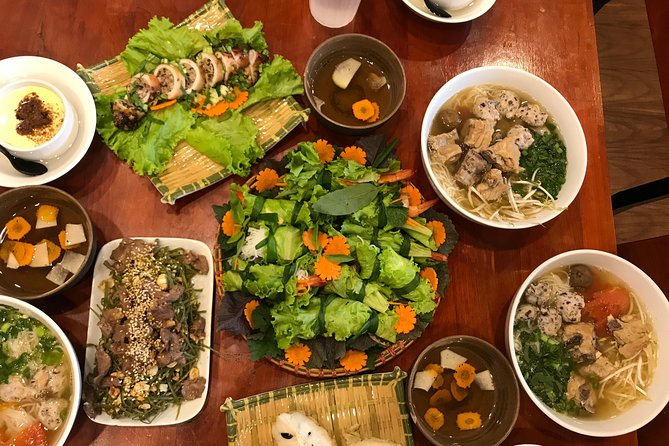
The class starts at 8 P. Gia Ngư, Hàng Bạc, Hoàn Kiếm, in Hanoi’s Old Quarter. You need to make your own way there because hotel pickup and drop-off are not included.
That location suits the experience. The Old Quarter is the right setting for a food class built around market shopping, street food, and local ingredients. Allow yourself time to find the meeting point, especially if you are navigating Hanoi for the first time. The activity ends back at the same place, so you do not need to arrange transport from a second location.
The tour lasts about three hours and 15 minutes, though the practical cooking portion may feel closer to two and a half hours depending on the group and the day. The timing matters if you have a tight sightseeing schedule. A morning class should leave much of the afternoon free, but you should not book another fixed activity immediately afterward.
The market visit: learning ingredients before recipes
The first real stop is Hanoi’s largest market, visited with the chef. This is more than a quick errand for onions and noodles. The guide helps you choose produce and spices, then explains the basic building blocks of Vietnamese cooking.
This part is especially helpful if Vietnamese markets are new to you. You get a closer look at the ingredients that can seem mysterious on a restaurant menu. Herbs and seasonings make more sense once you have seen and smelled them before cooking. The guide can also explain which items are used for broth, salads, marinades, noodles, and dipping sauces.
The market visit is not a separate sightseeing tour, so do not expect a long historical talk or a full market crawl. Its purpose is practical. You are gathering the food needed for the class, while learning how a local cook chooses ingredients.
I consider this one of the best parts for first-time visitors to Hanoi. It gives context to the meal without turning the morning into a lecture. You also get a short look at daily food shopping in the city, which is often more revealing than a formal museum stop.
Five dishes, five different lessons
The menu gives you a broad sample of Vietnamese cooking techniques and flavors. You are not making five versions of the same noodle dish.
A few more Hanoi trips worth weighing up
- Hanoi Coffee Workshop: Taste Salt, Coconut and Egg Coffee
★ 5.0 · 1,286 reviews - Hanoi: Salt Coffee Workshop Awake Your Senses With 6 Brews
★ 5.0 · 792 reviews - Hanoi: Handcrafted Wood Carving Workshop with Local Artisan
★ 5.0 · 733 reviews - Hanoi Cooking Class and Market Tour in Ancient House
★ 5.0 · 379 reviews
Pho bo, Hanoi’s beef noodle soup
Pho bo introduces you to one of Vietnam’s most famous dishes. The class covers the ingredients and method behind the beef noodle soup, including the herbs and spices that give the broth its character.
Pho is a useful dish to learn because it shows how much flavor can come from balance rather than heavy seasoning. The lesson may be less about making a long-simmered broth entirely from scratch and more about understanding the ingredients, assembly, and flavor profile. Some preparation is handled by the staff so the group can complete all five dishes within the allotted time.
You should leave with enough information to use the recipe at home, even if recreating a restaurant-style broth will require more time than this class allows.
Bun cha, the Hanoi barbecue pork noodle dish
Bun cha is closely tied to Hanoi. It pairs grilled pork with rice noodles, herbs, and dipping sauce, creating a meal that is smoky, fresh, salty, and lightly sweet.
This dish gives the class a chance to explain how Vietnamese meals balance several textures at once. You may help prepare the seasonings, noodles, herbs, or sauce, but not every group member will cook the pork from beginning to end. If full control over each item matters to you, this is worth knowing before booking.
Still, bun cha is a smart menu choice. It is distinctly associated with Hanoi and gives you something more specific than a generic stir-fry lesson.
Nem ran, or fried spring rolls
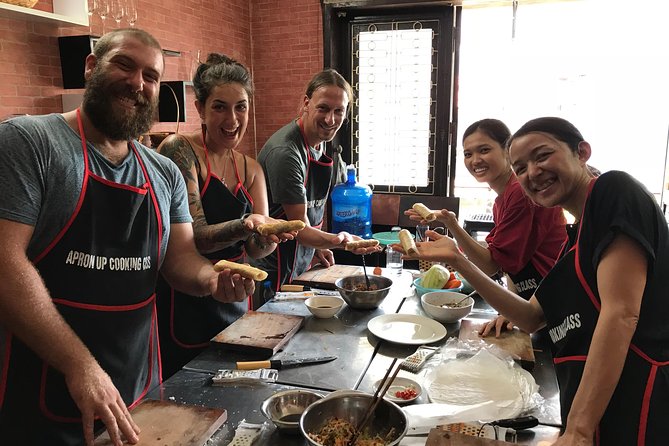
The fried spring rolls are the most obviously hands-on item. Rolling them teaches a simple skill that you can repeat at home, though getting the filling, wrapper, and shape right takes a little care.
This is also a social part of the session. People tend to work together at the preparation table, compare shapes, and help one another. The group format feels useful here rather than restrictive.
Papaya salad
Papaya salad adds crunch and freshness to a meal that also includes soup, noodles, pork, and fried food. It shows how Vietnamese cooking uses raw vegetables, herbs, and dressing to keep a menu from becoming too heavy.
The dish is likely to be one of the easier recipes to repeat at home because it does not depend on a long cooking time. It also helps you understand the sweet, sour, salty, and spicy balance found across Vietnamese food.
Egg coffee or chocolate
The final item is egg coffee or a chocolate version. Hanoi’s egg coffee is a memorable finish, with a sweet, creamy topping that turns a coffee into something closer to dessert.
This is a good choice for a cooking class because it uses a technique you might not think to try alone. If you do not drink coffee, the chocolate option gives you another route. The menu wording allows for either egg coffee or chocolate, so you should confirm the exact choice with the chef if this detail matters to you.
How hands-on is the class?
The class is genuinely participatory, but it is not a private kitchen where you control every pan. You cook with a partner and share the work across the group. One person may prepare vegetables while another handles a sauce or rolls spring rolls.
That arrangement suits couples, friends, and families. A participant specifically found the activity best suited to two people because the cooking is organized around partners. Solo visitors can still join, but you may be paired with someone else.
The chefs appear to be the biggest strength of the experience. Perla has been praised for keeping the session organized while explaining each step. Vy is noted for making the class lively and inclusive. Emmy received praise for friendly help and allergy awareness, while Coco was appreciated for involving children. Sunny was described as passionate and welcoming, and Bella received praise for making the lesson relaxed and humorous.
The names may vary by date, but the pattern is clear: the instructor makes a big difference. You can expect an English-speaking chef who explains the recipes, demonstrates techniques, and keeps the group moving.
Because several dishes are prepared at the same time, you need to pay attention. One person wanted more step-by-step guidance, which is a fair concern. If you prefer a very slow lesson with repeated demonstrations, you may find the pace brisk. If you enjoy working as part of a small group, the shared format should feel friendly and productive.
Sitting down to eat your own work
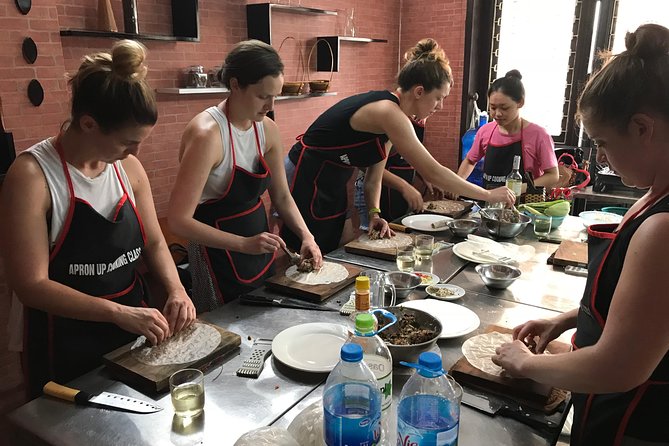
After the cooking, you sit down and eat the meal together. This is where the class pays off. You can compare the five dishes, see how the flavors work together, and ask final questions while everything is fresh.
The portions appear generous enough that you should arrive hungry. The menu includes soup, noodles, pork, spring rolls, salad, and a sweet coffee or chocolate finish, so this is effectively your meal for the session.
Complimentary Vietnamese rice vodka is included, along with coffee or tea. The rice vodka is a small cultural touch rather than the main event, and you can simply skip it if you do not drink alcohol.
There is also a practical pleasure in eating food you helped prepare. Even when the chef handled part of the prep, you understand the ingredients and process better than you would at a restaurant. The class turns lunch into a shared activity rather than a passive stop between sightseeing visits.
One small point to keep in mind is hygiene. One participant raised a concern in that area. No specific problem was described, but if food-handling standards are a major concern for you, pay attention to how the workspace is managed and use your own judgment.
Vegetarian and dietary needs
Vegetarians and people who avoid red meat can learn adapted versions of the menu. The class also has a record of making adjustments for allergies, including a family with a child who needed special consideration.
You should tell the provider about your dietary needs when booking and repeat them to the chef at the start. The supplied information confirms vegetarian and non-red-meat versions, but it does not spell out every possible substitution or guarantee that all allergies can be accommodated.
This is still a better setup than arriving at a fixed menu class with no flexibility. The staff have shown willingness to adjust dishes, but clear communication is important because five recipes are being prepared in a limited time.
The cookbook, certificate, and lasting value
The cookbook is more useful than a simple souvenir. It gives you a way to recreate the pho, spring rolls, egg coffee, and other dishes after returning home. Some people also receive recipes by email, but the experience specifically includes a cookbook, so you should expect written material to take home.
The certificate is a pleasant extra. It will not transform you into a Hanoi chef, but it makes the class feel complete, especially for children or anyone collecting cooking experiences during a trip.
For $35.07, these extras add to the value. The real worth comes from the meal and instruction, but the recipes help the experience continue after Vietnam. That is a strong reason to choose this class over a more expensive activity that ends when the meal is finished.
Who should book this experience?
I would choose this class if you want a compact introduction to Vietnamese cooking with real participation. It suits food-focused visitors, couples, solo diners willing to share a station, families, and anyone who wants an activity that combines eating with learning.
It is also a good pick near the end of a Vietnam trip. You will have tasted local food by then, and the class helps explain what you have been eating. Several participants treated it as a memorable final-night activity, though the morning schedule means you should check the available session time before planning around it.
You may want a different experience if you require a private class, need every dish cooked entirely by you, or prefer a slow technical course focused on one recipe. Five dishes in one session means breadth takes priority over detailed mastery.
The group maximum of 10 is a useful compromise. It is small enough for individual help, but large enough to create a social meal with people from different countries. Groups of six may feel particularly comfortable, while a full group could make some stations busier.
Should you book the Hanoi cooking class?
Book it if you value variety, local ingredients, and a meal you help create. The market visit adds useful context, the menu covers five very different dishes, and the price includes plenty of food plus a cookbook and certificate.
Go in expecting a lively group lesson, not a private chef apprenticeship. Some prep will be done for you, and the pace can be quick. For most visitors, that is a fair exchange for fitting pho, bun cha, spring rolls, papaya salad, and egg coffee into one well-organized Hanoi morning.
Free cancellation is available if you cancel at least 24 hours before the start time. Cancellations within 24 hours are not refunded, so keep that deadline in mind when making plans.
FAQ
How long does the Hanoi cooking class last?
The activity lasts approximately 3 hours and 15 minutes.
Where does the class begin?
It begins at 8 P. Gia Ngư, Hàng Bạc, Hoàn Kiếm, Hanoi, Vietnam.
Where does the experience end?
The class ends back at the meeting point.
Is hotel pickup included?
No. Hotel pickup and drop-off are not included, so you must travel to the meeting point yourself.
What dishes will I learn to cook?
The menu includes pho bo, bun cha, nem ran, papaya salad, and egg coffee or chocolate.
Are vegetarian options available?
Yes. Vegetarians and people who do not eat red meat can learn adapted vegetarian versions.
How many people can join the class?
The maximum group size is 10 people.
What is included in the price?
The experience includes an English-speaking chef, coffee or tea, Vietnamese rice vodka, the cooking class, the meal you prepare, a cookbook, and a certificate.
Can I cancel for a full refund?
Yes, if you cancel at least 24 hours before the experience start time. Cancellations made within 24 hours are not refunded.
More Market Visits
- Hanoi: Old Quarter Market Tour and Cooking Class with Meal
★ 4.8 · 192 reviews - Local Market Tour and Private Cooking Class
★ 5.0 · 104 reviews - Hanoi Cooking Class: Market Tour, Free Liquor & Coffee Tasting
★ 5.0 · 86 reviews - Cooking class with market visit
★ 5.0 · 49 reviews
More Cooking Classes
- Rose Kitchen Hanoi: Market, Cooking & Culture Tour + Free PickUp
★ 5.0 · 342 reviews - Hanoi Maya Kitchen: Traditional Cooking Class & Market Tour
★ 5.0 · 287 reviews - Hanoi Cooking Class: Pho/Bun Cha/Banh Xeo…+Free Egg/Salt Coffee
★ 5.0 · 267 reviews - Private Cooking Class with 5 dishes of your choice
★ 5.0 · 227 reviews
Just added around Hanoi
- Hanoi: Make 6 Iconic Coffees in a Heritage Home with Locals★ 5.0 · 32 reviews
- Private Ninh Binh Full Day (Bich Dong -Tam coc -Mua cave- Biking)★ 5.0 · 32 reviews
- 15-Day Vietnam Itinerary All in One | Travel Package 2026-2027★ 5.0 · 32 reviews
- Retro Hop-on-hop-off Bonbon City Tour: Classic Package★ 4.0 · 32 reviews
- Verdure Lotus Classic Cruise in Halong Bay & Lan Ha Bay (2D1N)★ 4.0 · 32 reviews
- 10-Day Vietnam Discovery from North to South | Best Packages★ 5.0 · 32 reviews
- Full-day Guided Meditation Experience in Ha Noi★ 5.0 · 33 reviews
- Private Transfers Hanoi <=> Halong One Way by Limousine Vehicles★ 5.0 · 33 reviews
Cooking Classes, compared.
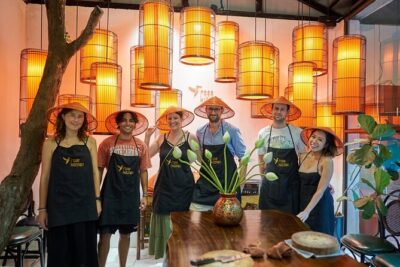
Hanoi Cooking Class: Culture, Local Market & Meaning CSR Impact
Read our review →
Cooking Class Hoi An:Local Market, Basket Boat, Fishing & Cooking
Read our review →
Hoi An Cooking Class(Market,BasketBoat Crabfishing&Cooking Class)
Read our review →
Mekong Delta Boat,Khotcake cooking Coconut Village,SmallGroup
Read our review →
Market Tour, Basket Boat Ride and Cooking Class
Read our review →
Cai Be Mekong Delta Tour: Cooking Class, Cycling & Craft Villages
Read our review →
Hoi An Cooking Class(Local market,Basket Boat,Fishing & Cooking)
Read our review →
Mekong Delta 4 Islands, TukTuk, Boat, Try Khot Cake Local Cooking
Read our review →Browse the lists this tour appears in