
Reviewed · COOKING CLASSES
Vietnamese Spring Rolls Cooking Class
Crispy rolls, local stories, and dinner included. This two-hour class at Saigonese Trekking House gives you a friendly, hands-on way to meet Vietnamese food beyond the restaurant table. You prepare fillings, roll rice paper, fry the rolls, and learn why Vietnamese cooking pays such close attention to fresh herbs, texture, and dipping sauce.
I like the small group limit of 10, which should make it easier to follow the cook and get help with the fiddly rolling. I also like that the class ends with a meal you made yourself, plus a recipe you can use at home.
The main point to consider is that the activity is centered on one dish and lasts about two hours. If you want a full market tour or a broad survey of Vietnamese cooking, this may feel focused, although the provider’s other cooking activities suggest that longer food experiences may also be available.
In This Review
- Key points before you book
- Why spring rolls are a smart Sapa cooking lesson
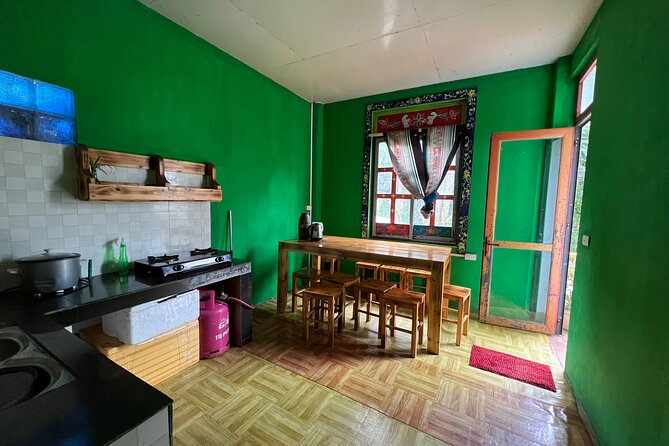
- Starting at Saigonese Trekking House
- Preparing the filling with fresh ingredients
- Rolling rice paper without tearing it
- Frying until the wrappers turn golden
- Sitting down to eat what you made
- What the $25 price really buys you
- Who will enjoy this class most
- Practical booking advice for Sapa
- Should you book the spring roll class?
- FAQ
- Where does the Vietnamese spring rolls cooking class begin?
- Where does the activity end?
- How long does the cooking class last?
- How much does the class cost?
- What food do you make during the class?
- Is dinner included?
- Is a drink included?
- How many people can join the class?
- What happens if bad weather cancels the class?
Key points before you book
- Crispy fried spring rolls are the focus: You prepare fillings with noodles, mushrooms, vegetables, herbs, spices, and rice paper.
- Hands-on from start to finish: You do not simply watch a demonstration. You practice rolling and frying your own food.
- Dinner is included: Sit down and eat the spring rolls you have prepared in a warm, family-style setting.
- Small maximum group: The class accepts no more than 10 people, a useful size for a practical lesson.
- Welcome drink included: Coffee or tea is served at the beginning.
- Good value at $25 per person: The price covers the class, food, welcome drink, and dinner, with group discounts available.
Why spring rolls are a smart Sapa cooking lesson
Sapa is often linked with mountain walks and village visits, but food offers another way to understand the area. A cooking class slows the day down and lets you focus on ordinary Vietnamese habits: how ingredients are combined, how textures are balanced, and how a dipping sauce can change the whole bite.
Fried spring rolls are a particularly useful dish to learn. The ingredients are familiar enough for a beginner, but the technique has a few traps. Rice paper can tear. A filling can become too wet. A roll can brown outside before the center is properly cooked. You get a practical lesson in all three problems.
The finished roll is meant to be more than simply crunchy. You are working toward a contrast between the crisp wrapper, soft noodles, tender vegetables, earthy mushrooms, and fresh herbs. The traditional dipping sauce adds another layer, usually bringing salty, sweet, sour, or savory notes into the same mouthful. The class uses this dish to explain how Vietnamese meals balance flavors and textures rather than relying on one heavy taste.
A few more Sapa trips worth weighing up
- Hanoi Cooking Class: Culture, Local Market & Meaning CSR Impact
★ 5.0 · 5,147 reviews - 5 Traditional Dishes Hanoi Cooking Class with Market Trip
★ 5.0 · 4,890 reviews - Hoi An: Vietnamese Coffee Culture and Coffee Making Class
★ 4.9 · 4,006 reviews
Starting at Saigonese Trekking House
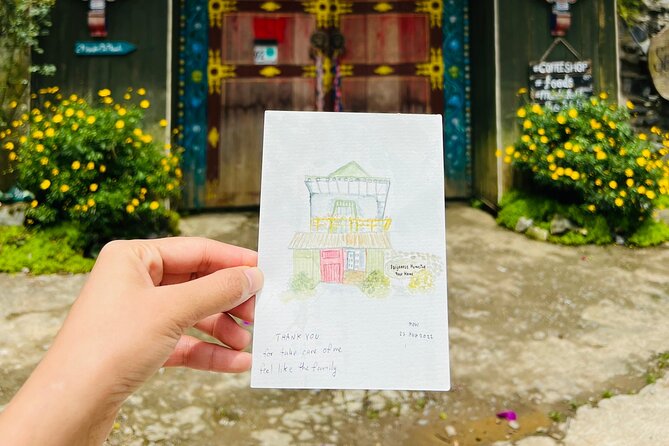
The class begins at Saigonese Trekking House, 02 Nguyễn Chí Thanh, in Sa Pa, Lào Cai. The meeting point is near public transportation, which makes it a practical place to reach within town. The activity also ends back at this same location, so you do not need to arrange a separate return transfer.
At the start, expect a coffee or tea welcome drink and an introduction to the ingredients. The class description points to fresh herbs, vegetables, local spices, noodles, mushrooms, and rice paper. That opening matters because it gives you a sense of the dish before the cooking begins, rather than handing you a bowl of prepared ingredients with no explanation.
The setting is intended to feel family-style and welcoming. That is useful if you are curious about Vietnamese eating habits, not just the mechanics of folding a spring roll. Previous cooking sessions at this venue have also included explanations of local food customs, so you may hear about how Vietnamese people serve and enjoy dishes as well as how they prepare them.
The exact sequence can vary, especially if the class is adapted for the group. One past food activity at the same venue included a trip to the market for ingredients, but that is not listed as a fixed part of this spring roll experience. Do not book this class expecting a guaranteed market visit.
Preparing the filling with fresh ingredients
Once the ingredients are introduced, you move into preparation. The filling includes noodles, mushrooms, and vegetables, with herbs and spices helping to keep the mixture fragrant rather than bland. This is where the class becomes more useful than a recipe card, since you can see the texture the mixture should have before it goes into the rice paper.
For a first-time cook, the filling is the part to watch carefully. It needs enough moisture to taste good, but too much liquid can weaken the wrapper and cause problems during frying. A local cook can show you how the ingredients fit together and how tightly the mixture should be packed.
You can also ask questions as you work. The group limit of 10 is important here. In a large class, a demonstration can become hard to see and a teacher may not have time to correct each person’s technique. This smaller format should give you a better chance to ask for help with filling, folding, or frying.
The class is described as suitable for vegetarians, food lovers, and people simply curious about Vietnamese cuisine. That makes the ingredient stage especially important. If your diet has other restrictions, ask before booking, since the supplied information confirms vegetarian suitability but does not give a full list of dietary accommodations.
Rolling rice paper without tearing it
Rolling is the most hands-on part of the lesson. You place the filling on rice paper, fold the wrapper, and form a compact roll that can survive the hot oil. It sounds simple until you try to make several rolls with the same shape and tightness.
A roll that is too loose may open while frying. One that is too tight may split as the filling expands. The class gives you time to practice this basic Vietnamese technique under local guidance, which is far more helpful than trying to copy a short recipe video at home.
This is also where the class works well for couples, friends, and families. You can compare your shapes, laugh at the uneven ones, and improve with each roll. The activity is social without requiring a high level of cooking skill.
You should not expect every spring roll to look perfect. That is part of the value. By the end, you should understand the method well enough to repeat it, and the recipe you take home gives you a starting point for making the dish again.
More Cooking Classes:
- Sapa Trekking & Cooking with H’Mong Locals –Local Culture
★ 5.0 · 36 reviews - Cooking Class Hoi An:Local Market, Basket Boat, Fishing & Cooking
★ 5.0 · 3,660 reviews - Hoi An Cooking Class(Market,BasketBoat Crabfishing&Cooking Class)
★ 5.0 · 3,386 reviews - HCM:Mekong Delta Boat,Khotcake cooking Coconut Village,SmallGroup
★ 5.0 · 2,374 reviews
Frying until the wrappers turn golden
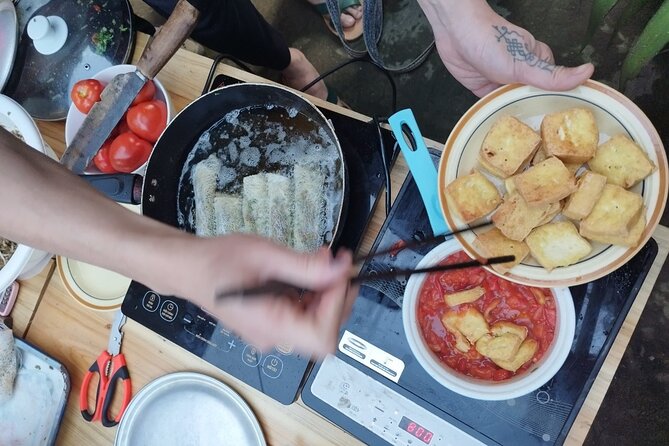
The final technique is frying. The aim is a golden, crunchy exterior while keeping the filling properly cooked. Since hot oil is involved, the local cook’s instructions are important, especially for anyone who does not often fry food at home.
The class presents frying as a practical lesson in timing and texture. You learn to look for color and crispness rather than simply relying on a timer. This is the kind of detail that can be hard to get from written instructions alone, because the result depends on the size of the rolls and the cooking conditions.
The finished spring rolls are served with a traditional dipping sauce. That sauce is not a side note. It cuts through the fried wrapper and gives the dish its familiar Vietnamese balance. Try the roll first on its own, then with the sauce, so you can notice how much the flavor changes.
Fresh herbs and vegetables also help keep the meal from feeling too heavy. The food is fried, but the overall experience is built around contrast: hot and fresh, crisp and soft, savory and bright.
Sitting down to eat what you made
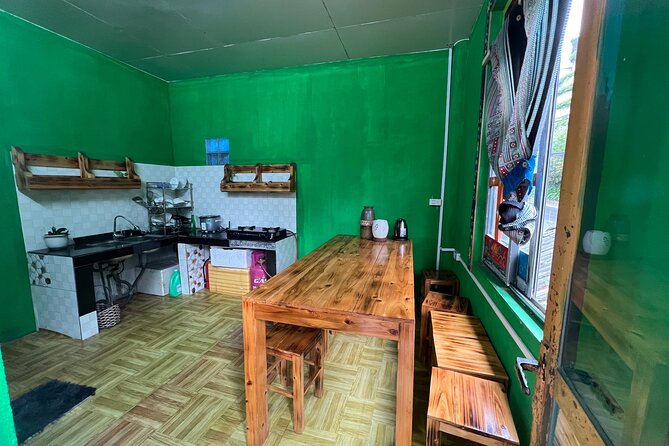
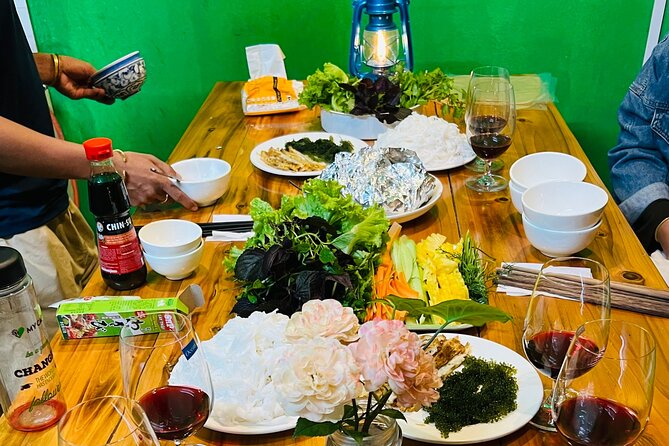
After the cooking, you sit down for dinner at the meeting point. Dinner is included in the $25 price, so you are not paying for instruction and then buying a separate meal afterward. You also receive the welcome coffee or tea, which adds a small but useful touch at the beginning.
Eating your own work is one of the strongest parts of this experience. A restaurant can show you what a good spring roll tastes like. This class lets you connect the taste with the process, including the filling, the rolling, the frying, and the dipping sauce.
The family-style setting also leaves room for conversation. One past session at the venue lasted closer to four hours because the hosts and participants spent extra time cooking and talking. The advertised spring roll class is about two hours, so do not plan on that longer length, but the example suggests that the atmosphere may be more conversational than a quick, formal lesson.
If your schedule is tight, allow a little breathing room around the stated duration. The class is approximately two hours, not a precise promise that you will be walking away at a particular minute.
What the $25 price really buys you
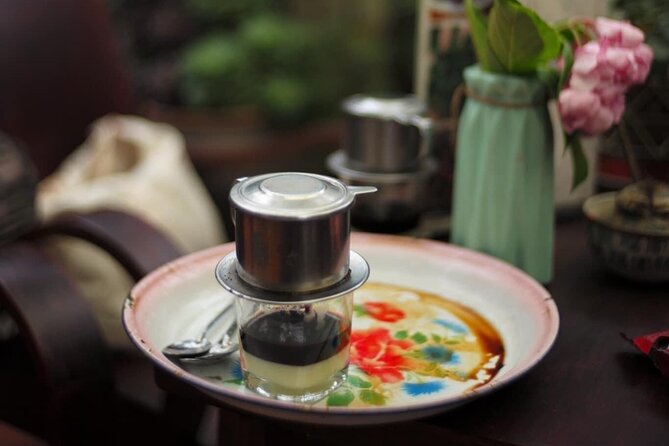
At $25 per person, this is a fair price for a short food activity in Sapa. You receive cooking instruction, ingredients, a welcome coffee or tea, dinner, and a recipe to take home. The meal alone is not the main value. The useful part is learning a technique you can repeat after your holiday.
Group discounts may improve the price for friends or families booking together. The small maximum of 10 also helps protect the quality of the lesson. A cheaper class with a much larger group might offer less personal guidance, though the supplied information does not give a direct comparison.
The value is strongest if you enjoy practical activities. If you only want to eat spring rolls, a local restaurant will be faster and probably cheaper. If you want to understand how the dish is made and take part in the process, the class earns its price.
There is no mention of hotel pickup, private transport, or extra sightseeing. You should budget your time and transport to reach 02 Nguyễn Chí Thanh yourself. Since the activity ends at the same place, the return portion is simple.
Who will enjoy this class most
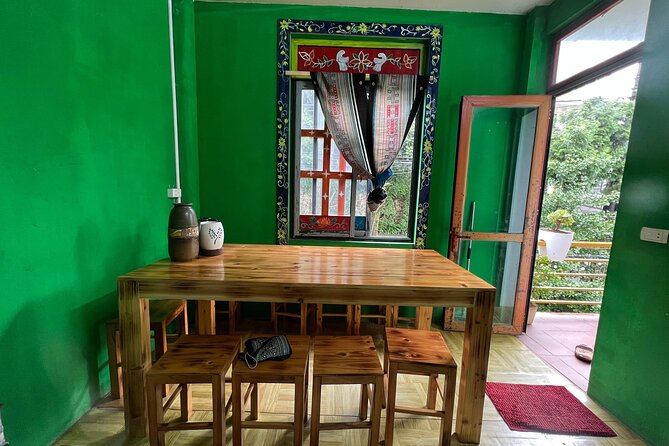
I would recommend this experience to you if you like food, prefer small-group activities, or want a gentle cultural activity between more active days in Sapa. It suits beginners because the cook guides you through preparation, rolling, and frying rather than expecting advanced kitchen skills.
It is also a good choice for couples. The work is easy to share, and the meal creates a natural finish to the activity. Families and small groups may benefit from the group discount, although the available information does not specify the discount amount.
Vegetarians are specifically welcomed, which makes this class more appealing than cooking activities built around meat. The recipe and ingredients listed here focus on noodles, mushrooms, vegetables, herbs, and spices.
You may want to choose something else if you need a fully customized menu, dislike fried food, or want an entire evening devoted to several Vietnamese dishes. The class has a clear purpose: learn one famous comfort food and enjoy it fresh.
Practical booking advice for Sapa
You receive confirmation at the time of booking. The class has a maximum of 10 participants, so booking ahead is sensible if you are visiting during a busy period or want to attend as a group.
Free cancellation is available up to 24 hours before the start time for a full refund. Changes or cancellations made less than 24 hours before the start time are not accepted for a refund, and the cut-off follows local time in Vietnam.
Good weather is required for the experience. If poor weather causes cancellation, you are offered another date or a full refund. Tips are not included, so carry a little extra if you feel the cook provided good personal help.
The meeting point is easy to identify from the address, but allow enough time to get there. Since no pickup service is included in the details, do not assume a vehicle will collect you from your hotel.
Should you book the spring roll class?
Book it if you want a relaxed, useful food lesson with dinner included and a genuine chance to talk with a local cook. The 100 percent recommendation rate and five-star rating point to a consistently well-liked experience, especially for its friendly instruction, cultural conversation, and the fun of making a local dish yourself.
I would treat the class as a focused introduction, not a complete Vietnamese cooking course. Its strongest features are the small group, the hands-on work, the included meal, and the recipe you can take home. For $25, that is a solid choice for a free evening or a quieter break from Sapa’s outdoor activities.
FAQ
Where does the Vietnamese spring rolls cooking class begin?
It begins at Saigonese Trekking House, 02 Nguyễn Chí Thanh, TT. Sa Pa, Sa Pa, Lào Cai, Vietnam.
Where does the activity end?
The class ends back at the same meeting point, Saigonese Trekking House.
How long does the cooking class last?
The experience lasts approximately two hours.
How much does the class cost?
The listed price is $25 per person. Group discounts are available.
What food do you make during the class?
You learn to make crispy fried Vietnamese spring rolls with rice paper, noodles, mushrooms, vegetables, fresh herbs, local spices, and a traditional dipping sauce.
Is dinner included?
Yes. Dinner is included, and you eat the spring rolls you prepare during the class.
Is a drink included?
Yes. Coffee and/or tea is provided as a welcome drink.
How many people can join the class?
The activity accepts a maximum of 10 travelers.
What happens if bad weather cancels the class?
If poor weather causes cancellation, you are offered a different date or a full refund. You can also cancel up to 24 hours before the start time for a full refund.
Just added around Sapa
- Sapa trekking 2 days small group★ 5.0 · 32 reviews
- From Sapa: 3 Day Ha Giang Loop Guided Motorbike Tour With Rider★ 5.0 · 33 reviews
- 2 Day Trekking Experience: Explore with knowledgeable local guide★ 5.0 · 34 reviews
- Sapa: 3-Day Ha Giang Loop Motorbike Tour★ 4.9 · 34 reviews
- Trek Adventure in Ta Van Village, Lao Chai★ 5.0 · 36 reviews
- Sapa Trekking & Cooking with H’Mong Locals –Local Culture★ 5.0 · 36 reviews
- Sapa Private Car Rental–Half & Full Day & English Speaking Driver★ 5.0 · 37 reviews
- Sapa: Local Exploration on a Guided Motorbike Tour★ 4.2 · 37 reviews
Cooking Classes, compared.
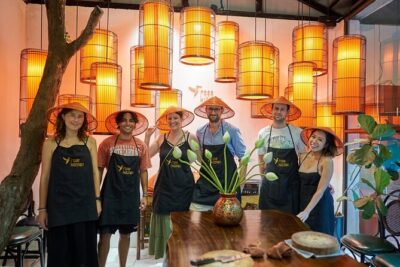
Hanoi Cooking Class: Culture, Local Market & Meaning CSR Impact
Read our review →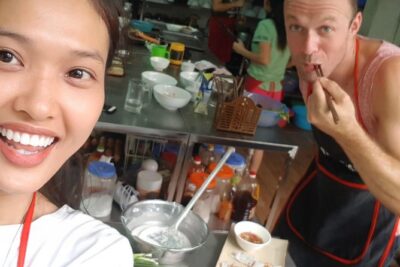
5 Traditional Dishes Hanoi Cooking Class with Market Trip
Read our review →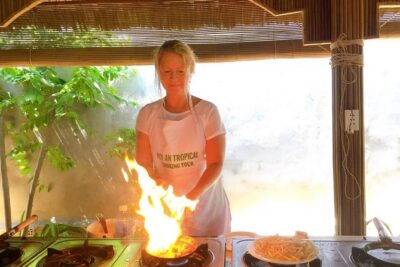
Cooking Class Hoi An:Local Market, Basket Boat, Fishing & Cooking
Read our review →
Hoi An Cooking Class(Market,BasketBoat Crabfishing&Cooking Class)
Read our review →
Mekong Delta Boat,Khotcake cooking Coconut Village,SmallGroup
Read our review →
Market Tour, Basket Boat Ride and Cooking Class
Read our review →
Cai Be Mekong Delta Tour: Cooking Class, Cycling & Craft Villages
Read our review →
Hoi An Cooking Class(Local market,Basket Boat,Fishing & Cooking)
Read our review →Browse the lists this tour appears in