

Reviewed · COFFEE EXPERIENCES
Coffee Workshop in Ho Chi Minh City: Discover the art of coffee
Coffee here is more than a caffeine stop. This two-hour Ho Chi Minh City workshop takes you from coffee cherry to finished cup, with hands-on work that makes Vietnam’s famous Robusta beans easier to understand. I like the chance to handle coffee fruit and sort green beans, and I like that you finish by brewing Vietnamese coffee with a traditional phin filter. The group is capped at 15, so the class should feel more personal than a large tasting session.
The main thing to consider is the teaching style. Much of the class follows the SCA Introduction to Coffee program, so it includes technical terms, roasting theory, and coffee tasting methods. One participant found the session more suited to a serious barista than to someone seeking a few simple home-brewing tips, and English was difficult to follow with one young instructor.
In This Review
- What makes this coffee workshop worth your time
- Starting in Phu My Hung, District 7
- Coffee farming begins with the cherry
- Green beans reveal the quality gap
- Three roast levels show how flavor changes
- Cupping puts the roast comparison to work
- The phin lesson gives the class a useful finish
- The instructors can shape the experience
- What $71 gets you
- Who should book this class
- Practical advice before you go
- Should you book the Ho Chi Minh City coffee workshop?
- FAQ
- How long does the coffee workshop last?
- Where does the workshop begin and end?
- What will I learn during the class?
- How many people can join the workshop?
- Is the workshop available with a mobile ticket?
- Can I cancel for a full refund?
What makes this coffee workshop worth your time
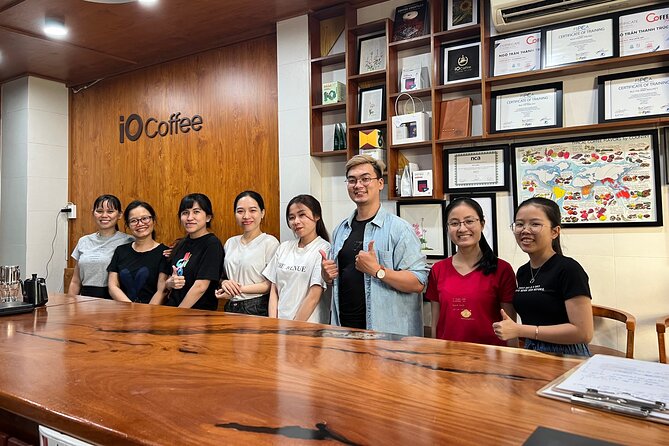
- You handle real coffee materials: Examine ripe coffee cherries, touch green beans, and remove defective beans by hand.
- You compare three roast levels: Taste how roasting changes coffee’s aroma and flavor, then work out which style suits you.
- You see three processing methods: A small demonstration shows how coffee cherries can be prepared after harvest.
- You make coffee with a phin: The class ends with a practical Vietnamese brewing lesson you can repeat at home.
- You may receive near-private instruction: The maximum group size is 15, and one session had only one participant.
- You learn about Fine Robusta: The workshop gives proper attention to the bean that built Vietnam’s coffee identity.
Starting in Phu My Hung, District 7
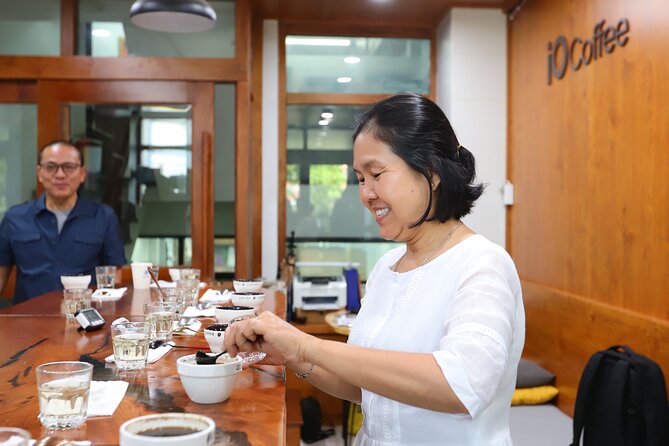
The class begins at The Signature M7, in the lobby of Block A and B in Phu My Hung, District 7. This is not a walk-up coffee tasting in central District 1, so check the meeting point carefully before setting out. The location is near public transportation, but the supplied details do not specify a hotel pickup or a transfer service.
That matters because a two-hour class can turn into a much longer outing if you misjudge the trip across Ho Chi Minh City. I would save the exact address, allow time to find the correct lobby, and arrive ready to begin. Your mobile ticket is accepted, and confirmation is issued when you book.
The workshop ends at the same place. That makes planning simple, but it also means you need to arrange your own onward transport. If you are staying elsewhere in the city, factor in the return journey when comparing the $71 price with a casual café visit.
More City Tours in Ho Chi Minh City
- Cu Chi Tunnels Tour from HCM City – Morning or Afternoon
★ 5.0 · 15,833 reviews - From HCM City: Mekong Delta Tour with Sampan Journey
★ 4.5 · 13,132 reviews - Ho Chi Minh City Street Food Tour & Sightseeing By Motorbike
★ 5.0 · 9,413 reviews
Coffee farming begins with the cherry
The opening section explains how coffee is harvested and how farmers select ripe fruit. This is useful because many café menus jump straight to roast and brewing, leaving out the plant itself. Here, you get to examine the structure of a coffee cherry and connect the bright outer fruit with the green seed inside.
The hands-on element is the real strength. You can touch and peel the coffee fruit, then look at green beans before they are roasted. That small act makes the process clear: the bean in your cup begins as a raw agricultural product, not as a dark, shiny coffee bean.
You also see a small demonstration of three coffee-processing methods. The supplied information does not name each method, so you should not expect a detailed farm visit or a full production tour. Still, comparing the methods helps show why the same type of coffee can taste different before roasting even begins.
A particularly useful exercise is sorting green beans and removing defective ones. You are not simply told that quality matters. You get to look for yourself and make a selection. For anyone who buys coffee to brew at home, this is a practical lesson in paying attention to the beans rather than relying only on labels.
Green beans reveal the quality gap
The class makes a clear distinction between low-quality and high-quality coffee. That can be valuable in Vietnam, where coffee is sold in many forms and the drink may include sugar, condensed milk, or other additions that hide the bean’s character.
The sorting exercise gives you a basic way to think about quality. You inspect the raw beans, notice defects, and consider how careful selection affects the final drink. It will not turn you into a professional grader in two hours, but it gives you a better vocabulary and a sharper eye.
I like this part because it avoids treating coffee as a mysterious luxury product. You see that quality begins with ordinary physical choices: harvesting ripe fruit, processing it properly, and removing damaged beans. That is a more useful lesson than simply being handed an expensive cup.
The workshop focuses on Vietnam’s Robusta production, including Fine Robusta. This is important context. Vietnam is one of the world’s leading coffee-producing countries, and Robusta is central to its coffee culture. The class does not treat Arabica as the only bean worth discussing. Instead, it gives Vietnam’s main coffee style proper attention.
Three roast levels show how flavor changes
Next comes hands-on roasting. You work with three roast levels and taste the results. This is the point where the raw green bean becomes familiar coffee, and the contrast can help you understand why roast choice matters.
A darker roast may seem more forceful, while a lighter roast can make other flavors easier to notice. The exact tastes will depend on the samples and your own palate, so I would treat this as a guided comparison rather than a promise of a fixed flavor list.
The useful takeaway is personal. You get to decide what you prefer instead of being told which roast is best. That makes the activity practical for future coffee purchases. If you like a stronger, heavier cup, one roast may appeal more. If you want more distinct bean character, another may suit you better.
The roasting session is also where the class may feel technical. It follows material from the SCA Introduction to Coffee program, so you may hear careful explanations about processing, roasting, and flavor development. That is good news if you already care about coffee science. If you only want a quick lesson in making Vietnamese iced coffee, the pace may feel more serious than expected.
One person found the workshop aimed at very serious baristas and wanted simpler home-brewing advice. That is a fair warning. The class is not just a relaxed café demonstration. It spends time explaining why coffee changes, not only showing you what to do.
More Coffee Tours in Ho Chi Minh City
- Fun & Easy Vietnamese Coffee Workshop in Hồ Chí Minh City
★ 5.0 · 293 reviews - Vietnamese Coffee & Culture Exploration in Hồ Chí Minh City
★ 5.0 · 202 reviews - Decadent Vietnamese “Egg Coffee” Workshop in Hồ Chí Minh City
★ 5.0 · 150 reviews - 1 hour Egg Coffee Cooking Class with Snack and Local Instructor
★ 5.0 · 72 reviews
Cupping puts the roast comparison to work
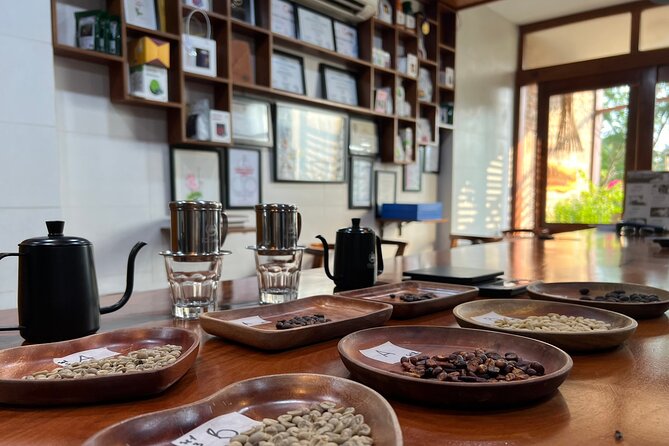
The tasting section, often called cupping, lets you compare the roast levels in the cup. You explore coffee flavor without relying on milk or condensed milk to soften the differences.
This can be a useful bridge between theory and drinking. You have already seen the green beans and roasting process. Now you taste the result. The connection is direct, and it helps you understand why trained tasters compare coffees in a controlled way.
Do not expect a grand tasting menu. The supplied details promise samples and different roast levels, not a long flight of coffees from many farms. The value comes from the comparison, not from quantity.
I would pay attention to texture, bitterness, aroma, and aftertaste. You do not need a polished tasting vocabulary. The point is to notice what changes from one roast to another and decide what you enjoy. That makes the lesson approachable, even when the technical explanations become more advanced.
The phin lesson gives the class a useful finish
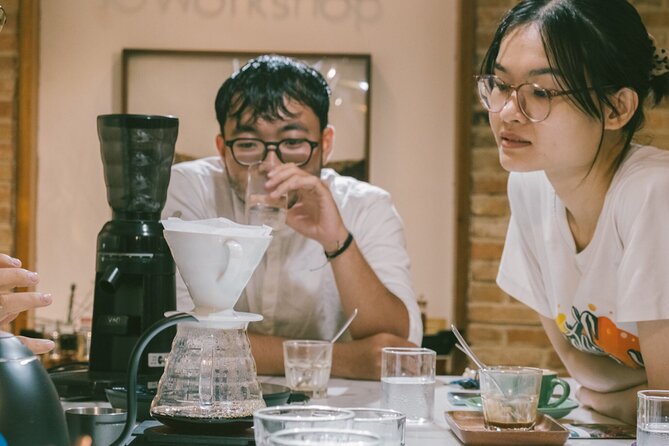
The final brewing activity focuses on traditional Vietnamese phin coffee. A phin is a small metal filter that sits over your cup and lets water pass slowly through ground coffee. It is simple, compact, and closely tied to everyday Vietnamese coffee culture.
You make your own cup rather than only watching an instructor. That is one of the best features of the experience because the lesson continues after you leave Ho Chi Minh City. Once you understand the basic method, you can try it at home with a phin and Vietnamese coffee.
The workshop presents phin brewing as a way to taste the natural character of Fine Robusta. That framing is useful. Vietnamese coffee is often associated with a strong, sweet drink made with condensed milk, but this class gives you a chance to consider the bean itself before additions change the flavor.
The exact recipe, grind size, water temperature, and brewing time are not provided in the tour details. You should listen closely during the demonstration and ask questions while you have the instructor nearby. If English is not equally clear from every instructor, repeat the key steps back to the guide so you leave confident about the method.
The finish also gives the two-hour class a satisfying shape. You begin with coffee as a crop, move through selection and roasting, taste the result, and then prepare a traditional cup. It is a full chain of events rather than a single tasting.
The instructors can shape the experience
Named instructors connected with the class include Chris and Danny. Chris received praise for being kind, funny, and able to adjust the session when only one participant attended. Danny was described as patient and clear in explaining the details.
That flexibility matters. A class limited to 15 people may be small enough for questions, but the actual atmosphere can change with attendance. A nearly private session can give you more time to handle the samples and ask about your own brewing habits. A fuller group may feel more like a formal class.
There is one communication point to keep in mind. One participant found a young instructor’s English difficult to understand. That does not mean every session has the same issue, but coffee terminology can already be technical, so clear explanations matter. If you are unsure about a point, ask for it to be shown again. The hands-on format helps because you can often learn by watching as well as listening.
The strongest teaching moments appear to be the practical ones: peeling coffee fruit, sorting green beans, comparing roast levels, and brewing with the phin. If you prefer a class built around doing, this format should suit you better than a lecture.
What $71 gets you
At $71, this is not a cheap café activity. You could drink several Vietnamese coffees for far less, and a casual café visit would take less time. The question is not whether the class costs more than a cup of coffee. It is whether you want a structured lesson that explains the cup from farm to brew.
I see the price as reasonable for someone who values instruction, samples, and hands-on practice. You are paying for access to green coffee, roasting comparisons, tasting, and guidance with a traditional brewing tool. The small maximum group also supports the price, especially if the class is not full.
The value is weaker if you only want to learn how to make a sweet iced coffee at home. In that case, the farming, processing, sorting, and roast comparison may feel like extra material. You could leave with more coffee theory than you expected.
The high overall rating and 94 percent recommendation suggest that the format works well for most participants. Still, the lower rating gives you the key warning: this is a serious coffee class, not simply a fun drink-making stop. I would book it for the education, not just for the final cup.
Who should book this class
I would point coffee fans here if you want to understand Vietnam’s beans instead of only ordering them in a café. It is especially suited to people who enjoy learning by touch and taste, since you handle fruit and green beans, roast samples, compare cups, and brew a phin coffee.
It also suits home brewers who want to understand what happens before water reaches the filter. You may come away with a better sense of bean quality, roast preference, and the place of Robusta in Vietnamese coffee.
The experience may be less suitable for a visitor with a packed sightseeing schedule. The class lasts about two hours, then you still need to travel from District 7 to your next stop. It is also not the best match if you want a light, informal introduction with little technical detail.
Families and mixed-interest groups should think about the group’s patience. Someone who loves coffee science may enjoy every stage. Someone who only wants a quick tasting could find the bean processing and roast discussion slow.
Practical advice before you go
Read the meeting point carefully. The class is at The Signature M7 in Phu My Hung, District 7, not at a central café listed only by the company name. Save the mobile confirmation and give yourself time to locate Lobby Block A and B.
Plan your questions in advance. You might ask how to spot defective beans, how the three processing methods differ, which roast works best in a phin, or how to recreate the final cup at home. Specific questions will help you get more from the technical parts of the class.
Keep an open mind about Robusta. The workshop is designed to show how carefully processed Robusta can offer more than the harsh, overly bitter image some drinkers associate with it. You do not need to prefer every sample. The point is to taste with fewer assumptions.
If plans change, free cancellation is available up to 24 hours before the start time. Cancellations or changes made inside that window are not refunded or accepted, with cut-off times based on local time. Service animals are allowed, and the activity is near public transportation.
Should you book the Ho Chi Minh City coffee workshop?
Book it if you want a serious, hands-on look at Vietnamese coffee and like the idea of making your own phin brew. The strongest reasons are the bean-sorting exercise, the three roast comparison, the focus on Fine Robusta, and the chance of personal instruction in a group capped at 15.
Skip it if your goal is only a few quick tips for better coffee or a relaxed café tasting. The SCA-based material can be technical, and the quality of English instruction may vary by session.
For the right coffee drinker, $71 buys more than a beverage. It buys a working understanding of how Vietnam’s coffee moves from cherry to cup, plus a method you can repeat long after your visit.
FAQ
How long does the coffee workshop last?
The workshop lasts approximately two hours.
Where does the workshop begin and end?
It begins at The Signature M7, Lobby Block A and B, in Phu My Hung, District 7, Ho Chi Minh City. The activity ends back at the same meeting point.
What will I learn during the class?
You will learn about coffee harvesting, coffee cherries, green bean selection, three processing methods, roasting, cupping, and brewing Vietnamese coffee with a traditional phin filter.
How many people can join the workshop?
The activity has a maximum of 15 participants.
Is the workshop available with a mobile ticket?
Yes. A mobile ticket is available, and confirmation is sent at the time of booking.
Can I cancel for a full refund?
Yes, if you cancel at least 24 hours before the experience start time. Cancellations or changes made less than 24 hours before the start time are not refunded or accepted.
More Coffee Tours
- Saigon Unseen: Culture, Coffee, Hidden Spots Motorbike Adventure
★ 5.0 · 60 reviews - Vietnam Flavour: Market-to-Table & The Art of Egg Coffee
★ 5.0 · 53 reviews - Hoi An: Vietnamese Coffee Culture and Coffee Making Class
★ 4.9 · 4,006 reviews - Hanoi Coffee Experience: 6 Brews, 9 Recipes & 3 Liquor Tastings
★ 5.0 · 2,945 reviews
More Workshops
- Cai Be Mekong Delta Tour: Cooking Class, Cycling & Craft Villages
★ 5.0 · 1,881 reviews - Chef Vu Cooking Class Plus Market Trip in Saigon Center (Pick up by Cyclo)
★ 5.0 · 477 reviews - Immersive Cooking Class & Wet Market Tour by Local Chef +Cookbook
★ 5.0 · 367 reviews - Small-group 2-Day Mekong Delta: Floating market, Cooking Class…
★ 5.0 · 194 reviews
Just added around Ho Chi Minh City
- Early Riser Walk: Grandma Noodles, Cafe, Exotic Fruits & History★ 5.0 · 33 reviews
- Mekong Delta Tour with Kayaking, Cycling and Cooking★ 5.0 · 33 reviews
- Cu Chi Tunnels – Waterway Trip Half Day Morning Tours★ 5.0 · 33 reviews
- Mekong Day Tour by Car:Cai Be market, Local Island & Cycling★ 4.8 · 33 reviews
- Full-Day Private Ho Chi Minh City Tour★ 5.0 · 34 reviews
- Ho Chi Minh Airport: Vip Fast Track Lane, Private Transfer★ 4.0 · 35 reviews
- Exploring organic farm & Vietnamese Culinary with Master chef★ 5.0 · 35 reviews
- Skip the Line: Golden Dragon Water Puppet Show Tickets★ 4.0 · 35 reviews
Coffee Experiences, compared.

Vietnamese Coffee Culture and Coffee Making Class
Read our review →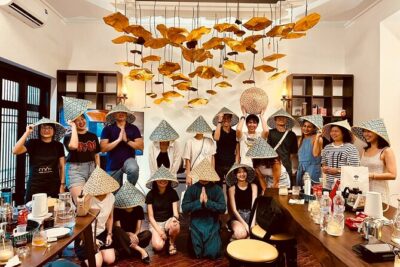
Hanoi Coffee Experience: 6 Brews, 9 Recipes & 3 Liquor Tastings
Read our review →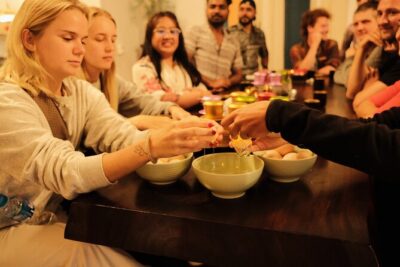
Hanoi Coffee Workshop: Taste Salt, Coconut and Egg Coffee
Read our review →
Salt Coffee Workshop Awake Your Senses With 6 Brews
Read our review →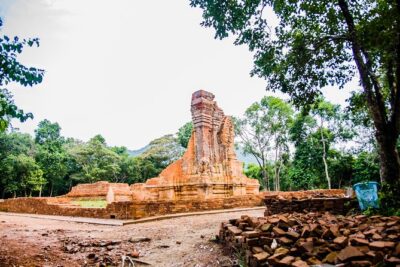
Early Morning My Son Sanctuary Trip w. Champa Food & Coffee
Read our review →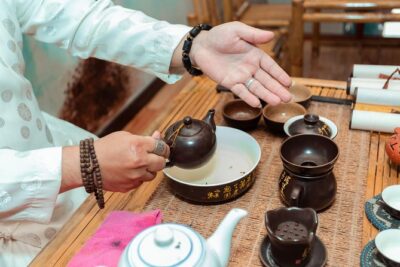
Da Nang Cooking Class with Coffee Tasting and Market Visit
Read our review →Browse the lists this tour appears in