
Reviewed · SAPA TRIPS AND TREKS
Explore Sapa by TrekkingAdventures, Mountain,Rice fields
Sapa is best seen on foot. This Hmong-led trek leaves the town behind for rice terraces, village paths, and mountain valleys, with local women explaining daily life along the way. I especially like the chance to choose an easier or harder route and the direct support this tour gives to Hmong women and local children.
I also like the small cultural details, from buffalo and farm animals to traditional houses, indigo dyeing, local schools, and stories about family life. The main drawback is the trail itself: downhill sections can become muddy, slippery, and awkward, while winter fog may hide the famous views.
In This Review
- Key things to know before you go
- Why this Sapa trek feels different
- Starting in Sapa and heading toward Y Linh Ho
- The trail conditions and the choice of routes
- Lao Chai, the lunch stop, and Hmong daily life
- Walking from Lao Chai to Ta Van
- The guides are the heart of the experience
- What lunch, transport, and group size mean for value
- Weather, seasons, and the best way to prepare
- Who should book this Sapa trek?
- Should you book Dinh Sapa Trekking Adventures?
- FAQ
- Where does the Sapa trek start?
- Which villages does the route visit?
- How long is the walk?
- Is lunch included?
- What happens if it rains?
- Is the return trip to Sapa included?
Key things to know before you go
- Three mountain villages in one day: The route links Y Linh Ho, Lao Chai, and Ta Van, three different communities with different ethnic traditions.
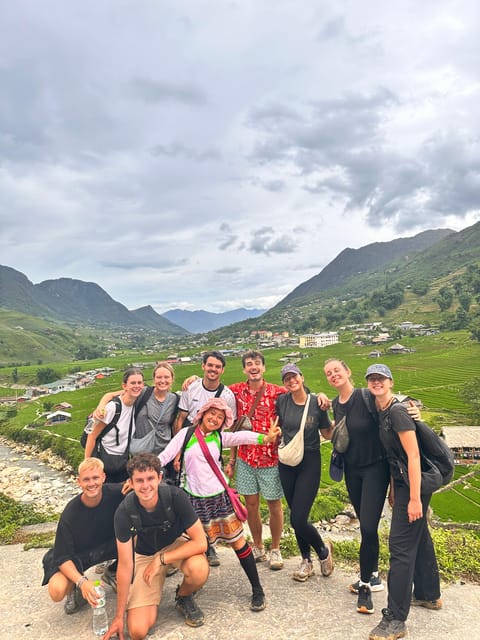
- Local Hmong women lead the walk: Your guide shares personal stories, family experiences, and details about village life.
- You can choose your walking challenge: The route ranges from about 5 to 11 kilometers, with easy, hard, or mixed options.
- Lunch is included in Lao Chai: The meal is plentiful, with vegetarian and vegan options reported by participants.
- Rain changes the trail: Boots and trekking sticks are available, but wet paths can still be slippery.
- The return ride is included: The trek ends in Ta Van, followed by private transport back to Sapa Town.
Why this Sapa trek feels different
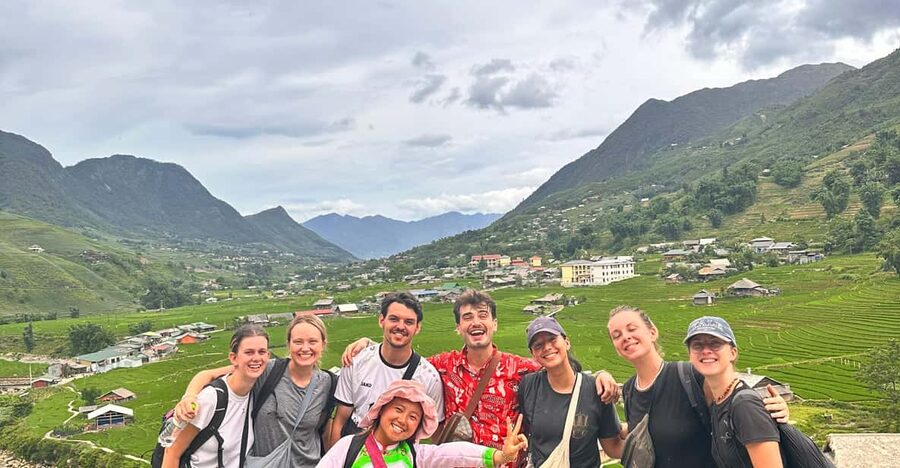
Sapa Town can feel crowded and commercial, especially around the church and central streets. This tour takes you quickly into quieter valleys where farming, livestock, footpaths, and village homes become the main sights.
The strongest part is the local guiding. Dinh and her family organize a team of Hmong women, including guides such as Sun, Khu, Chuchu, Mu, Co, and Mama Mai. The exact guide depends on the day, but the pattern is clear: you get a personal introduction to local life rather than a standard walk with memorized facts.
I like that the stories are connected to the guide’s own life. The women explain marriage traditions, work, family, education, farming, and the differences between the Black Hmong and Dzay communities. These conversations give the scenery meaning. A rice terrace is not just a pretty photo when you understand how people plant, harvest, and depend on it.
The social purpose also matters. The organizers say that bookings help provide work for local Hmong women, support children going to school, and create more jobs in the area. You are still buying an organized tour, but your money has a clearer local connection than it might with a large outside operator.
More Sapa Trips and Treks:
- Sa Pa: Muong Hoa Valley Trek and Local Ethnic Villages
★ 4.6 · 864 reviews - Sapa: Fansipan Cable, Cat Cat Village & Moana Instagram Tour
★ 5.0 · 777 reviews - Sapa: Eco Adventure Terrace Fields and Local Villages Trek
★ 4.9 · 636 reviews
Starting in Sapa and heading toward Y Linh Ho
The usual meeting point is your hotel in Sapa Town or the area in front of the main church. The standard start is 9:00 AM, although another time can be arranged if you contact the organizers.
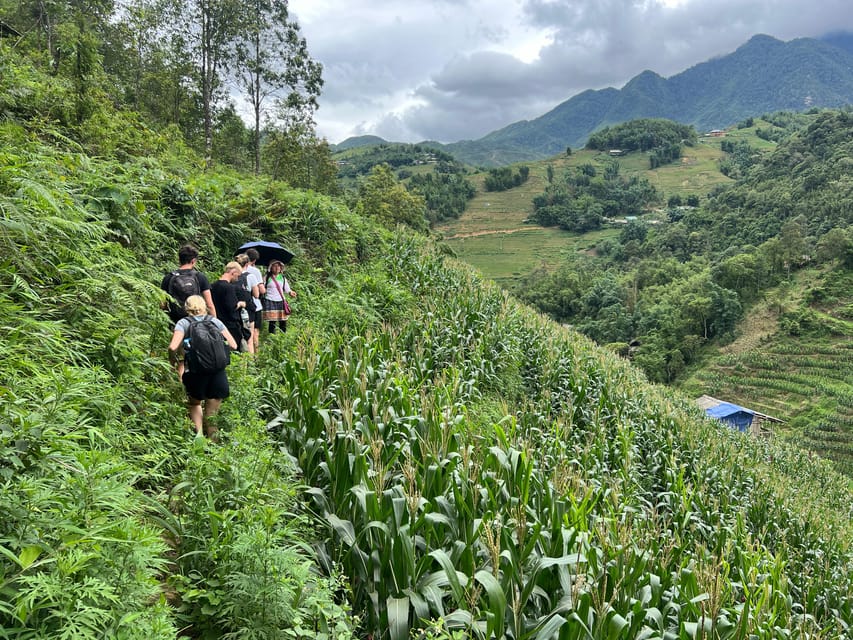
The first major section drops from Sapa toward Y Linh Ho. This is important to understand before booking: the day begins with a descent, not a gentle flat stroll. You will walk on mountain paths and less-developed tracks, with some narrow or uneven sections.
Y Linh Ho is a Black Hmong village surrounded by striking rice terraces. Depending on the season and weather, you might see rice planting or harvesting. Farm animals, including buffalo, pigs, and chickens, appear along the route, giving the walk a grounded, everyday feel.
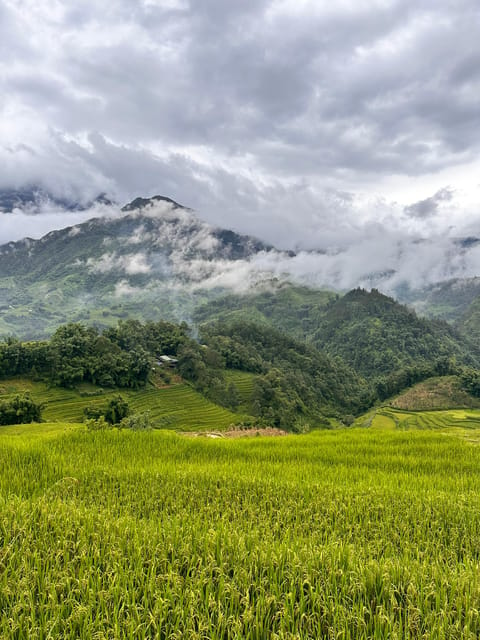
The views often improve as you descend. Several people have started in Sapa fog and watched the scenery appear lower down, with sunshine breaking through the cloud. That is a useful Sapa trick: a gray morning in town does not always mean a gray day in the valley.
Still, you should not count on clear views. Winter can bring thick fog, and one February walk had almost no visible scenery. The trek remained worthwhile for the villages and exercise, but the terraces lost much of their visual impact. If mountain views are your main goal, check the forecast and keep your expectations flexible.
The trail conditions and the choice of routes
The tour offers a choice of roughly 5 to 11 kilometers, with easy, hard, or hard-then-easy options. The actual distance can vary, and some participants have walked for about six hours even though the advertised duration is five.
The easier option generally uses more road walking. The harder route takes you closer to the fields and onto rougher paths, with mud, rocks, stream crossings, low fences, and short scrambles in places. You do not need to be an athlete, but you do need steady footing and full mobility in your legs.
The downhill direction is the main physical challenge. Walking down steep muddy paths can be harder on your balance than walking uphill, especially after rain. Some sections are narrow, and the ground may be slippery around rice fields and streams.
Your guide sets the pace and stops for rests. One commonly described rhythm is a short break every hour or so, with photo stops along the way. Guides also help you choose the route and take care around tricky sections.
In wet conditions, the organizers provide boots and trekking sticks. That is helpful, but it does not turn the path into a dry walking trail. Bring comfortable shoes and clothes, and expect mud if the forecast calls for rain. A raincoat, insect repellent, sunscreen, sun hat, sunglasses, and cash all belong in your day bag.
Lao Chai, the lunch stop, and Hmong daily life
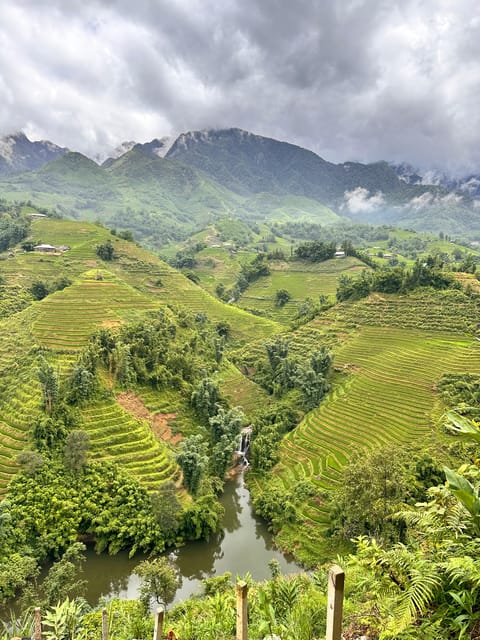
The route continues to Lao Chai, one of the largest and oldest Hmong communities in the area. This is where the cultural side of the tour gains depth, because you are not simply passing through a scenic valley. Your guide explains how homes, work, traditions, and local customs fit together.
The group stops at a local restaurant for lunch. The meal is included, and reports describe it as generous and tasty, with enough food for the table. Vegetarian and vegan meals are available, but tell the organizers in advance so they can prepare properly.
A meal in Lao Chai is more than a convenient refueling stop. After several hours on the trail, it gives you time to sit, ask questions, and talk with your guide outside the rhythm of walking. One participant specifically enjoyed a restaurant overlooking the river and rice fields, though the exact setting can vary.
You may also visit a traditional Black Hmong house. This is one of the most useful stops for understanding how local families live, rather than just photographing a house from the path. The guides explain daily routines and cultural differences, including the customs of the Hmong and Dzay people.
Some guides also demonstrate or explain indigo dyeing, an important part of Black Hmong textile traditions. The experience is strongest when you ask questions. The women are open about their own families and work, and the conversation often becomes the most memorable part of the day.
A few more Sapa trips worth weighing up
- Number one top rated ethical cultural trekking and homestay by ETHOS
★ 5.0 · 456 reviews - Cat Cat Village, Moana, Fansipan Cable Car, Alpine Coaster – Sapa
★ 5.0 · 420 reviews - From Sapa: 1-Day Guided Trek to Lao Chai & Ta Van with Lunch
★ 4.9 · 416 reviews - Sa Pa Full Day Trekking Tour
★ 5.0 · 414 reviews
Walking from Lao Chai to Ta Van
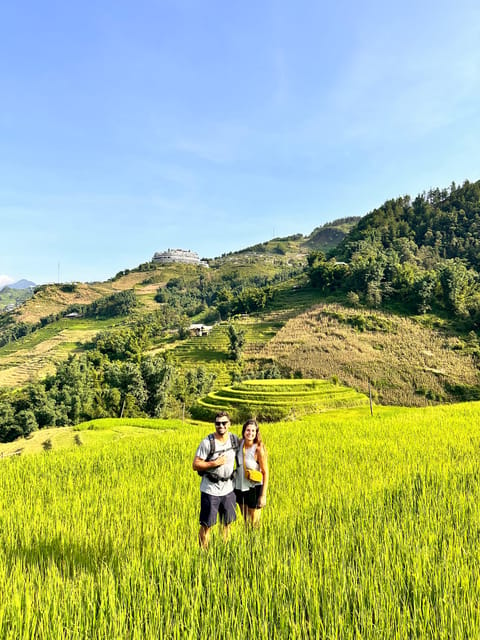
After lunch, the route continues toward Ta Van Village, home to the Dzay people. This section gives you a chance to compare two ethnic communities within the same mountain region.
The contrast is not presented as a museum display. You see it through the guide’s explanations of language, clothing, customs, homes, and village life. If you are curious, ask the guide to explain how the communities differ and what they share.
The route can feel repetitive toward the end, especially if you choose a longer version or the scenery is hidden by cloud. That is the trade-off for spending more time in the valley. The shorter route may suit you if you want the main views and village experience without turning the day into a full walking workout.
Ta Van is the finishing point, usually around 3:00 PM. A private car then takes you back to Sapa Town. The ride is included, which matters because the walk ends outside central Sapa and arranging your own transport would be an unnecessary nuisance after a muddy trek.
The guides are the heart of the experience
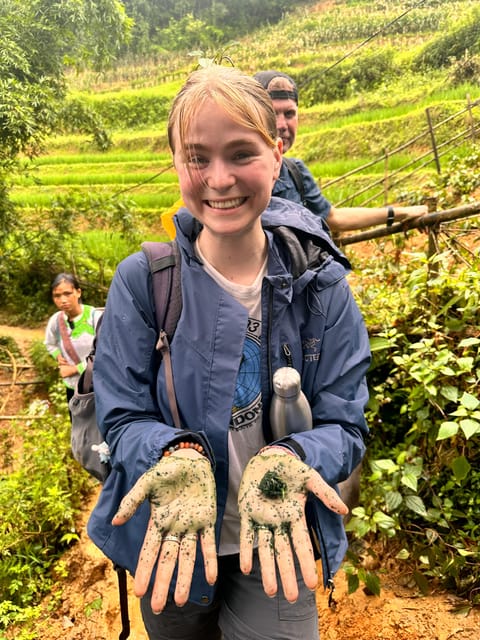
The guide can make or break a walking tour, and this family-run operation has a strong record here. Sun receives repeated praise for her humor, clear English, energy, and ability to explain local customs without making the day feel like a classroom.
Other guides, including Khu, Ko, Chuchu, Mu, Ze, Co, Mam, and Mama Mai, are also described as friendly, attentive, and helpful. Names and assignments vary, but you can expect a local English-speaking guide, with Vietnamese also available.
I like the balance between information and conversation. The guides explain what you are seeing, but they also talk about their own lives and ask about yours. That makes the walk feel less scripted.
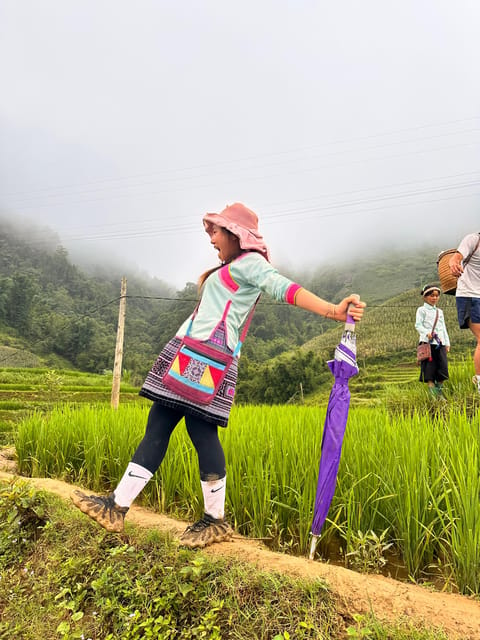
Some groups are joined for part of the route by local women from nearby villages. They can help on muddy or difficult sections, which is useful, but they may also offer handmade goods for sale. This is the one social wrinkle you should know about before going.
The selling can feel persistent. A guide may explain that you are not required to buy anything, and you should feel free to say no politely. Bring cash only if you actually want to purchase something. Buying a small handmade item can support the women directly, but the decision should be yours, not the result of pressure.
What lunch, transport, and group size mean for value
At $23 per person, this is unusually good value for a full mountain outing. The price includes a local English-speaking guide, lunch, water, village entry fees, and the ride back to Sapa. You would pay separately for several of those elements if arranging the day yourself.
The group format keeps the price low, but it also means you may walk with other people. One group included around 20 participants before being divided into smaller groups, so do not assume you are booking a private walk.
A private option is available for an extra charge. This may be worth considering if you want a slower pace, more personal conversation, or a route built around your fitness level. The standard group tour is a better choice if you enjoy meeting other people and want the lowest price.
Extra drinks during the hike are not included, apart from the provided water. Bring cash for anything else, including drinks or handicrafts.
The booking terms are practical: you can reserve now and pay later, and cancellation is free up to 24 hours before departure. Same-day booking may be possible, but the stated advice is to book two or three hours ahead. Do not rely on a last-minute place if your schedule is tight.
Weather, seasons, and the best way to prepare
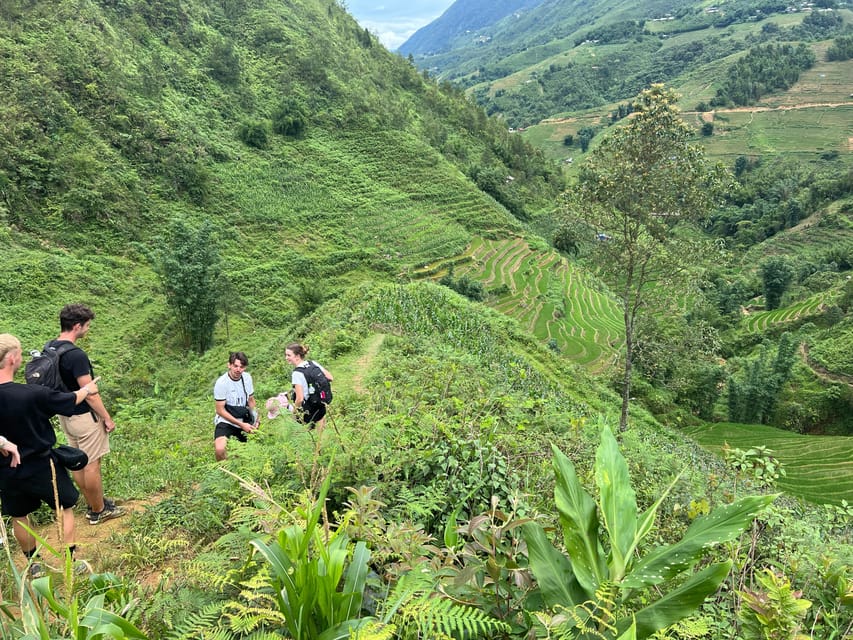
Sapa weather can change the entire character of this tour. On a clear day, rice terraces and valleys provide the big visual reward. On a foggy day, you may see little beyond the path, but the village visits and conversations still give the day purpose.
Rain creates the biggest practical issue. Muddy paths become slick, particularly on steep downhill stretches. Boots and sticks are available, but you should still wear clothes that can get dirty and avoid bringing anything fragile.
The warmest months can be more comfortable for walking, and one participant specifically recommended summer after experiencing cold, cloudy, muddy conditions in January. Clear weather has also occurred in winter, so there is no guaranteed season for perfect views.
I would pack:
- Water and a small snack
- A raincoat
- Sunscreen and insect repellent
- A hat and sunglasses
- Comfortable walking shoes
- Cash for drinks or crafts
- A camera with a secure strap
The walk is not suitable for anyone with serious mobility limitations, and the provider excludes people over 95. Children under three can join free if arranged in advance.
Who should book this Sapa trek?
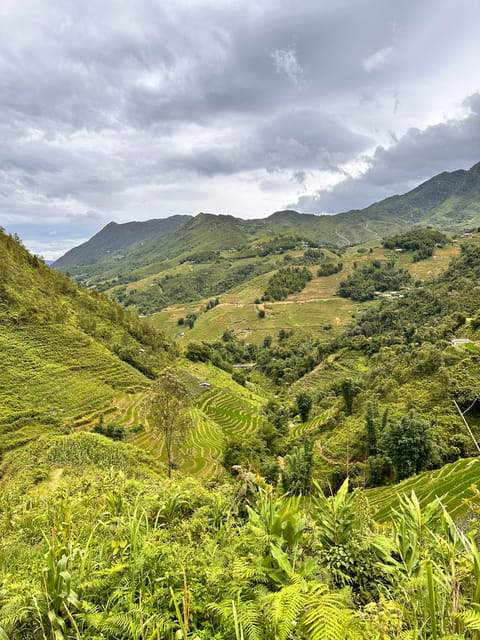
I would choose this tour if you want to see rural Sapa without committing to a multi-day trek. It gives you terraces, villages, lunch, local stories, and return transport in one day.
It suits reasonably active people who can handle uneven ground and steep descents. You do not need to be especially fit, since the pace includes breaks and you can select an easier route, but balance matters more than speed.
This is also a good choice if you care about meeting local guides and hearing personal stories. The cultural exchange is not an extra feature added after the scenery. It is the point of the day.
I would think twice if you need smooth paths, guaranteed views, or a strictly timed five-hour program. Weather can hide the terraces, the trail can be slippery, and the day may stretch closer to six hours depending on the route and group.
Should you book Dinh Sapa Trekking Adventures?
Yes, if you want a fairly priced introduction to Sapa’s valleys and ethnic communities, especially with a local Hmong woman as your guide. The strongest reasons to book are the guides, the personal stories, the flexible route difficulty, the included lunch, and the direct support for local women.
Go prepared for mud, fog, uneven paths, and occasional sales pressure from women accompanying the group. Check the weather, wear shoes you can sacrifice to the trail, and choose the shorter route if you would rather focus on culture than endurance.
At $23, the package delivers a lot: a guided trek, three villages, food, entry fees, and a ride home. For many people, the best memory will not be the perfect rice terrace photo. It will be walking beside a local guide and learning how life works beyond Sapa Town.
FAQ
Where does the Sapa trek start?
The tour can meet you at your hotel in Sapa Town or in front of Sapa’s main church. The usual start time is 9:00 AM, although another time may be possible if arranged in advance.
Which villages does the route visit?
The route runs from Sapa to Y Linh Ho, Lao Chai, and Ta Van. Y Linh Ho and Lao Chai are associated with Black Hmong communities, while Ta Van is home to the Dzay people.
How long is the walk?
You can choose a route of about 5 to 11 kilometers. The walking level may be easy, hard, or hard then easy. Some outings last closer to six hours, depending on the route, breaks, and group pace.
Is lunch included?
Yes. Lunch at a local restaurant in Lao Chai is included, along with water. Vegetarian and vegan options are available, but you should notify the organizers in advance.
What happens if it rains?
The organizers provide boots and trekking sticks in rainy conditions. You should still bring a raincoat, wear comfortable clothing, and expect muddy or slippery paths.
Is the return trip to Sapa included?
Yes. The trek ends in Ta Van, and transportation back to Sapa Town is included in the price.
Just added around Sapa
- Sapa trekking 2 days small group★ 5.0 · 32 reviews
- From Sapa: 3 Day Ha Giang Loop Guided Motorbike Tour With Rider★ 5.0 · 33 reviews
- Vietnamese Spring Rolls Cooking Class★ 5.0 · 34 reviews
- Sapa: 3-Day Ha Giang Loop Motorbike Tour★ 4.9 · 34 reviews
- 2 Day Trekking Experience: Explore with knowledgeable local guide★ 5.0 · 34 reviews
- Trek Adventure in Ta Van Village, Lao Chai★ 5.0 · 36 reviews
- Sapa Trekking & Cooking with H’Mong Locals –Local Culture★ 5.0 · 36 reviews
- Sapa Private Car Rental–Half & Full Day & English Speaking Driver★ 5.0 · 37 reviews
Sapa Trips and Treks, compared.

Sapa 2 Days 1 Night From Hanoi – Overnight in Ta Van Village
Read our review →

Muong Hoa Valley Trek and Local Ethnic Villages
Read our review →
Fansipan Cable, Cat Cat Village & Moana Instagram Tour
Read our review →

Sapa 3 Days 2 Nights Trekking Tour (1 Night In Ta Van Village, 1 Night In Hotel)
Read our review →
Eco Adventure Terrace Fields and Local Villages Trek
Read our review →
3-Day Trekking Adventure of Sapa from Hanoi – Stay Ta Van Village
Read our review →Browse the lists this tour appears in