

Reviewed · SAPA TRIPS AND TREKS
Sapa: 3-Day, 3-Night Trek and Hotel with Overnight Train
Sapa starts before sunrise. This trip pairs an overnight train from Hanoi with village walks, rice terraces, and a night in Ta Van, giving you a useful first look at northern Vietnam beyond the town center. I especially like the chance to meet Hmong, Dzay, and Red Dao communities, and the balance between a comfortable hotel night and a simpler homestay.
I also like that the tour includes meals, transfers, a guide, and the return limousine to Hanoi, which removes much of the planning. The main consideration is physical: the walking can be demanding, the weather changes quickly, and persistent local sellers may accompany you along parts of the route.
In This Review
- Key points to know before booking
- Why this Sapa trip works well
- The overnight train from Hanoi to Lao Cai
- Lao Cai to Sapa, then the walk to Sin Chai
- Muong Hoa Valley from Y Linh Ho to Lao Chai
- Ta Van homestay with the Dzay community
- Red Dao villages, Giang Ta Chai, and Su Pan
- The return limousine to Hanoi
- Guides, group style, and local contact
- Handling the handicraft sellers around Sapa
- What to pack and how hard the walk feels
- Who should book this Sapa trek?
- Should you book this 3-day Sapa experience?
- FAQ
- How long does the Sapa trekking experience last?
- Does the tour include the overnight train?
- Where do you stay in Sapa?
- Which ethnic communities do you visit?
- Is the trek suitable for children?
- Is food included?
- What should you bring?
- Is hotel pickup from Hanoi included?
- Can solo visitors join the tour?
Key points to know before booking
- The trip begins on a night train: You board in Hanoi around 10 PM and reach Lao Cai the next morning in a shared four-bed, air-conditioned cabin.
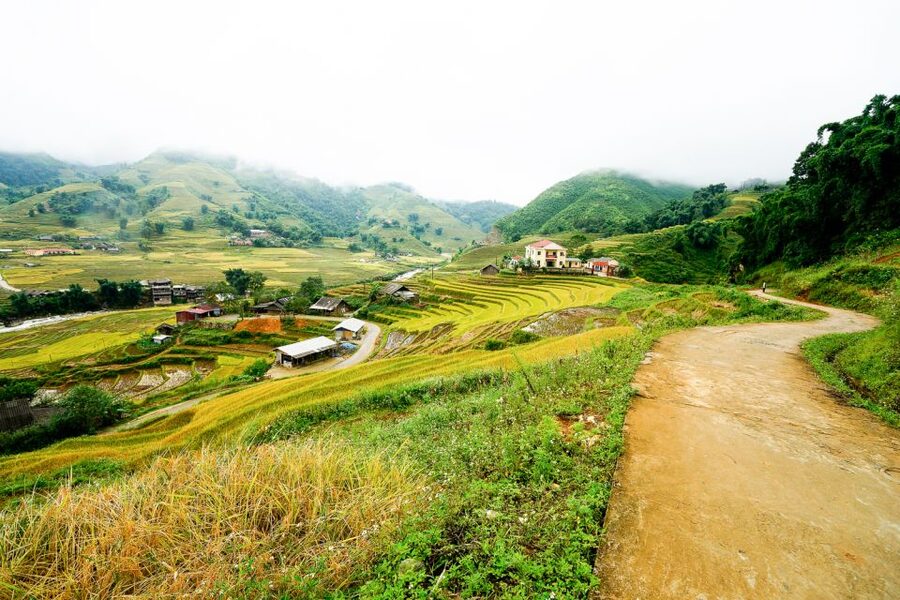
- The best walking is in Muong Hoa Valley: Y Linh Ho, Lao Chai, and Ta Van bring rice terraces and village life into the center of the experience.
- You sleep in two different settings: One night is in a 3-star hotel in Sapa, and one is in a Ta Van homestay with the Dzay community.
- The trek is not a gentle stroll: One section covers about 9 kilometers, with uneven ground and conditions that become harder in rain.
- Guides receive strong praise: Guides such as Su Su, Ai, Chu, and Mai are described as friendly, attentive, and good company on the trail.
- Sapa’s sales pressure is real: Women and children may offer handicrafts or follow the group for part of the walk, so bring patience and stick with your guide.
Why this Sapa trip works well
At $212 per person, this is a fairly full package for three to three and a half days. You get the Hanoi to Lao Cai train, transport up to Sapa, a hotel night, a homestay night, meals listed in the schedule, guided walks, entrance fees, and a return limousine. Booking each part alone would require more organizing, especially for the train and the mountain transfers.
The value depends on what you want. If you prefer independent travel and already know how to arrange trains, buses, rooms, and local walks, you could possibly spend less. If you want one plan that connects Hanoi with a short Sapa visit, the price is easier to justify.
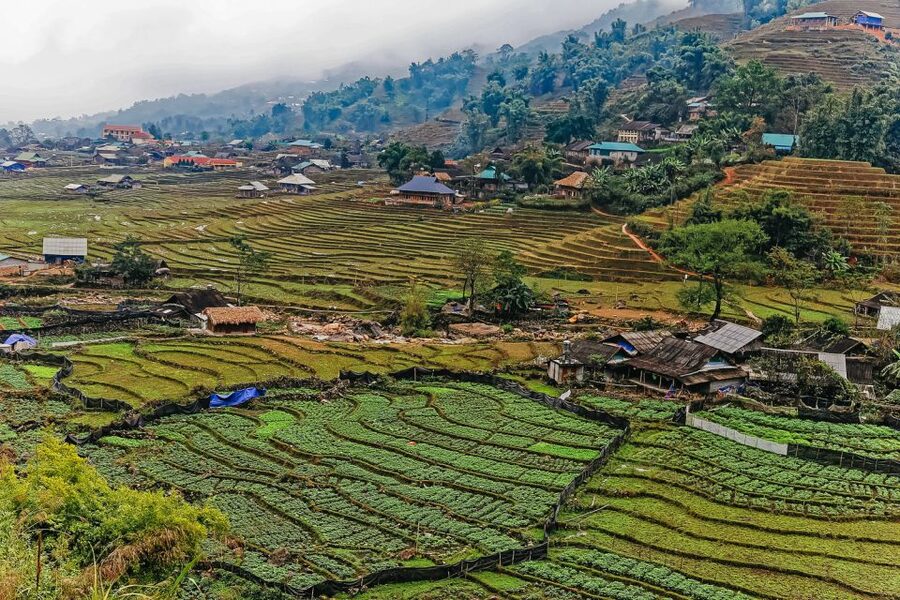
The biggest strength is the mix of experiences. You are not simply driven to a viewpoint, given lunch, and sent back. You walk between communities, see how the valley changes from one village to the next, and sleep in Ta Van rather than returning to Sapa every night.
The tradeoff is a busy schedule. The first night is spent on a train, the final day includes another long transfer, and the walking days leave little room for sitting around. I would choose this plan for a short northern Vietnam itinerary, not for a slow retreat.
More Hiking and Trekking Tours in Hanoi
- Halong Bay Full Day with Kayaking, Hiking viewpoint, Cave – Deluxe To Luxury
★ 5.0 · 884 reviews - From Hanoi: 2-Day Sapa Trekking Trip with Homestay & Meals
★ 4.8 · 704 reviews - Sapa 3 Days 2 Nights Trekking Tour (1 Night In Ta Van Village, 1 Night In Hotel)
★ 5.0 · 699 reviews
The overnight train from Hanoi to Lao Cai
Your trip begins at Hanoi Railway Station. You either arrange pickup from a hotel in the Old Quarter or make your own way to the station by about 9 PM. At the station, meet the staff, collect your tickets, go to the second floor, and proceed to gate 2A.
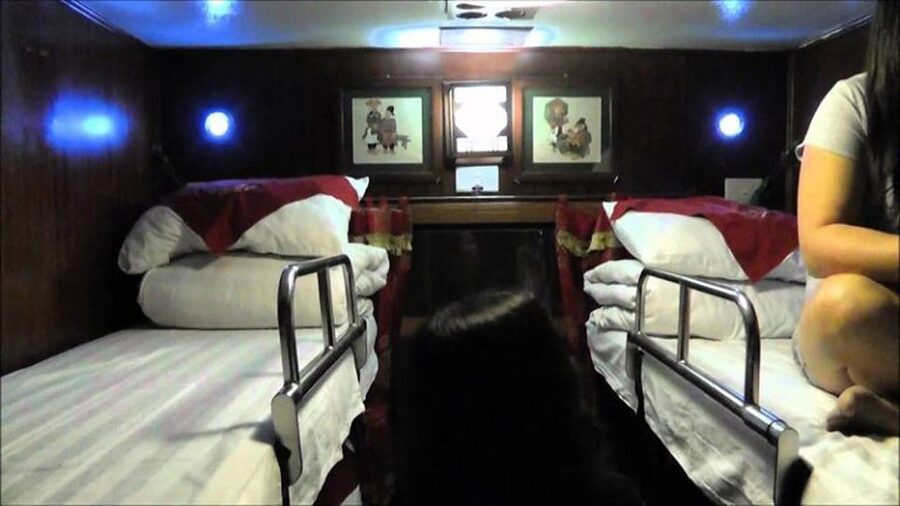
The train leaves around 10 PM. Your berth is in a shared four-bed, air-conditioned cabin. Several people describe the soft berth as comfortable enough for a good night, and one person found the train itself an enjoyable part of the trip. Still, you should set realistic expectations. Overnight trains can be noisy and bumpy, and the toilet may feel basic.
You do not choose your bunk position, so you may receive an upper berth. Pack your essentials where you can reach them rather than burying them in a large bag. Warm clothing is useful too, since Sapa can be cold, especially from September through March.
The train gets you to Lao Cai early, around 6 AM. That timing is practical because it gives you nearly a full day in the mountains, but it can also leave you tired. I would avoid planning a late Hanoi evening before departure.
Lao Cai to Sapa, then the walk to Sin Chai

At Lao Cai Station, you meet the guide and transfer to Sapa in a shared minibus. After reaching town, you leave your luggage at the hotel and have breakfast. The room is normally available for check-in at 2 PM, so do not expect to settle into the room right away unless you pay for early check-in.
The first walk heads southwest from Sapa to Sin Chai, a Black Hmong village about 2 kilometers from the town center. Sin Chai is described as simple and rustic, and it gives you a gentler introduction to village life before the longer valley walks begin.
This section is valuable because it shows you a less polished side of the Sapa area. You can look for ordinary details rather than grand sights: homes, paths, local work, and the quiet rhythm of a highland village. The walk also helps you learn how the Black Hmong community differs from the other groups you meet later.
After the morning walk, you return to the hotel for lunch and free time. That break matters. You can rest, explore Sapa town, or simply recover from the overnight train before dinner at about 6 PM.
Sapa at night offers a change of mood. You might find roasted corn and baked eggs cooking beside charcoal fires, along with shops selling local goods. The hotel is in central Sapa and rated three stars, giving you a private, more familiar base after the train.
Muong Hoa Valley from Y Linh Ho to Lao Chai
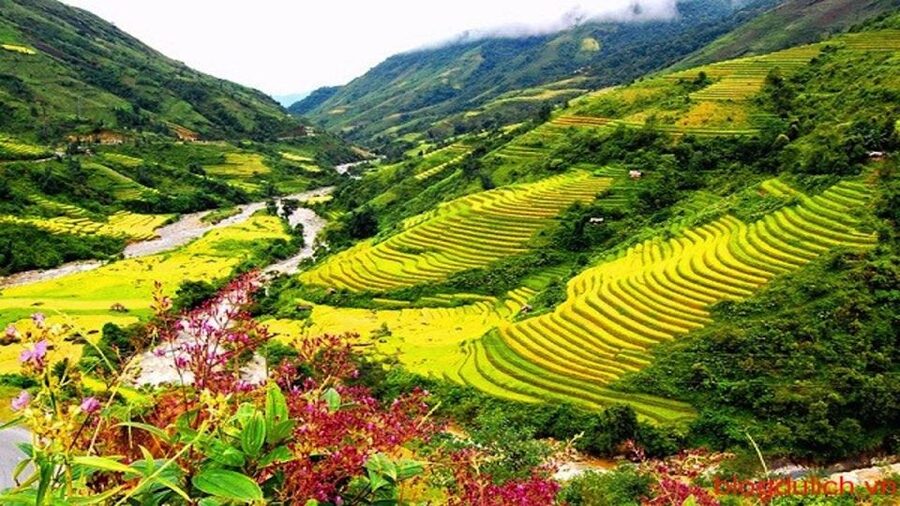
Day two is the main walking day. After breakfast, you follow the side of Muong Hoa Valley toward Y Linh Ho, a village associated with the Black Hmong. From there, the route continues down to Lao Chai, another Hmong village.
The appeal here is the movement through the valley. Instead of viewing the rice terraces from one roadside lookout, you pass through them on foot. The route lets you stop for pictures and take in the changing views at a more natural pace.
Conditions matter. The trail may be muddy after heavy rain, and parts of the walk are demanding. The total 9-kilometer trek is not recommended for older people or children, and the tour is not suitable for people with mobility limitations or wheelchair users. I would bring proper trekking shoes, not smooth-soled trainers.
The best time for a farming detail may be May, when rice planting can be underway. You might have the chance to see how the work is done and, if the situation allows, try it yourself. That kind of contact is more memorable than simply taking photographs of terraces.
Lunch comes during the route before you continue toward Ta Van. Remember that drinks are not included with meals, so carry Vietnamese dong for water and other purchases. Cash is useful throughout Sapa because local banking services may not always work properly.
More Sapa Trips and Treks in Hanoi
- Sapa 2 Days 1 Night From Hanoi – Overnight in Ta Van Village
★ 5.0 · 2,669 reviews - Hanoi – Sapa 2 Days 1 Night Overnight At Homestay
★ 5.0 · 899 reviews - 3-Day Trekking Adventure of Sapa from Hanoi – Stay Ta Van Village
★ 5.0 · 611 reviews - Sapa 2 Days 1 Night From Hanoi – Overnight in Hotel
★ 5.0 · 440 reviews
Ta Van homestay with the Dzay community

After Lao Chai, you walk through terraced rice fields to Ta Van, where the Dzay community lives. This is the emotional center of the trip for me because the overnight stay gives you more time in one village than a quick roadside stop would.
The homestay is not presented as a luxury property. Its value is the setting and the chance to share a meal and evening in a local community. The accommodation is described as clean and pleasant, but you should still expect a simpler stay than the Sapa hotel.
Dinner is included, and the food receives especially warm praise. The meal gives you a chance to slow down after the trail and talk with your guide or other people in the group. The exact social atmosphere will depend on the group size and the day, but this is the night when the trip feels least like a standard sightseeing circuit.
You should bring warm layers. Sapa’s altitude brings cooler conditions, and fog is common from December through March. A scarf, hat, sun cream, sunglasses, insect repellent, and any personal medicine belong in your day bag.
Red Dao villages, Giang Ta Chai, and Su Pan
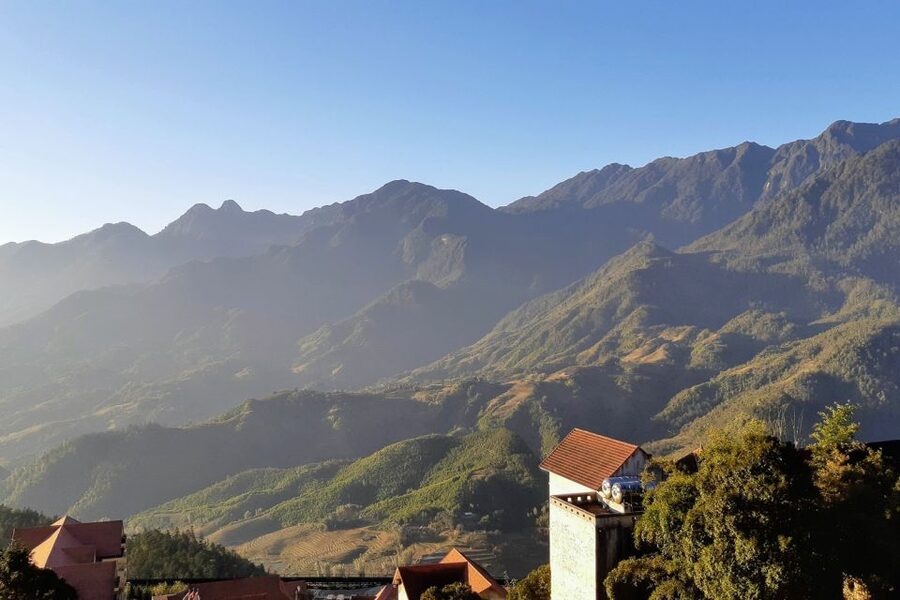
Day three takes you back onto the trail after breakfast. You visit Giang Ta Chai and Su Pan, with stops connected to the Red Dao and Hmong communities.
The route includes a waterfall, a rattan bridge, and views through bamboo forest. These features add variety after the rice terraces of the previous day. The waterfall and bridge are the sort of stops that break up the walking and give you useful pauses for photographs.
You then reach the main road and take a vehicle back to Sapa. The schedule gives you time to pack and prepare around 2 PM before the return journey to Hanoi.
This final morning can feel rushed. You have already walked for two days, and the return transfer takes several hours. Still, it lets you fit a real mountain route into a short holiday without adding another hotel night.
The return limousine to Hanoi

The return transport is a limousine vehicle rather than another overnight train. The journey takes roughly six to seven hours, with arrival at a Hanoi hotel expected around 8 to 9 PM.
The limousine is one of the practical improvements over ordinary long-distance transport. You avoid another sleeper train and return to Hanoi the same evening. Confirm the exact drop-off arrangement when booking, especially if your hotel is outside the Old Quarter.
One important detail deserves attention: hotel pickup is offered from Hanoi’s Old Quarter, but the published meeting instructions also say to make your own way to the railway station. If your hotel is elsewhere, choose the correct meeting point option rather than assuming a pickup is included.
Guides, group style, and local contact

The guide can make or break a walking trip, and this experience receives strong praise in that area. Su Su and Ai are described as friendly, talkative, and well informed. Chu is praised for explaining local life, while Mai is remembered for good conversation and for allowing plenty of time for photographs and stops.
The tour is offered with a live English-speaking guide. A private group option is available, while the regular setup may place you with a small group. A solo participant may move between different guides or groups on different days, so ask for clear meeting instructions if you are traveling alone.
A single supplement applies to solo travelers for two nights of accommodation, including the 3-star hotel and a private bungalow. The exact amount is updated at booking. That extra cost can change the value calculation for one person, so check it before paying.
The local contact team can also be useful. One person had trouble finding the guide at the station in the early morning and received quick help by phone. Save the local contact number before departure, and keep it accessible rather than inside your main luggage.
Handling the handicraft sellers around Sapa
Sapa has a persistent sales problem. Local women and children may walk beside you, offer handicrafts, ask for money, or follow the group for part of the route. The pressure can continue at stops and lunch, and some items may be offered at high prices.
The guide cannot fully control this situation. You may choose to speak politely, listen, or buy something, but do not feel obliged to purchase. If you do want a souvenir, agree on the price before handing over money and carry small notes in Vietnamese dong.
The tour specifically advises you to stick with the guide and ignore persistent sellers. I would add a little patience. These are local people trying to earn income, and treating them harshly will not improve your walk. A firm, friendly no is usually better than an argument.
The handicraft center, where local women gather to exchange skills, offers a more focused way to learn about textile work. It also gives the cultural side of the trip more substance than simply passing market stalls.
What to pack and how hard the walk feels
Pack light for the mountain portion. Your main luggage can remain at the Sapa hotel, while you carry what you need for the homestay and trail.
Bring:
- Trekking shoes with good grip
- Warm clothing, including a scarf and hat
- Rain protection for sudden showers
- Sunglasses and sun cream
- Insect repellent
- Personal medicine
- Cash in Vietnamese dong
- A phone charger and basic overnight items
The weather is unpredictable. From September to March, Sapa is normally cold, while December through March can bring fog. Rain changes the difficulty of the trail quickly, so your experience may be much harder than the same route in dry weather.
You should be comfortable walking for several hours on uneven ground. This is not suitable for wheelchair users or people with mobility impairments. Children and older people may find the 9-kilometer section too demanding.
Who should book this Sapa trek?
I would recommend it to you if you have limited time in Vietnam and want more than a day trip from Hanoi. It suits active adults who want a guided route, basic cultural contact, and a clear transport plan.
It is also a good choice if you like variety. The train, Sapa hotel, Hmong villages, Dzay homestay, Red Dao communities, waterfall, bamboo forest, and limousine ride give you several different experiences in a short period.
I would think twice if you need quiet, privacy, or a relaxed schedule. The train may be noisy, the mountain paths can be wet, sellers can be persistent, and the final return to Hanoi is long. Independent walkers may also prefer arranging a village stay directly and choosing their own pace.
Cancellation is free up to 24 hours before departure, and you can reserve now and pay later. Those terms help if your Hanoi schedule is still changing, but they do not remove the need to check the solo supplement, pickup location, and room arrangements before booking.
Should you book this 3-day Sapa experience?
Book it if you want a well-organized first visit to Sapa, especially one that includes both guided walking and a local homestay. The strongest reasons are the Muong Hoa Valley routes, the friendly guides, the included meals, and the simple but worthwhile contrast between the hotel and Ta Van stay.
Skip it if you dislike overnight trains, strenuous walking, or sales approaches. For most active visitors, though, $212 is reasonable for the transport, accommodation, food, guiding, and access to several villages in one compact trip. Bring good shoes, warm layers, cash, and realistic expectations, and you will be ready for the mountains.
FAQ
How long does the Sapa trekking experience last?
The activity lasts about three to three and a half days, beginning with the overnight train from Hanoi and ending with arrival back in Hanoi around 8 to 9 PM on the final day.
Does the tour include the overnight train?
Yes. The package includes one night in a shared four-bed, air-conditioned cabin on the train from Hanoi to Lao Cai.
Where do you stay in Sapa?
You spend one night in a 3-star hotel in Sapa center and one night at a homestay in Ta Van Village.
Which ethnic communities do you visit?
The route includes villages associated with the Black Hmong, Dzay, and Red Dao communities.
Is the trek suitable for children?
The 9-kilometer trek is not recommended for children or older people. The activity is also not suitable for people with mobility impairments or wheelchair users.
Is food included?
Breakfast, lunch, and dinner are included where shown in the schedule. Drinks and meals not listed are not included.
What should you bring?
Bring comfortable trekking shoes, warm clothing, a scarf, a hat or cap, sunglasses, sun cream, insect repellent, personal medicine, and cash in Vietnamese dong.
Is hotel pickup from Hanoi included?
Pickup is available from hotels in Hanoi’s Old Quarter. If your hotel is outside the Old Quarter, you need to select the appropriate meeting point option.
Can solo visitors join the tour?
Solo visitors can join, but a single supplement applies for two nights of accommodation in the 3-star hotel and private bungalow. The amount is confirmed at booking.
More Hiking and Trekking Tours
- 3D and 2N Lan Ha Bay Cat Ba Island Kayaking & Trekking with Vega
★ 5.0 · 593 reviews - Ninh Binh 1 day Hoa Lu Trang An with Dragon Mountain Hiking
★ 5.0 · 245 reviews - Ninh Binh: Hoa Lu, Trang An and Mua Caves Hiking Day Trip
★ 4.5 · 163 reviews - From Hanoi: Trek and Stay: 3-Day Sapa Highlands Adventure
★ 4.6 · 152 reviews
More Sapa Trips and Treks
- 2-Day Sa Pa Ethnic Homestay Tour & Trek with Limousine Bus
★ 4.8 · 440 reviews - Hanoi – Sapa 3 Day 2 Night Trekking With Hotel & Homestay
★ 5.0 · 389 reviews - From Hanoi: 2-Day Sapa Limo Bus Tour & Fansipan Peak Visit
★ 4.6 · 277 reviews - From Hanoi: 2-Day Sapa Trek Tour – Luxury Limousine Transfer
★ 4.1 · 249 reviews
Just added around Hanoi
- Hanoi: Make 6 Iconic Coffees in a Heritage Home with Locals★ 5.0 · 32 reviews
- Private Ninh Binh Full Day (Bich Dong -Tam coc -Mua cave- Biking)★ 5.0 · 32 reviews
- 15-Day Vietnam Itinerary All in One | Travel Package 2026-2027★ 5.0 · 32 reviews
- Retro Hop-on-hop-off Bonbon City Tour: Classic Package★ 4.0 · 32 reviews
- 10-Day Vietnam Discovery from North to South | Best Packages★ 5.0 · 32 reviews
- Verdure Lotus Classic Cruise in Halong Bay & Lan Ha Bay (2D1N)★ 4.0 · 32 reviews
- Full-day Guided Meditation Experience in Ha Noi★ 5.0 · 33 reviews
- Private Transfers Hanoi <=> Halong One Way by Limousine Vehicles★ 5.0 · 33 reviews
Sapa Trips and Treks, compared.

Sapa 2 Days 1 Night From Hanoi – Overnight in Ta Van Village
Read our review →

Muong Hoa Valley Trek and Local Ethnic Villages
Read our review →
Fansipan Cable, Cat Cat Village & Moana Instagram Tour
Read our review →

Sapa 3 Days 2 Nights Trekking Tour (1 Night In Ta Van Village, 1 Night In Hotel)
Read our review →
Eco Adventure Terrace Fields and Local Villages Trek
Read our review →