
Reviewed · SAPA TRIPS AND TREKS
SAPA : Climb up to Fansipan mountain with LOCAL GUIDE
Come prepared to work for the view. This one-day climb from Sapa gives you a direct route to Fansipan’s 3,143-meter summit, with a local Black Hmong guide, picnic lunch, transport, and plenty of encouragement along the way. I especially like the personal guiding and the chance to learn about mountain life from someone who lives here. The main catch is simple: this is a serious hike, not a gentle sightseeing walk.
The price is also appealing. At $72 per person, you get a guide, entrance fee, transport, lunch, water, gloves, and a climbing certificate. I like that the tour can be adjusted to your pace, though the climb may take longer than the advertised eight hours, particularly in rain or if you choose to walk both ways.
In This Review
- The climb in six useful points
- Why climb Fansipan from Sapa?
- The 5:30 AM start from Sapa
- Tram Ton Pass at 1,800 meters
- Rocks, stairs, and the hardest hours
- Mountain lunch and a welcome pause
- Reaching the 3,143-meter summit
- Descending on foot or taking the cable car
- Returning to Sapa between 4 and 6 PM
- How much value do you get for $72?
- What to bring for a safer, happier day
- Who should book this climb?
- Should you book the Fansipan climb?
- FAQ
- Where does the Fansipan hike start?
- How long does the climb take?
- Is the cable car included?
- What does the $72 price include?
- Is the hike suitable for children?
- What should I wear and bring?
The climb in six useful points
- 5:30 AM pickup: Meet at Sapa Stone Church or at a hotel along the road to Tram Ton Pass.
- 1,800-meter trailhead: The hike begins at Tram Ton Pass, not in Sapa town.
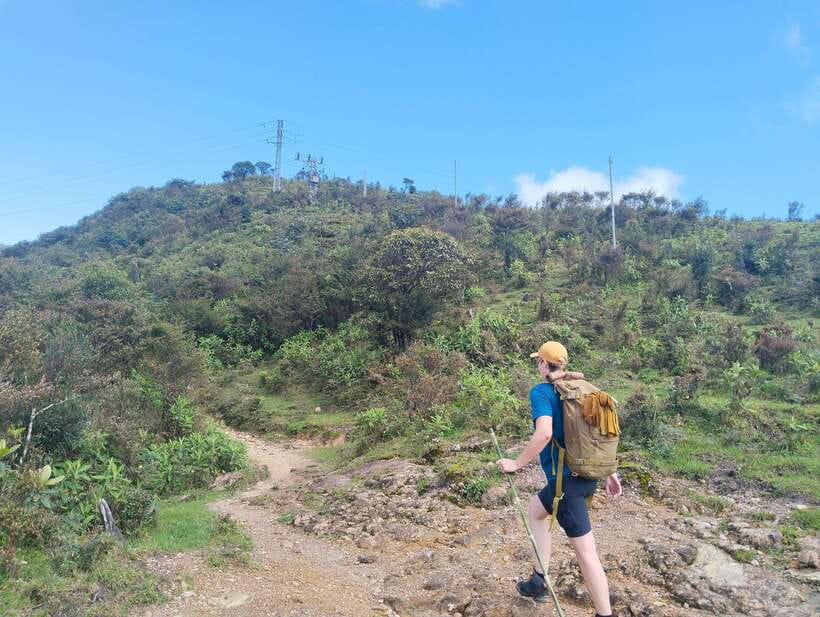
- 7 to 9 hours on foot: Expect a moderate-to-challenging ascent with stairs, rocks, mud, and some light scrambling.
- Local Black Hmong guides: Za, Zo, Khu, Mai, and other guides lead groups, with English explanations and close attention to safety.
- Lunch on the mountain: A filling picnic, often including banh mi or a hot meal prepared by the guide, is part of the day.
- Cable car backup: You can pay separately to descend by cable car if your legs are finished, but the ticket and transfer are not included.
Why climb Fansipan from Sapa?
Fansipan is known as the highest mountain in Indochina, and reaching the summit under your own power feels very different from simply arriving by cable car. The cable car gives you a quick view of the mountain, but this route lets you watch the forest change as you gain height.
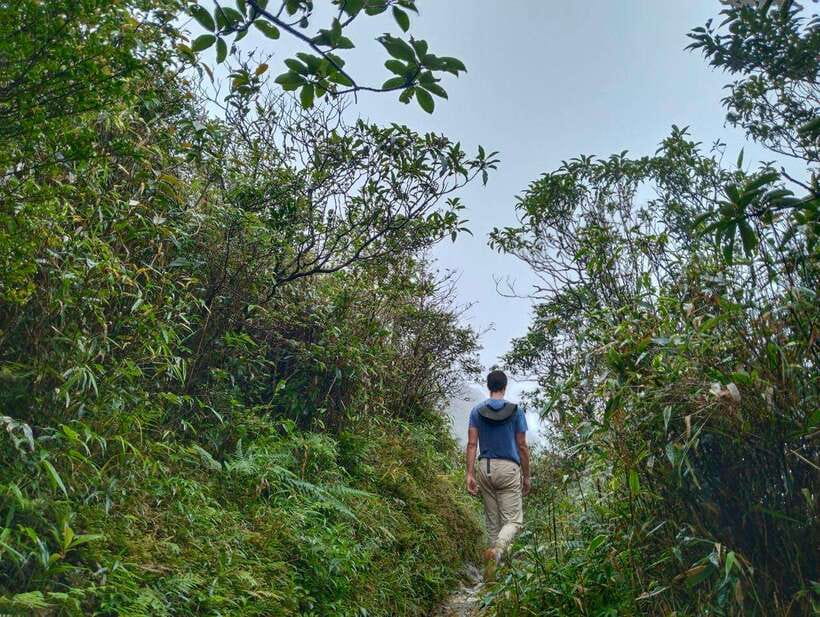
The climb begins at Tram Ton Pass, about 1,800 meters above sea level. From there, you walk through changing forest zones toward the summit. Along the route, you may see cardamom plants, mountain scenery, Muong Hoa Valley, buffalo, and the plants and animals that make this area special.
The route is not described as technical mountaineering. You do not need special climbing skills, but you do need healthy joints, good shoes, and a decent level of fitness. There are rocky sections, long stair-like stretches, uneven ground, and sections where you use your hands for balance.
I would compare the effort to a long, demanding mountain hike rather than a casual day out. Several people who considered themselves reasonably fit found the final two or three hours especially hard. One person who could run a 5K comfortably still chose the cable car down. That is useful advice: the uphill section may feel manageable, but the descent can test tired knees and feet.
More Sapa Trips and Treks:
- Sa Pa: Muong Hoa Valley Trek and Local Ethnic Villages
★ 4.6 · 864 reviews - Sapa: Fansipan Cable, Cat Cat Village & Moana Instagram Tour
★ 5.0 · 777 reviews - Sapa: Eco Adventure Terrace Fields and Local Villages Trek
★ 4.9 · 636 reviews
The 5:30 AM start from Sapa
Your guide and driver meet you at your hotel, Sapa Stone Church, or another agreed point along the road to Tram Ton Pass. Transport may be by car or motorbike, depending on the arrangement and group.
The early start matters. It gives you the best chance of finishing the climb in daylight and leaves room for weather delays, rest breaks, and a slower descent. It also puts you on the trail before the day becomes warmer and before the summit area fills with cable car visitors.
Za is the named local guide behind many of the strongest experiences here. He is a Black Hmong guide from the Sapa area and speaks good English. His communication before the hike is a real help: he explains what to bring, confirms pickup details, and helps you prepare for the route.
Other guides, including Zo, Khu, Mai, and A Già, also lead this experience. The personal character of the guiding is one of its best features. Guides check your condition, adjust the pace when possible, take photographs, share local stories, and help you through the more tiring sections.
The road transfer ends at Tram Ton Pass. Once you leave the vehicle, the day becomes a proper mountain walk.
Tram Ton Pass at 1,800 meters
Tram Ton Pass is the practical starting point for the summit attempt. You are already high in the mountains, so you avoid beginning with the long road climb from Sapa. Even so, the remaining distance demands steady effort.
The first part of the hike gives you time to settle into a rhythm. Keep your pace controlled rather than trying to match the guide’s natural speed. Local guides are used to the mountain and may be far fitter than you are. A good guide will slow down, wait at difficult sections, and arrange breaks according to the group.
You receive 1.5 liters of water and gloves, but I would still bring extra water if you normally drink a lot during exercise. The provided water is useful, not a reason to skip your own supply.
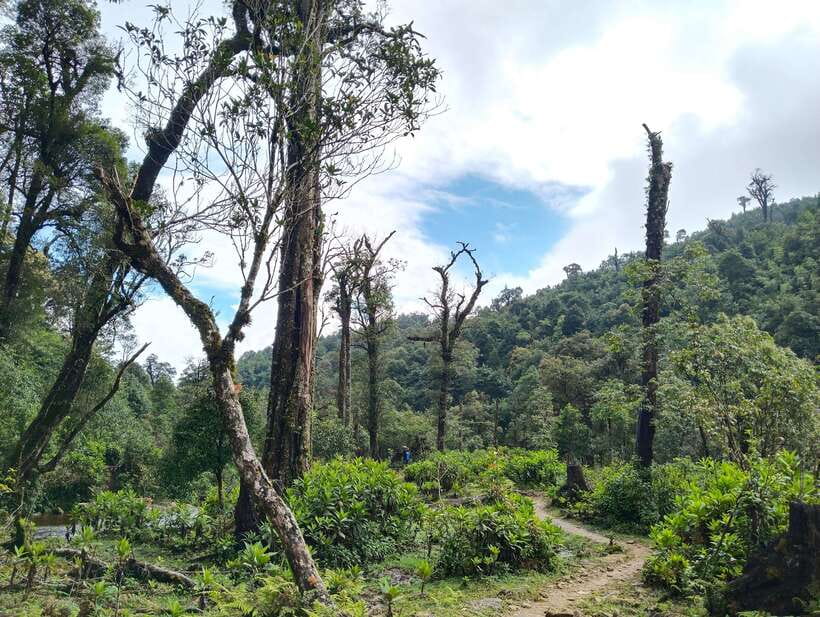
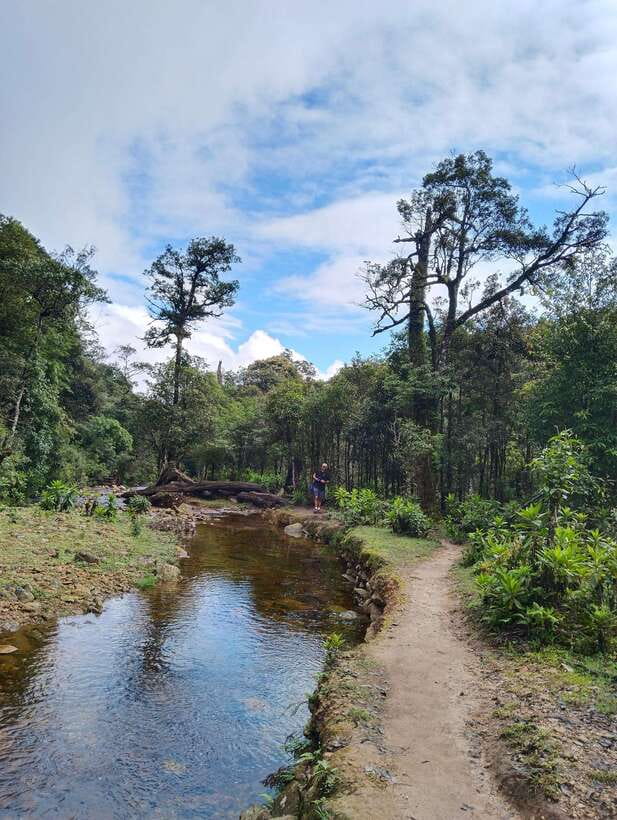
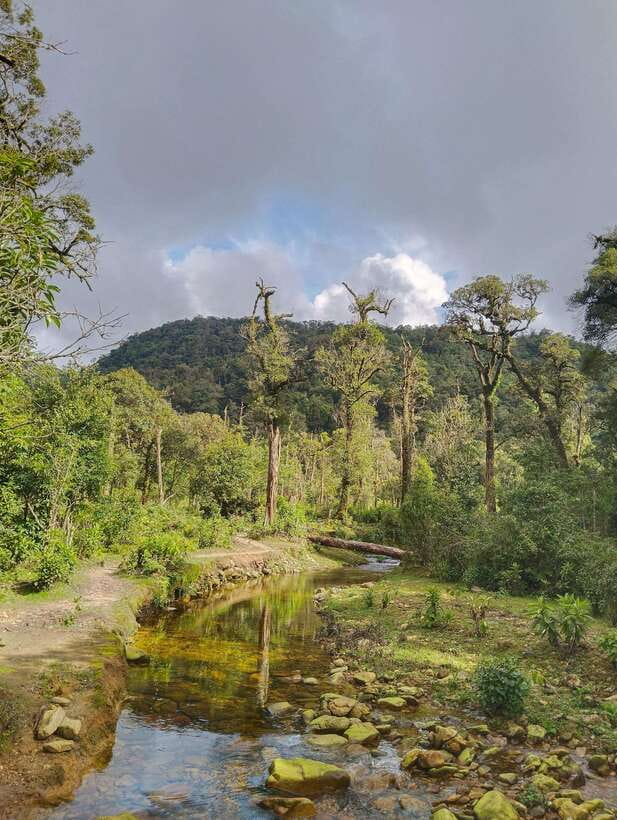
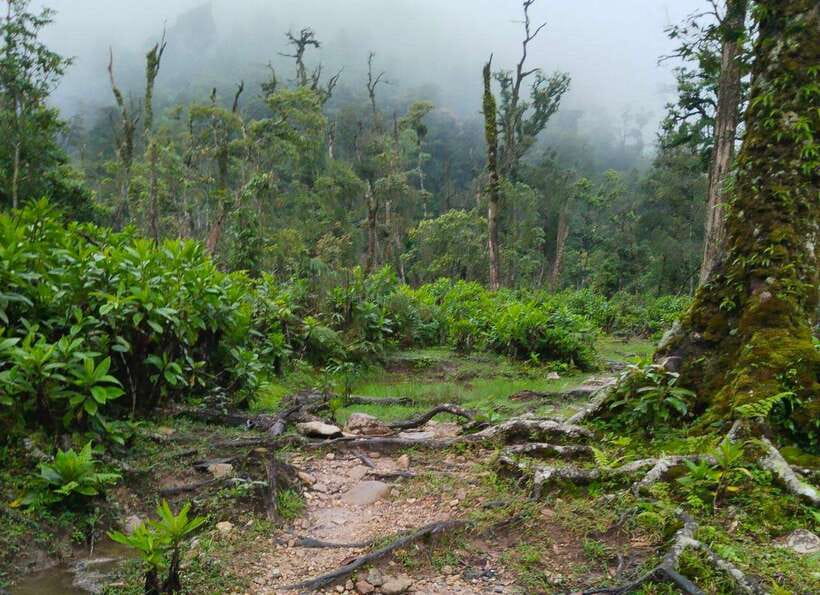
The path passes through different forest types as the altitude rises. This change is one of the more worthwhile parts of walking instead of taking the cable car. You get to see how the plants alter with height, including cardamom, a spice grown in the region and used to flavor food.
In clear weather, the walk provides views toward Muong Hoa Valley and the surrounding mountains. In cloud, the scenery can disappear almost completely. That is common mountain behavior here, not a sign that the walk has failed. Several people reached the summit in thick fog or rain but still considered the climb worthwhile because of the forest, the sense of achievement, and the care from the guide.
Rocks, stairs, and the hardest hours
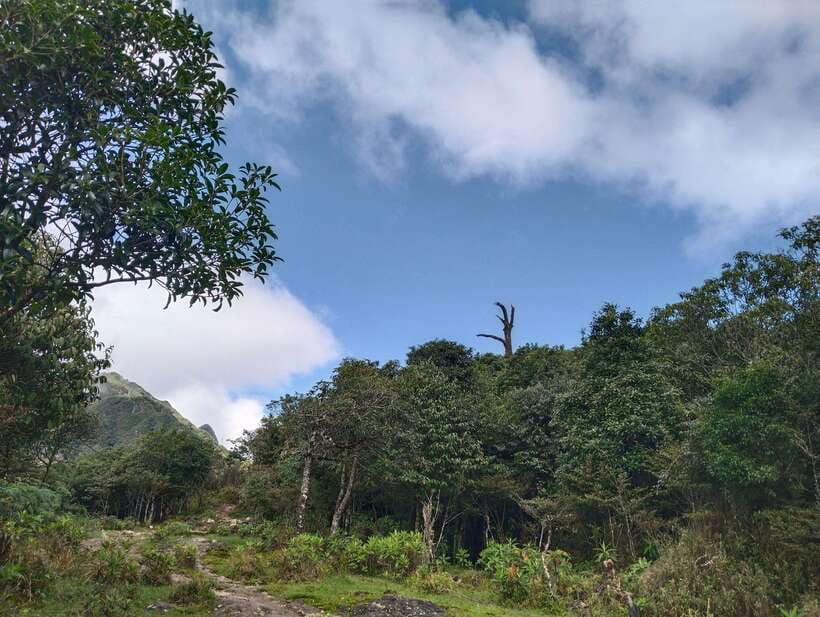
The route becomes more demanding as you gain height. Expect uneven rocks, steep sections, stairs, wet ground after rain, and occasional light scrambling. The path is not described as a route with frightening cliffs, and one person with a fear of heights found it comfortable from that point of view.
The bigger issue is stamina. You will be climbing for hours, then asking your legs to descend. Rain can turn the trail muddy, slow your progress, and make rocks slippery. A hike advertised at seven to nine hours may stretch to ten hours, and one slow group needed to walk for about an hour in darkness.
That detail is worth taking seriously. Carry proper rain gear, and do not rely on a small umbrella. A long-sleeved shirt helps with changing weather and sun exposure. Wear closed-toe hiking shoes with a firm sole. Comfortable trainers may be enough in dry weather, but they are a poor choice for a muddy descent.
The guides carry headlamps when needed, but I would not plan on finishing after dark. Start ready for a full day, and treat the headlamp as a safety backup.
A porter is included for groups of four or more. The information does not specify the porter’s exact load arrangement, so pack lightly and ask how this works when booking. Your own small daypack should hold water, rain gear, snacks, sunscreen, a phone, and a dry layer.
A few more Sapa trips worth weighing up
- Number one top rated ethical cultural trekking and homestay by ETHOS
★ 5.0 · 456 reviews - Cat Cat Village, Moana, Fansipan Cable Car, Alpine Coaster – Sapa
★ 5.0 · 420 reviews - From Sapa: 1-Day Guided Trek to Lao Chai & Ta Van with Lunch
★ 4.9 · 416 reviews - Sa Pa Full Day Trekking Tour
★ 5.0 · 414 reviews
Mountain lunch and a welcome pause
Lunch is included, and it is more than a token snack. Guides have prepared banh mi, hot soup, coffee, tea, and other filling food for groups. The timing can vary with the pace. Some groups eat early, around 9 AM, while the planned schedule places lunch around midday or during a stop near the upper part of the route.
That flexibility makes sense. On a mountain, lunch happens when the group reaches a sensible resting place, not necessarily at the exact clock time on the schedule.
The food has received unusually warm praise. A hot meal prepared by your guide can feel like a small luxury after hours of climbing. Za has cooked meals himself, and one group especially enjoyed a snack at about 2,800 meters. Do tell the provider about dietary needs before you go, since the supplied information does not give a fixed menu.
Use the stop to eat slowly, drink, and check your clothing. Do not rush because you think the summit is close. The upper section is often where tiredness catches up with you.
Reaching the 3,143-meter summit
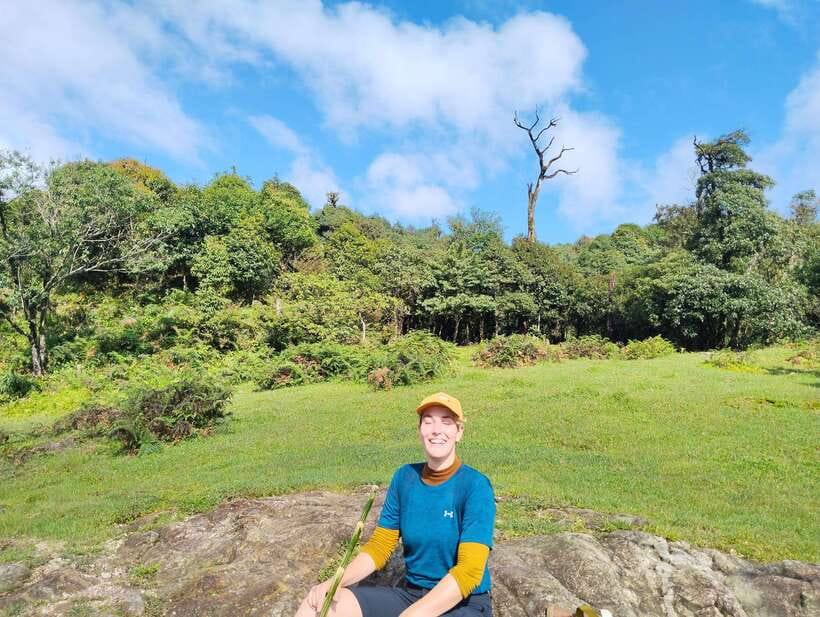
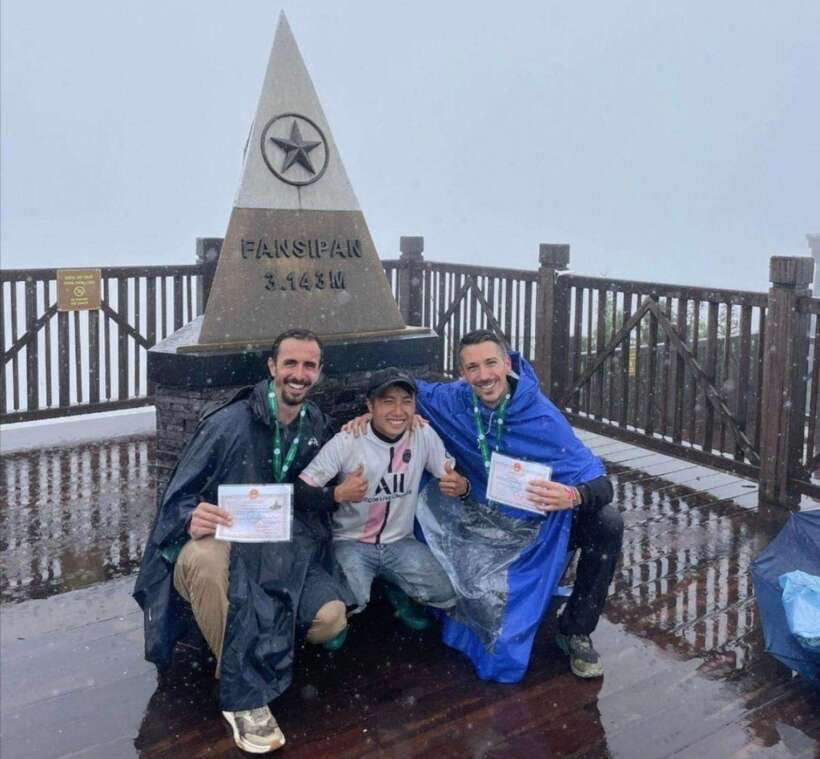
The summit is marked as the roof of Indochina, and getting there under your own effort is the clear reward of the day. You have time to celebrate, take photographs, and admire the mountain from the top before beginning the descent.
Weather controls the view. On a clear day, the summit and surrounding mountains can be spectacular. On a cloudy day, you may see very little from the top. Several people had fog at the summit but found good photo opportunities lower down, so keep your camera ready throughout the hike.
The summit area can also be busy because many people arrive by cable car. Do not expect solitude at the top, especially during popular periods. The quieter and more personal part of the experience is the trail itself, where you walk with your guide through the mountain environment.
A climbing certificate is included, and some groups also received a medal. These are small extras, but they make a nice souvenir after a strenuous day.
Descending on foot or taking the cable car
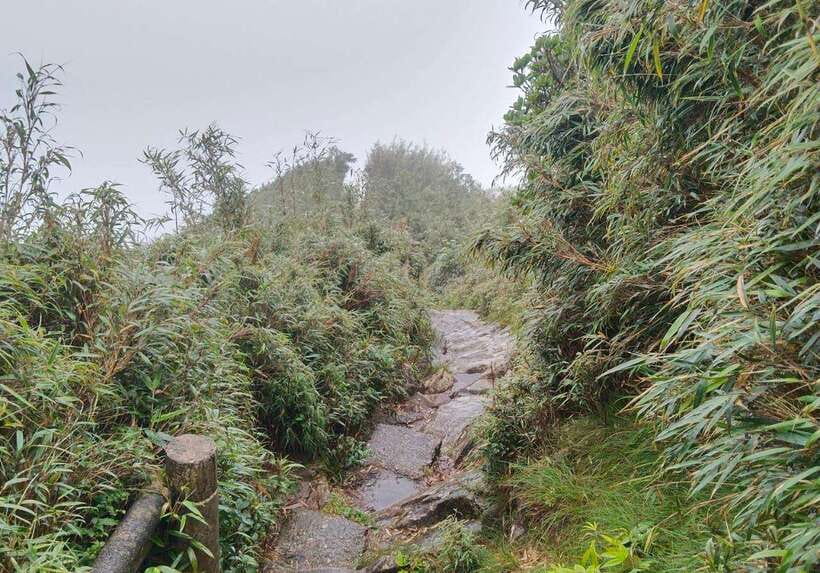
The planned route is to descend toward the 2,900-meter area, continue back to Tram Ton Pass, and meet the driver for the return to Sapa. If you walk the entire way, the descent is not an easy afterthought. Your legs have already done the hard work, and wet rocks or mud can make going down slower than expected.
Some people actually preferred the descent because it gave them more time to enjoy the scenery. Others found it harder than the climb and chose the cable car. Both choices are sensible.
The cable car is optional and not included in the $72 price. The supplied information states that the ticket has been around 800,000 Vietnamese dong per person, and you should carry cash if you want this backup. The shuttle from the cable car station to your accommodation is also excluded.
This is an important cost and logistics point. Do not assume the cable car will bring you straight back to your hotel. Ask your guide where you will finish and how you will return to Sapa if you use it.
If you think you may take the cable car, decide before your legs are completely exhausted. A guide can help you judge the situation, but the final ticket cost is yours.
Returning to Sapa between 4 and 6 PM
After reaching Tram Ton Pass, your driver takes you back to Sapa. The planned arrival is between 4 PM and 6 PM, though rain, rest breaks, group pace, and a full descent can push the day later.
The return transfer is included, which adds real value. You do not need to arrange a separate taxi to the trailhead or find your way back after a long climb. The pickup and drop-off plan is simple, but confirm the exact meeting point if your hotel is not on the road toward Tram Ton Pass.
You should keep your evening free. This is not the day to book a tight dinner reservation, night bus, or train connection. Give yourself room to arrive late and recover.
How much value do you get for $72?
For $72 per person, this is a strong package if you genuinely want to climb Fansipan on foot. The price includes:
- English-speaking guide
- Entrance fee
- Transport from Sapa to Tram Ton Pass and back
- Picnic lunch
- 1.5 liters of water
- Gloves
- Porter for groups of four or more
- Fansipan climbing certificate
The guide is the main value. A local guide helps with route finding, pace, safety, weather decisions, photography, and communication. The cultural side matters too. Za and the other Black Hmong guides share stories about local people and daily life around Sapa, giving the hike a human connection that a standard mountain transfer cannot provide.
The price is less attractive if you are mainly interested in reaching the summit quickly. The cable car is easier, and you can avoid seven to ten hours of exertion. This tour is for the experience of walking through the mountain, not just collecting a summit photo.
The optional cable car can also change your final budget. Set aside extra cash if you want the flexibility to ride down.
What to bring for a safer, happier day
Pack for weather changes, not just the forecast in Sapa. Conditions at Fansipan can shift quickly, and rain may make the route muddy and longer.
Bring:
- Hiking shoes with good grip
- Comfortable closed-toe shoes
- Rain gear
- A long-sleeved shirt
- A T-shirt for changing conditions
- Extra water if needed
- Small snacks
- Phone or camera
- Cash for the optional cable car
The tour provides gloves and 1.5 liters of water. You should still bring a small daypack and avoid carrying unnecessary weight.
Altitude can affect some people. One participant developed a headache and tiredness at height and wished they had prepared for it. The supplied information does not require altitude medication, so speak with a medical professional if you have concerns. Do not treat a personal fitness level as a guarantee that altitude will not bother you.
Who should book this climb?
I would recommend it to fit adults and older teenagers who enjoy demanding day hikes and want local contact along the way. The minimum age is 15, and the activity is not suitable for people over 70 according to the stated restrictions.
You do not need to be an expert climber. You do need a good base of fitness, the ability to walk for many hours, and confidence on uneven ground. Healthy knees and ankles matter more than impressive gym strength.
This is less suitable if you dislike rain, mud, early starts, long descents, or uncertain views. It is also a poor choice if you have a tight schedule after the hike.
The strongest part of the experience is not a guaranteed panorama. It is the combination of physical effort, local guiding, mountain ecology, and the satisfaction of reaching the summit. Za’s patience, clear English, photography, cooking, and attention to safety have made a particularly strong impression. The same qualities appear in the accounts of guides such as Zo and Khu.
Should you book the Fansipan climb?
Book it if you want to earn the summit and learn about Sapa from a local Black Hmong guide. The food, transport, entrance fee, certificate, and personal support make $72 good value, especially for a group of four or more that can also use the included porter.
Think twice if you want a relaxed excursion or a guaranteed clear view. The hike can be muddy, tiring, foggy, and longer than planned. My practical advice is to book with enough time before your next journey, carry rain gear and cash, and keep the cable car as a backup rather than a failure.
If your fitness is reasonable and you accept that the mountain sets the schedule, this is a memorable way to reach Fansipan.
FAQ
Where does the Fansipan hike start?
The guide and driver pick you up in Sapa, usually at Stone Church or at a hotel along the road to Tram Ton Pass. The trek begins at Tram Ton Pass, about 1,800 meters above sea level.
How long does the climb take?
The advertised duration is eight hours, while the ascent and descent are expected to take about seven to nine hours. Rain, mud, rest breaks, and group pace can make the day longer.
Is the cable car included?
No. The optional cable car is not included, and the transfer from the cable car station to your accommodation is also excluded. The ticket has been reported at about 800,000 Vietnamese dong per person.
What does the $72 price include?
The price includes an English-speaking guide, entrance fee, transport, picnic lunch, 1.5 liters of water, gloves, a climbing certificate, and a porter for groups of four or more.
Is the hike suitable for children?
The activity is not suitable for children under 15. It requires good physical condition and includes steep, rocky, muddy, and sometimes scrambling sections.
What should I wear and bring?
Bring hiking shoes, comfortable closed-toe shoes, rain gear, a long-sleeved shirt, and a T-shirt. Extra water, snacks, and cash for the optional cable car are also sensible additions.
Just added around Sapa
- Sapa trekking 2 days small group★ 5.0 · 32 reviews
- From Sapa: 3 Day Ha Giang Loop Guided Motorbike Tour With Rider★ 5.0 · 33 reviews
- Vietnamese Spring Rolls Cooking Class★ 5.0 · 34 reviews
- Sapa: 3-Day Ha Giang Loop Motorbike Tour★ 4.9 · 34 reviews
- 2 Day Trekking Experience: Explore with knowledgeable local guide★ 5.0 · 34 reviews
- Trek Adventure in Ta Van Village, Lao Chai★ 5.0 · 36 reviews
- Sapa Trekking & Cooking with H’Mong Locals –Local Culture★ 5.0 · 36 reviews
- Sapa Private Car Rental–Half & Full Day & English Speaking Driver★ 5.0 · 37 reviews
Sapa Trips and Treks, compared.

Sapa 2 Days 1 Night From Hanoi – Overnight in Ta Van Village
Read our review →

Muong Hoa Valley Trek and Local Ethnic Villages
Read our review →
Fansipan Cable, Cat Cat Village & Moana Instagram Tour
Read our review →

Sapa 3 Days 2 Nights Trekking Tour (1 Night In Ta Van Village, 1 Night In Hotel)
Read our review →
Eco Adventure Terrace Fields and Local Villages Trek
Read our review →
3-Day Trekking Adventure of Sapa from Hanoi – Stay Ta Van Village
Read our review →Browse the lists this tour appears in