
Reviewed · SAPA TRIPS AND TREKS
1-Day Sapa Long Trek – Rice Field Terrace, Ethnic Culture
Sapa gets better on foot. This 7-hour trek through Muong Hoa Valley combines sweeping rice terraces, mountain paths, and visits with Hmong and Giay families. I especially like the small groups, capped at 10 people, and the local Hmong guides who explain daily life in English rather than simply pointing at scenery. The home-cooked lunch and village visits add real value. The main catch is the trail: expect steep, uneven, and muddy sections, especially after rain.
I also like the route’s balance. You get a grand view toward Fansipan early in the day, then spend hours among fields, streams, wooden bridges, and village homes. Guides such as Mao, Sung, Soso, Chai, Giang, and Ma Ma Je have been praised for adjusting the pace and sharing personal stories. Still, this is not a gentle sightseeing walk. At roughly 12 to 15 kilometers for some groups, it will test your knees.
In This Review
- Key points to know before you go
- Why this Sapa trek is worth your walking time
- The 9:00 AM ridge and the first Fansipan view
- Muong Hoa Valley and the descent through rice terraces
- Y Linh Ho at 11:00 AM, river, bridge, and open fields
- Lao Chai Sang lunch with a Hmong family
- Clothing, indigo dye, and traditional craft
- Ta Van around 3:00 PM and the ride back to Sapa
- How difficult is the route?
- The guides make the biggest difference
- Is $24 good value?
- Who should book this trek?
- Should you book the Lao Chai to Ta Van trek?
- FAQ
- How long does the Sapa trek last?
- Where does pickup take place?
- Is lunch included?
- What villages does the trek visit?
- What language does the guide speak?
- Is the trek difficult?
- What should I bring?
- Can I cancel the booking?
Key points to know before you go
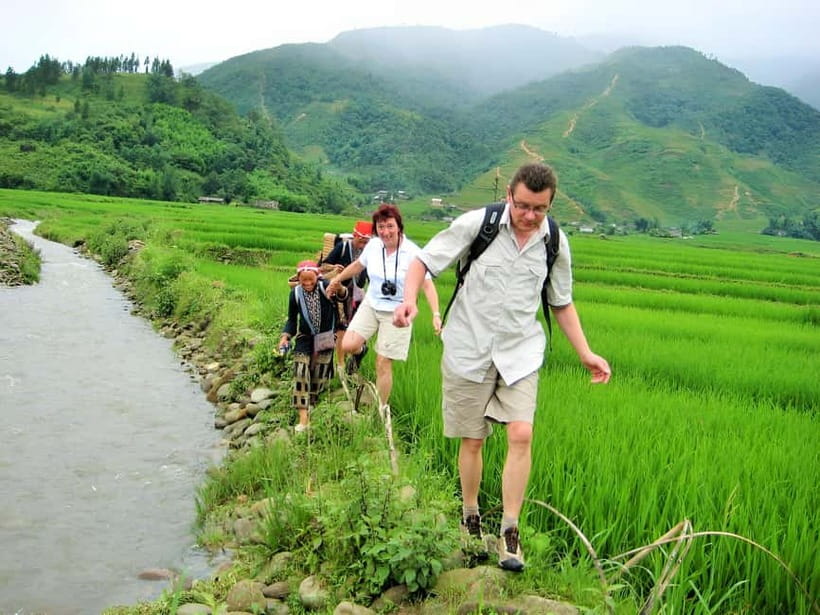
- A local Hmong guide leads the way: English-speaking guides from nearby villages explain customs, farming, clothing, and village life.
- The Muong Hoa Valley is the star: Rice terraces, river crossings, mountain views, and open fields fill much of the route.
- Lunch is part of the cultural experience: A family-style meal in a local home gives you time to rest and talk, with dietary needs accommodated if shared in advance.
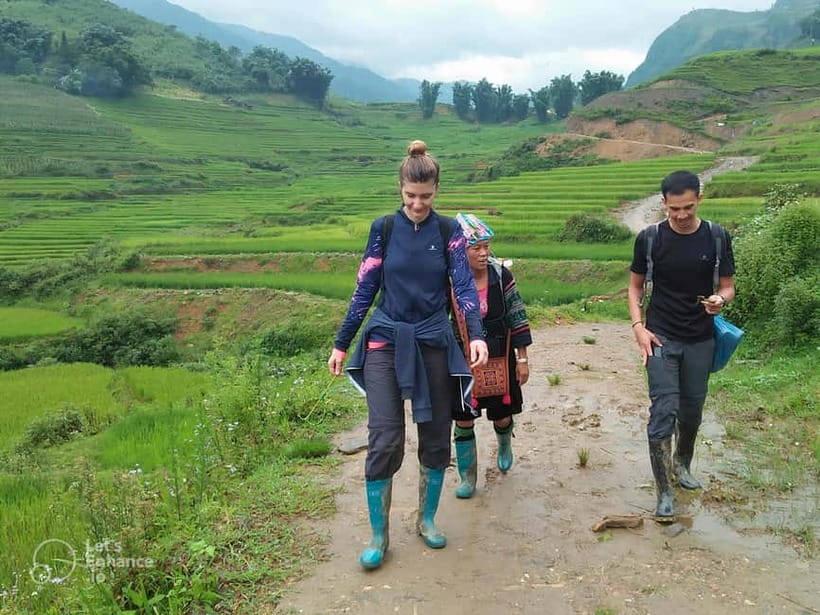
- The ground can turn slick: Hiking shoes with strong grip are essential, and rubber boots may be useful during wet weather.
- Ta Van brings a Giay village finish: You can learn about traditional fabric work, natural dyes, and the local art of incense making before returning to Sapa.
- The price is unusually low: At $24 per person, transport, guiding, village fees, lunch, water, and rain protection make this a strong-value day out.
Why this Sapa trek is worth your walking time
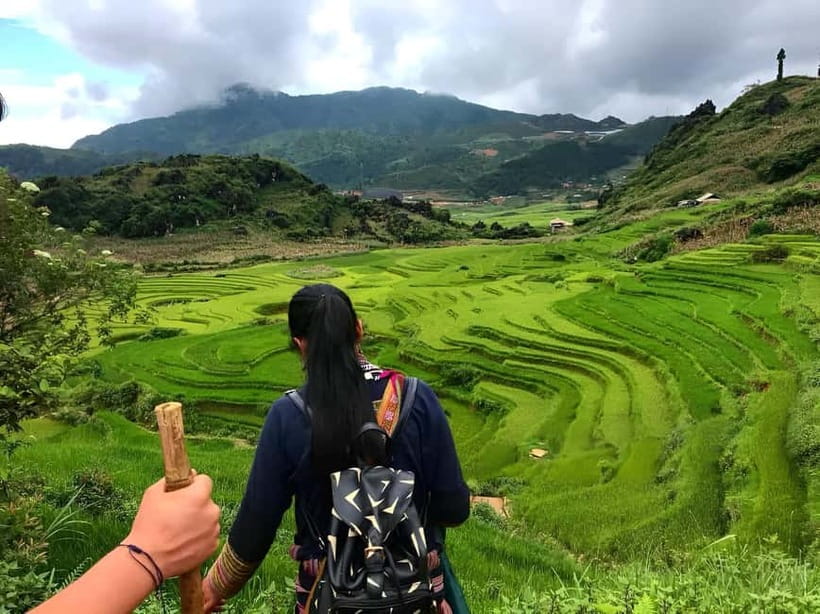
Sapa town can feel busy, but the surrounding valley quickly becomes quieter once you leave the roads. This route gives you a useful first look at northern Vietnam’s mountain communities without requiring a multi-day hike or a homestay.
The appeal is not only the scenery. You walk through places where farming, weaving, dyeing, and family life still shape the day. Your guide can explain what you are seeing in a way that a roadside photo stop cannot.
The tour is limited to 10 people, though some departures may be smaller. Groups of four were especially comfortable because everyone could keep a similar pace and ask questions without holding up a crowd. If you prefer a private walk, custom routes are available on request, but confirm any extra cost before booking.
The published schedule runs from a 9:00 AM start to a return around 3:00 PM or later, depending on the group. In practice, the route may cover 12 kilometers, with some walkers reporting 13 to 15 kilometers. That difference matters. You should treat this as a full walking day, not a short half-day stroll.
More Countryside and Village Tours in Sapa
- Sa Pa: Muong Hoa Valley Trek and Local Ethnic Villages
★ 4.6 · 864 reviews - Sapa: Fansipan Cable, Cat Cat Village & Moana Instagram Tour
★ 5.0 · 777 reviews - Sapa: Eco Adventure Terrace Fields and Local Villages Trek
★ 4.9 · 636 reviews
The 9:00 AM ridge and the first Fansipan view
The day begins with pickup in Sapa town. If your hotel is within town limits, the ride to the trailhead is included. If you are staying outside town, you can request transport for a fee or meet at Sapa TT Homestay on 812 Dien Bien Phu Street or Sapa View Spring Garden Hotel at 61 Muong Hoa Street.
The opening climb takes you toward a quieter ridge with a broad view toward Fansipan, known as the Roof of Indochina. Cloud is a regular character in Sapa, so you may see the peak clearly, partly, or not at all. One guide wisely gave a group the choice of climbing higher for a possible view or staying lower in mist, which is the sort of judgment that makes a local guide useful.
Take this first section slowly. The day is long, and there is no prize for racing through the opening climb. Use the stop to check your laces, apply sunscreen, and make sure your water is easy to reach.
Muong Hoa Valley and the descent through rice terraces
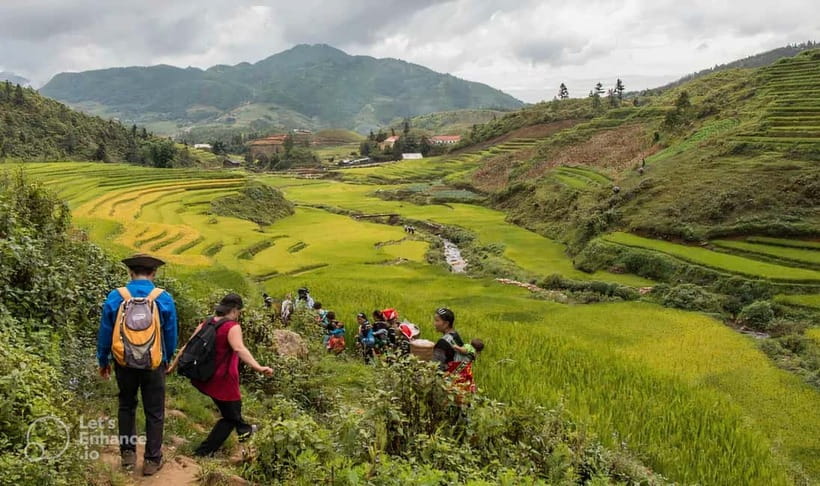
From the ridge, the trail descends toward Muong Hoa Valley. The rice terraces are the visual heart of the walk, especially when the slopes are green and the mountain air is clear.
The terraces are not a single viewpoint. You experience them from changing angles as the path drops through fields and follows the contours of the valley. That makes the walk more rewarding than a quick drive to a lookout. You see how the fields occupy narrow mountain shelves, with streams and paths linking one level to another.
The descent can be harder than it looks. Dry ground may feel manageable, but wet soil turns smooth sections into sliding zones. Several people found the route challenging after rain, particularly where the path became steep or muddy. Good hiking shoes are more important here than expensive outdoor clothing.
You may also see Hmong women working in the fields. These encounters can be a strong reminder that the terraces are working farmland, not a decorative garden built for photographs. Ask before taking close-up pictures, and let your guide help with polite communication.
Y Linh Ho at 11:00 AM, river, bridge, and open fields
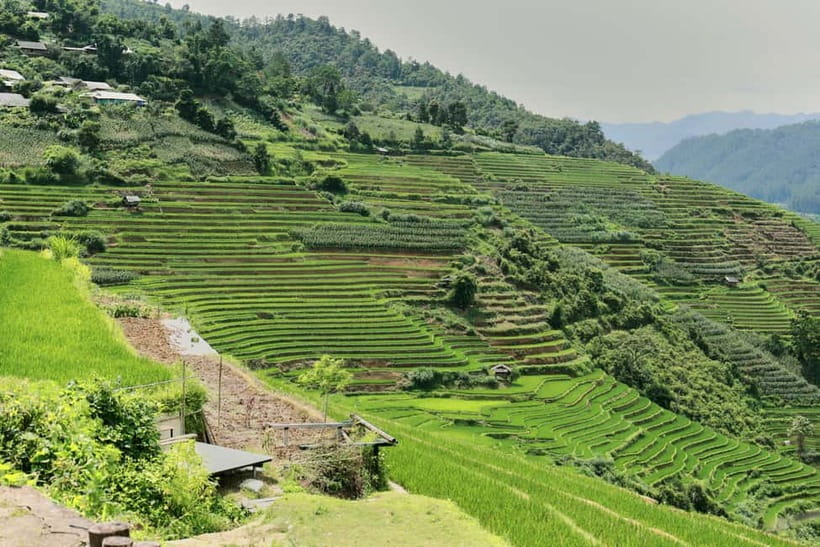
Around 11:00 AM, the route reaches Y Linh Ho, a quiet Hmong village beside a clear river. A wooden bridge provides one of the memorable crossings of the day, followed by a walk deeper into the valley.
This section gives you a feel for the valley’s scale. The peaks rise around the trail, yet the walking remains close to fields, water, and homes. The combination is what makes Sapa special: grand mountain views are never far from ordinary rural work.
Your guide is likely to be most valuable here. Guides from villages in the area can explain family life, farming routines, and local customs with examples drawn from their own communities. Chai was praised for combining humor with thoughtful explanations, while Thao spoke openly about women’s lives and social change in the villages. Those conversations can give the scenery more meaning.
The path is uneven, and you may need to step carefully over wet stones or narrow sections. People with back, heart, mobility, or other existing medical problems should take the operator’s warning seriously. This route is not suitable for wheelchair users or anyone who needs a flat surface.
More Hiking and Trekking Tours in Sapa
- Number one top rated ethical cultural trekking and homestay by ETHOS
★ 5.0 · 456 reviews - From Sapa: 1-Day Guided Trek to Lao Chai & Ta Van with Lunch
★ 4.9 · 416 reviews - Sa Pa Full Day Trekking Tour
★ 5.0 · 414 reviews - Sapa 1 Day Long Trek: Trek to Hau Thao and Sa Seng Villages
★ 4.6 · 344 reviews
Lao Chai Sang lunch with a Hmong family
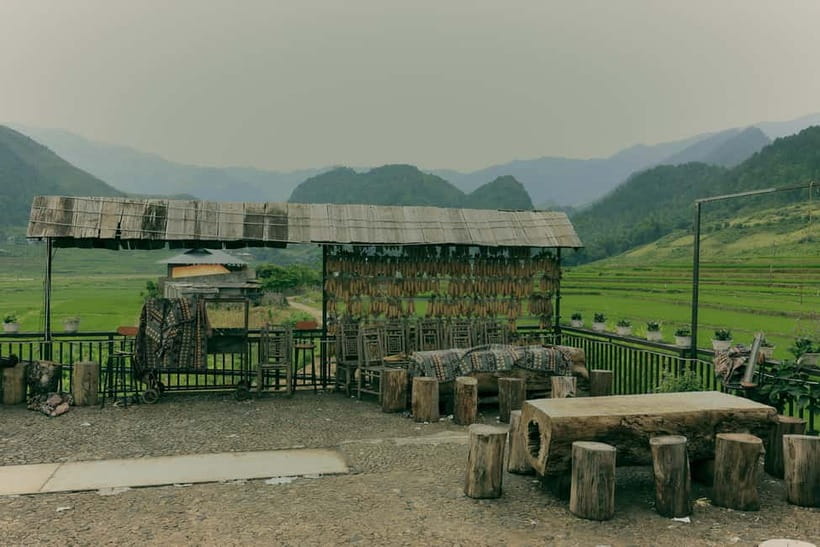
The schedule places lunch around 12:30 PM in Lao Chai Sang, where a Hmong family serves a home-cooked meal. Some descriptions also refer to lunch in or near Ta Van, so confirm the exact lunch stop with the operator before departure if that detail matters to you.
The meal is usually served family-style, with several dishes placed for sharing. The food has been praised for being generous and tasty, and you can ask for more if needed. This pause is about more than refueling. Sitting in a home, eating at a relaxed pace, and talking with the people who live along the route creates a more personal connection than eating at a standard restaurant.
Tell the operator about allergies or dietary restrictions before the tour. The activity says that special diets can be accommodated, but last-minute requests are never as easy in a rural setting.
Lunch also gives your feet a break before the second half of the trek. Wear clothing you can sit comfortably in, and keep a light layer handy. Sapa weather can shift from warm sun to cloud and rain during the same outing.
Clothing, indigo dye, and traditional craft
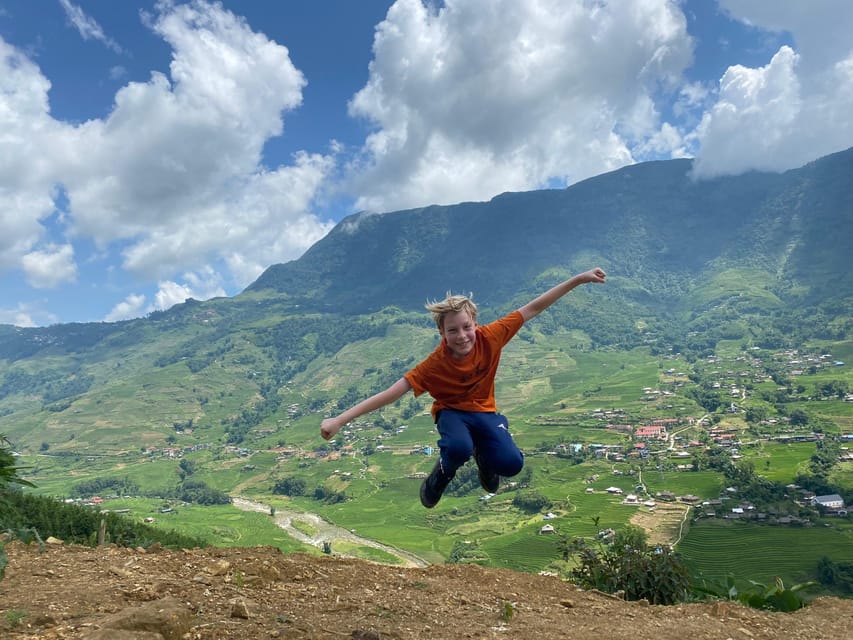
Around 2:00 PM, the trek includes a local craft stop. The activity description highlights traditional clothing made from handwoven fabric and natural dyes, while the route information also refers to learning the art of incense making. Several accounts specifically describe seeing indigo dyeing, so you may have the chance to watch or discuss this process with local people.
This is one of the most useful cultural parts of the day because it connects clothing with labor. Fabric is not just a souvenir. It represents time spent weaving, coloring, drying, sewing, and maintaining designs tied to community identity.
You may meet local women selling scarves or other handmade items along the route. Buying something can directly support the people you meet, but you should not feel obliged to purchase. A few people found the sales approach tiring, particularly when they wanted to focus on walking. A friendly, clear no is enough.
If you do buy a textile, ask who made it and how it was produced. That simple question can turn a quick purchase into a better understanding of the work behind it.
Ta Van around 3:00 PM and the ride back to Sapa
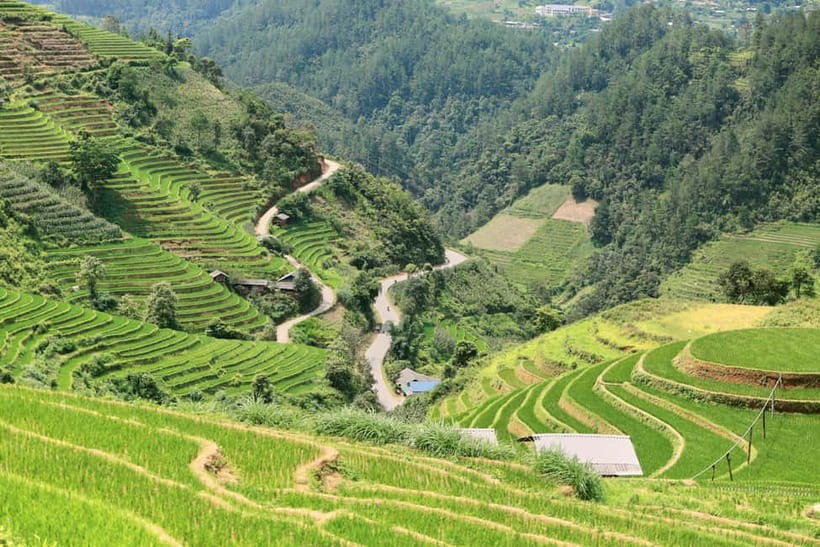
The final destination is Ta Van, a quieter Giay village. You have time for a last walk, photographs, and more explanation about local life before the driver meets the group.
Ta Van works well as the endpoint because it brings another ethnic community into the day. The Hmong and Giay have distinct traditions, and the contrast helps you see that Sapa is not one single cultural area. Your guide can explain those differences in a clear, respectful way.
The return vehicle takes you back to Sapa town. Drop-off at your preferred location may be free or may carry a fee depending on where you are staying, so communicate the address in advance. Transport received very strong marks for reliability, and the included ride is especially helpful after several hours on steep paths.
If you have a train or bus connection from Lao Cai later that day, leave a generous buffer. The stated duration is seven hours, but weather, trail conditions, group pace, and photo stops can affect the finish.
How difficult is the route?
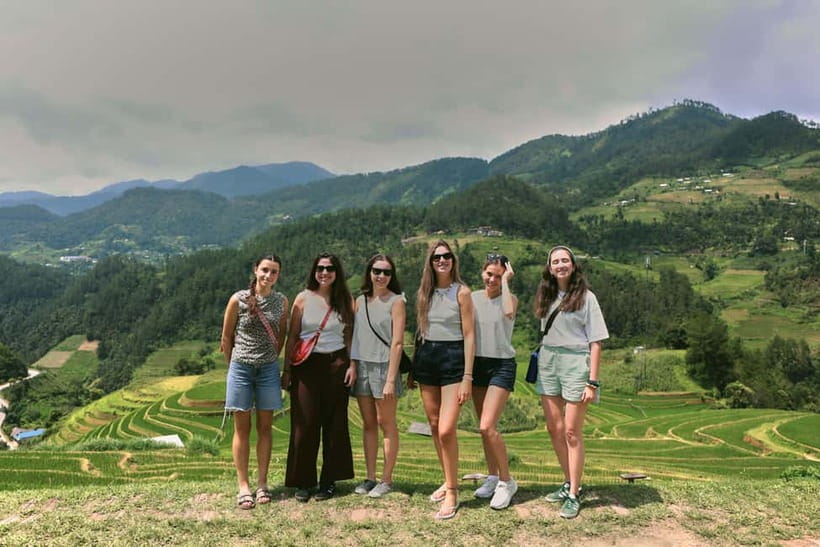
Fitness matters more than technical hiking skill. You do not need mountaineering experience, but you should be comfortable walking for several hours on uneven ground with repeated climbs and descents.
Some groups described the route as manageable. Others covered 13 to 15 kilometers and found the muddy sections demanding. Both descriptions can be true because weather changes the effort dramatically.
Bring:
- Hiking shoes with strong grip
- Water and sun protection
- A hat or sun cap, sunglasses, and sunscreen
- Insect repellent
- A raincoat or poncho
- Toiletries and a small personal day pack
The operator provides a small bottle of water and rain ponchos or raincoats, but I would still bring extra water. During wet periods, rubber boots can be rented locally, and one person called them a game-changer. Sneakers may work in dry conditions, but they are a poor bet on slick mud.
The tour runs in rain or sunshine. Cloud can hide Fansipan and soften the views, but mist also gives the valley a quieter mood. Rain is less romantic when you are sliding downhill, so prepare for the practical side of the weather.
The guides make the biggest difference
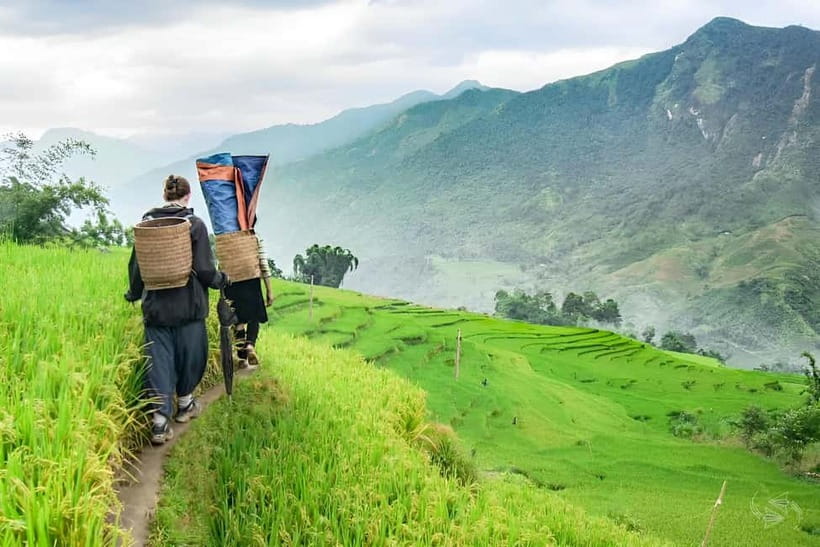
The route is good, but the guide determines how much you take from it. The strongest guides adjust speed, choose safer paths, and explain what you are seeing without turning the walk into a lecture.
Mao was praised for asking whether the group wanted easier or steeper paths. Sung and Soso were noted for clear English and lively conversation. Giang shared local traditions and helped keep the day personal, while Ma Ma Je showed visitors the indigo process and spoke warmly about her village.
English ability can vary from guide to guide, although many have been praised for communicating well. The most valuable quality is not perfect grammar. It is the willingness to stop, listen, explain, and make the route fit the group.
You should tell your guide early if your knees hurt, if you need a slower pace, or if you would prefer a less steep option. The route has some flexibility, but the group still needs to move together.
Is $24 good value?
At $24 per person, this is excellent value if the route operates as described. You receive hotel pickup within Sapa town, a local guide, village entrance fees, lunch, a return ride, rain protection, and a small bottle of water.
The price is low enough that you should not expect a polished luxury excursion. You are paying for a local walking experience, not a private vehicle waiting beside every viewpoint or a professionally staged cultural show. The rewards are the guide’s stories, the time on the paths, and the chance to eat with a local family.
Small groups improve the value. A group of four can move at a shared pace and take more questions, while the maximum of 10 keeps the outing from becoming unwieldy. If you want complete control over stops and speed, ask about a private or custom route.
Free cancellation up to 24 hours before departure and reserve-now, pay-later booking make the plan easier to manage. Those features are useful in Sapa, where weather can change quickly, but you should still read the final booking terms for any transport fees outside town.
Who should book this trek?
I would choose this experience if you want the classic Sapa views but also care about local life. It suits people who enjoy active days, shared meals, small groups, and conversations with guides from the nearby villages.
It is also a smart choice if you have only one night in Sapa. Darcy described it as a good introduction to the area, and I agree with that logic. In one day, you see terraces, streams, villages, mountain ridges, craft traditions, and two ethnic communities.
I would be cautious if you have weak knees, limited mobility, heart problems, a fear of heights, or another medical condition. The operator specifically excludes people with these concerns, and the muddy slopes are not a place to discover that a long descent is beyond your comfort level.
The experience is also less suitable if you want a completely quiet walk without sales encounters. Local women may accompany part of the route and offer scarves or other goods. That is part of the complicated reality of tourism in Sapa, but you should know about it before you go.
Should you book the Lao Chai to Ta Van trek?
Yes, if you are prepared for a real mountain walk. The scenery is excellent, but the best reason to book is the combination of local guides, family-style food, and time spent in Hmong and Giay communities.
Wear proper shoes, bring water, expect mud, and allow the whole day. Ask in advance about the lunch location, pickup if you are outside Sapa town, and any dietary needs. If the weather is poor, let the guide choose a lower or safer route rather than chasing a view hidden in cloud.
At $24, this is one of the better-value ways to see Sapa beyond the town streets. It asks for effort, but it gives you far more than a bus ride to a viewpoint.
FAQ
How long does the Sapa trek last?
The activity lasts about seven hours, beginning around 9:00 AM and reaching Ta Van around 3:00 PM before the return ride to Sapa.
Where does pickup take place?
Pickup is available from hotels or other locations within Sapa town. If you are staying outside town, you can request paid transport to the meeting point or go to Sapa TT Homestay at 812 Dien Bien Phu Street or Sapa View Spring Garden Hotel at 61 Muong Hoa Street.
Is lunch included?
Yes. A home-cooked lunch is included and is generally prepared by a local family. Dietary restrictions and allergies should be communicated before the tour.
What villages does the trek visit?
The route includes Y Linh Ho, Lao Chai Sang, Lao Chai, and Ta Van. The experience focuses on Hmong and Giay communities in and around Muong Hoa Valley.
What language does the guide speak?
Guides speak English and Vietnamese. The trek is led by local Hmong guides from nearby villages.
Is the trek difficult?
The route includes steep and uneven sections and may cover around 12 to 15 kilometers depending on the path and group. Mud can make it much harder after rain.
What should I bring?
Bring hiking shoes, a hat, sunscreen, sunglasses, water, insect repellent, toiletries, and rain protection. Rubber boots may be useful in wet conditions.
Can I cancel the booking?
You can cancel up to 24 hours in advance for a full refund. The activity also offers a reserve-now, pay-later option.
More Countryside and Village Tours
- Motorbike 1 Day Off The Beaten Track, Hidden Villages, rice field
★ 5.0 · 203 reviews - Sapa 1 day trek with local guide to the village by Comlam
★ 5.0 · 148 reviews - Sapa Muong Hoa Valley & Ta Van Eco Village Scenic Tour (No Trek)
★ 5.0 · 144 reviews - Sapa: Motorbike Tour 1 Day Visit Waterfalls & Local Villages
★ 5.0 · 112 reviews
More Sapa Trips and Treks
- Cat Cat Village, Moana, Fansipan Cable Car, Alpine Coaster – Sapa
★ 5.0 · 420 reviews - Sapa: Fansipan Cable, Cat Cat Village, Moana Instagram Tour
★ 4.8 · 294 reviews - From Sapa: 3-Day Ha Giang Loop with Safe Rider (max 8 pax)
★ 4.9 · 285 reviews - Sapa Motorbike Tour With Local Guide 1 Day – Waterfalls, Villages
★ 5.0 · 254 reviews
Just added around Sapa
- Sapa trekking 2 days small group★ 5.0 · 32 reviews
- From Sapa: 3 Day Ha Giang Loop Guided Motorbike Tour With Rider★ 5.0 · 33 reviews
- Vietnamese Spring Rolls Cooking Class★ 5.0 · 34 reviews
- Sapa: 3-Day Ha Giang Loop Motorbike Tour★ 4.9 · 34 reviews
- 2 Day Trekking Experience: Explore with knowledgeable local guide★ 5.0 · 34 reviews
- Trek Adventure in Ta Van Village, Lao Chai★ 5.0 · 36 reviews
- Sapa Trekking & Cooking with H’Mong Locals –Local Culture★ 5.0 · 36 reviews
- Sapa Private Car Rental–Half & Full Day & English Speaking Driver★ 5.0 · 37 reviews
Sapa Trips and Treks, compared.

Sapa 2 Days 1 Night From Hanoi – Overnight in Ta Van Village
Read our review →

Muong Hoa Valley Trek and Local Ethnic Villages
Read our review →
Fansipan Cable, Cat Cat Village & Moana Instagram Tour
Read our review →

Sapa 3 Days 2 Nights Trekking Tour (1 Night In Ta Van Village, 1 Night In Hotel)
Read our review →
Eco Adventure Terrace Fields and Local Villages Trek
Read our review →