
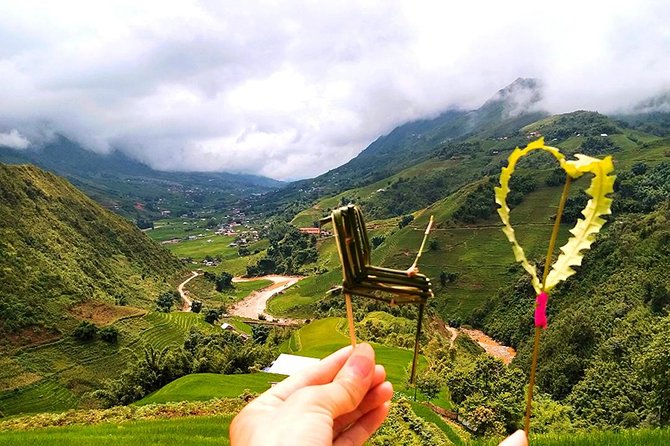
Reviewed · HIKING & TREKKING
Muong Hoa Valley Trek & Homestay Experience – 4D3N
Sapa’s best views come on foot. This four-day route takes you through five villages associated with Hmong, Giay, and Red Dao communities, with rice terraces, waterfalls, mountain paths, and the Muong Hoa River along the way. It is less about checking off viewpoints and more about seeing how people live and work in the valleys below Sapa.
I like the combination of big mountain scenery and village visits, and I also like the chance to learn about Hmong marriage customs, farming, house building, and Red Dao traditions from a local guide. The main consideration is physical effort: this is a multi-day trek, and summer heat can be much stronger in the valley than in Sapa Town. One June trek recorded temperatures of 31 to 32 degrees in the lower areas, even though Sapa itself was about 23 degrees.
The tour costs $190 per person and includes meals, village entry fees, a guide, water, and transport back to Sapa. That can be good value for four days, but you should clarify the accommodation details before paying. The inclusions list says one night of homestay accommodation, while the tour is described as a four-day, three-night experience.
In This Review
- Key points to know before you book
- Starting at Sapa Church at 9 a.m.
- Y Linh Ho and the first rice terraces
- Ta Van Village below Hoang Lien mountain
- Giang Ta Chai waterfall and Red Dao traditions
- Ban Ho and the route to Nam Toong
- The Muong Hoa River on the final morning
- What is included for $190
- How hard is the trek?
- The cultural value of a local guide
- Booking, group size, and practical details
- Who should book this Sapa trek?
- Should you book the Muong Hoa Valley trek?
- FAQ
- Where does the Muong Hoa Valley trek start?
- What time does the tour begin?
- How many villages does the tour visit?
- Which ethnic communities do you learn about?
- What meals are included?
- Is homestay accommodation included?
- What happens if the weather is too poor for the trek?
Key points to know before you book
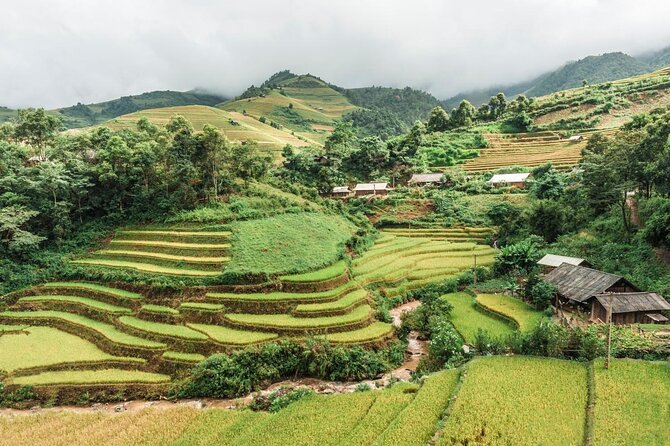
- Five villages in four days: The route links Y Linh Ho, Ta Van, Giang Ta Chai, Ban Ho, and Nam Toong, with a final walk near the Muong Hoa River.
- Three ethnic communities: You learn about Hmong, Giay, and Red Dao customs, work, homes, farming, and family traditions.
- Rice terraces are central: The most impressive scenery comes from the valley paths and the terraces below Hoang Lien mountain.
- Summer conditions can be hot: The valley may feel much warmer than Sapa Town, and rain is possible during the wet season.
- Meals are included: The package lists three dinners, four lunches, and three breakfasts, plus one large bottle of water per person.
- Small group size: The maximum is 15 people, a useful limit for narrow village trails and local conversations.
Starting at Sapa Church at 9 a.m.
Your meeting point is Sapa Church in Ham Rong Street, in central Sapa Town. Pickup is offered from a hotel in town, or you can meet the guide in front of the church. The tour begins at 9 a.m., giving you time to have breakfast and prepare without a pre-dawn start.
The first transfer takes you about 2 kilometers down the road toward Cat Cat. From there, the route heads into the valley toward Y Linh Ho. The opening stretch is useful because it quickly puts you below the busy center of Sapa and into the quieter mountain scenery.
You should expect the first day to set the pattern for the whole trip: walking between villages, pausing for views, and learning about local life rather than rushing from one attraction to the next. The guide is important here. A local guide can explain details that would otherwise look like ordinary houses, fields, or footpaths.
The tour provider describes itself as a small local Hmong operation in Sapa. A response from the company is signed by Sinh, although the supplied details do not confirm that Sinh personally leads every departure. If having a particular guide matters to you, ask when booking.
More Hiking and Trekking Tours in Sapa
- Sa Pa: Muong Hoa Valley Trek and Local Ethnic Villages
★ 4.6 · 864 reviews - Sapa: Eco Adventure Terrace Fields and Local Villages Trek
★ 4.9 · 636 reviews - Number one top rated ethical cultural trekking and homestay by ETHOS
★ 5.0 · 456 reviews
Y Linh Ho and the first rice terraces
Y Linh Ho is one of the first major stops and gives you an early look at the valley’s working countryside. The route is not simply a walk through scenic fields. It is also a chance to see how terraces shape daily life in the mountains.
The rice terraces are most impressive when viewed from above or across the valley. Their lines follow the slopes, making the steep ground usable for cultivation. The scenery changes with the season, so the fields may look different from the fresh green growth of the growing period to the warmer tones around harvest time.
The route can be especially warm once you lose Sapa’s higher elevation. A June trek took place during the wet season, but the group avoided rain during the walking hours. That is good luck rather than a guarantee. Bring clothing that dries quickly and protect your phone or camera if clouds build.
The first day is likely to feel long if you are not used to uneven mountain paths. The tour requires moderate physical fitness, and that wording should be taken seriously. You do not need to be an athlete, but you should be comfortable walking for several days in changing weather.
Ta Van Village below Hoang Lien mountain
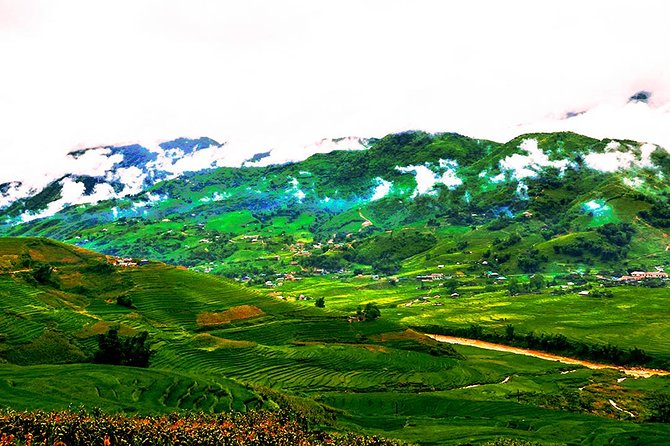
The route continues to Ta Van Village, where the views open toward large rice terraces and the Hoang Lien mountain area. This is one of the strongest scenic parts of the tour. You get the scale of the mountains without being confined to a roadside viewpoint.
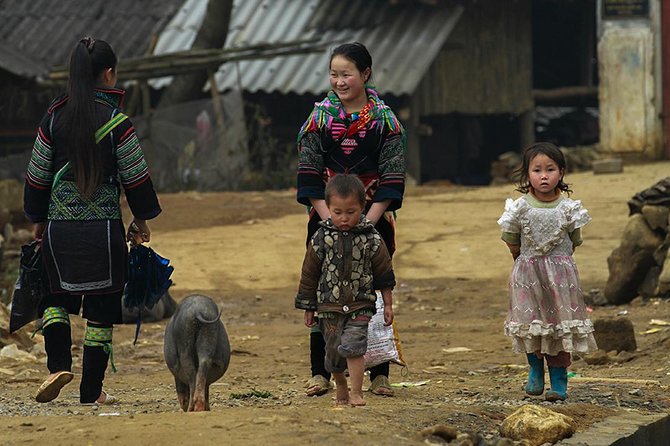
Ta Van is also important for the cultural side of the trip. The route passes through communities connected with the Giay people, among others, and the guide helps explain local customs and traditions. The value here is context. A rice terrace is beautiful, but it becomes more meaningful when you understand the work needed to build and maintain it.
The supplied schedule gives only brief stop times for several points, so do not read the listed one or two minutes as the length of your visit. Those figures appear to be itinerary markers rather than a promise that you will spend only a minute at each village. Still, the tour description does not provide exact walking distances or daily departure times, so ask for a current route plan if you want to measure the effort closely.
Accommodation is another point to confirm. The tour is promoted as a homestay experience, but the inclusions specifically list accommodation at a homestay for one night. The itinerary covers four days and provides three breakfasts and three dinners, which suggests overnight arrangements are involved, yet the information does not clearly state where all nights are spent. Get that detail in writing before booking.
Giang Ta Chai waterfall and Red Dao traditions
After breakfast on the second day, the route climbs toward the waterfalls of Giang Ta Chai. This change in scenery gives the trip a welcome lift after the first day of terraces and village paths. Water, forested slopes, and the sound of a waterfall make this section feel different from the open rice fields.
Giang Ta Chai takes you into an area associated with the Red Dao people. The guide introduces their customs and culture in more detail, helping you compare them with the Hmong and Giay communities seen elsewhere on the route.
This is where the tour’s cultural focus earns its keep. You are not just looking at traditional clothing or houses from a distance. The stated program includes discussion of work, homes, marriage traditions, and everyday practices. That makes the walking feel tied to real communities rather than arranged as a simple photo stop.
The uphill section may be demanding. If you visit during the wet season, mud and slippery ground are possible, even if rain does not fall while you walk. Good shoes matter more here than stylish footwear. The tour does not state that walking poles are supplied, so bring your own if you normally use one.
More Hiking and Trekking Tours:
- From Sapa: 1-Day Guided Trek to Lao Chai & Ta Van with Lunch
★ 4.9 · 416 reviews - Sa Pa Full Day Trekking Tour
★ 5.0 · 414 reviews - Sapa 1 Day Long Trek: Trek to Hau Thao and Sa Seng Villages
★ 4.6 · 344 reviews - EXPLORE SAPA: 2D1N TREKKING & HMONG CULTURE WITH DINH
★ 4.9 · 191 reviews
Ban Ho and the route to Nam Toong
Day three centers on Ban Ho Village. After breakfast, you continue roughly 3 kilometers from Ban Ho to Nam Toong. This is a manageable distance on paper, but the real effort depends on the trail surface and the day’s weather.
Nam Toong offers a closer look at the Red Dao community. The description places particular emphasis on learning how the Red Dao live, so this section suits you if you prefer cultural explanation over a nonstop march toward viewpoints.
Ban Ho also gives the trip a different rhythm. The schedule describes breakfast there and later walking from Thanh Phu back to Ban Ho by another route. That suggests the valley section is not a single out-and-back walk, although the exact overnight locations should still be confirmed.
The route is likely to feel more personal than a short half-day trek because you have time to return to the same area and see it from another direction. You also have more chances to ask questions. With a maximum group size of 15, the guide should have a better chance of speaking with people at a natural pace than on a large coach excursion.
The Muong Hoa River on the final morning
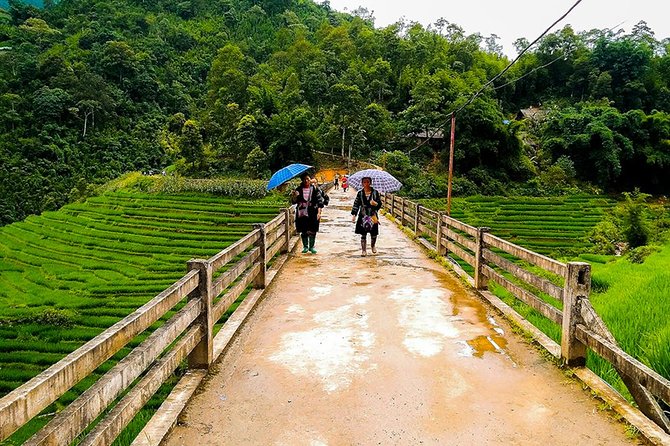
The fourth day begins with breakfast before the walk from Thanh Phu back to Ban Ho. This route follows the Muong Hoa River and is described as an easy but scenic way to finish.
That final walk is a sensible ending. After several days of village paths, uphill sections, and changing terrain, a gentler riverside route lets you enjoy the valley without another hard push. You still get mountain scenery and village views, but the pace should feel less demanding.
The tour then provides transport back to Sapa after the village portion ends. The published end point is the original meeting point, so you should expect to finish in central Sapa rather than at a separate destination.
The itinerary does not give an exact return time. If you have a train, bus, cable car booking, or other fixed plan after the trek, leave a generous buffer. Mountain routes and weather can affect timing, and the tour does not promise a specific arrival hour.
What is included for $190
At $190 per person, the price looks reasonable if the four days operate as described. You receive:
- Village entry fees
- A local guide
- Homestay accommodation listed for one night
- Transport back to Sapa
- Three dinners
- Four lunches
- Three breakfasts
- One large bottle of water per person
Meals are a major part of the value. Four lunches and three breakfasts cover the walking days, while three dinners reduce the need to arrange food in rural villages. You still pay for extra drinks such as bottled water or beer at the homestay, and tips are not included.
The water allowance is helpful but limited. One large bottle per person is not the same as a full supply for four days, especially in the hot valley conditions described by a June participant. Ask how much additional drinking water you can buy along the route, and carry enough capacity for your own needs.
Insurance is not included. You should arrange personal travel insurance separately, particularly because the route involves several days of walking and the tour may be canceled in poor weather.
The tour requires a minimum number of people to operate. If that minimum is not met, you are offered another date or experience, or a full refund. Poor weather can also lead to a change of date or a full refund.
How hard is the trek?
The official fitness guidance is moderate. That means you should be comfortable with repeated walking days, uneven paths, village trails, and at least some uphill movement. The program includes a climb toward Giang Ta Chai and several days in the valley, so the heat may be as important as the distance.
A summer wet-season departure can be humid and hot below Sapa. One reported June experience had valley temperatures of 31 to 32 degrees, despite cooler conditions in Sapa Town. You may also encounter rain, particularly in the wet season, though a dry walking day is possible.
I would pack:
- Comfortable walking shoes with dependable grip
- Lightweight clothing that dries quickly
- A waterproof layer for sudden rain
- Sun protection
- A small day bag
- Extra drinking water capacity
- A phone or camera cover
- Personal medication and travel insurance details
The tour does not list porter service, luggage handling, or equipment rental. Ask what happens to your larger bag during the trek. Do not assume that all personal luggage will travel with you between villages.
The cultural value of a local guide
The best reason to choose this trip over a basic valley walk is the guide-led explanation. The program includes Hmong marriage traditions, rice farming, work, house building techniques, and Red Dao customs.
Those details help you understand the valley as a lived-in place. The terraces are not just scenery, and the homes are not just backgrounds for photographs. They reflect work, family life, land use, and local identity.
You should still approach village visits with care. Ask before photographing people, homes, animals, or private activities. A guide can help you understand what is appropriate, but respectful behavior remains your responsibility.
The company says it is locally run by Hmong people in Sapa. That makes this a more direct way to support a local operator than a large sightseeing circuit, though the available information does not specify how homestays are selected or how the money is divided among communities.
Booking, group size, and practical details
The tour has a maximum group size of 15 people. That is not a private trek, but it is small enough to keep the group together on narrow paths and make guide explanations easier to hear.
Confirmation is provided at booking, and mobile tickets are accepted. The meeting point is near public transportation, and hotel pickup in Sapa Town is offered. The start time is 9 a.m.
The tour can be canceled free of charge up to 24 hours before the start time for a full refund. Cancellations or changes within 24 hours are not refunded or accepted. Since bad weather can affect mountain trails, this policy is worth reading before you make other fixed arrangements.
The experience has a 5 out of 5 rating from 42 published reviews and is recommended by 98 percent of customers. Those numbers suggest strong satisfaction, but they do not remove the need to confirm the accommodation, luggage plan, daily walking distances, and water arrangements.
Who should book this Sapa trek?
I would choose this tour if you want several days of village walking rather than a quick scenic outing. It suits you if you enjoy mountain views, local history and customs, simple rural accommodation, and a schedule that keeps moving.
It is also a good fit if you want one organized package covering food, guiding, entry fees, and return transport. At $190, that bundle can save effort and offer fair value, particularly for solo visitors who would otherwise need to arrange a guide and meals separately.
I would hesitate if you want a soft adventure with exact timings and hotel-standard accommodation. The route requires moderate fitness, the valley can be hot, and the accommodation information needs clarification. You should also think twice if you dislike uncertain weather or uneven paths.
Should you book the Muong Hoa Valley trek?
Book it if your priority is four days of scenery and cultural contact, not luxury. The combination of Y Linh Ho, Ta Van, Giang Ta Chai, Ban Ho, Nam Toong, rice terraces, waterfalls, and the Muong Hoa River gives you a broad view of the Sapa region.
Before booking, ask three direct questions: Where do I sleep each night? How is my main luggage handled? How much extra water should I carry? If the answers suit you, the price and included meals make this a practical way to see more than the usual Sapa viewpoints.
FAQ
Where does the Muong Hoa Valley trek start?
The tour starts at Sapa Church on Ham Rong Street in Sapa Town. Pickup is offered from hotels in Sapa Town, or you can meet the guide in front of the church.
What time does the tour begin?
The start time is 9 a.m.
How many villages does the tour visit?
The tour visits five villages or village areas: Y Linh Ho, Ta Van, Giang Ta Chai, Ban Ho, and Nam Toong.
Which ethnic communities do you learn about?
The program focuses on the Hmong, Giay, and Red Dao ethnic minorities.
What meals are included?
The tour includes three dinners, four lunches, and three breakfasts.
Is homestay accommodation included?
The inclusions list homestay accommodation for one night. Because the tour lasts four days and is described as a three-night experience, you should confirm the accommodation arrangements for every night before booking.
What happens if the weather is too poor for the trek?
If the tour is canceled because of poor weather, you are offered a different date or a full refund. Free cancellation is also available if you cancel at least 24 hours before the start time.
More 4-Day Experiences
- Ha Giang Loop 4 Days 3 Nights Motorbike Tour with easy Rider
★ 5.0 · 972 reviews - Ha Giang Loop Tour 4 Days 3 Nights with Ha Giang Vision Tour
★ 5.0 · 675 reviews - Ha Giang Tour 4 Day-3-Night, English Speaking Guide, Small Group
★ 5.0 · 562 reviews - Ha Giang loop 3 or 4 Days, Small Group Tour (within easy riders)
★ 5.0 · 429 reviews
Just added around Sapa
- Sapa trekking 2 days small group★ 5.0 · 32 reviews
- From Sapa: 3 Day Ha Giang Loop Guided Motorbike Tour With Rider★ 5.0 · 33 reviews
- Vietnamese Spring Rolls Cooking Class★ 5.0 · 34 reviews
- Sapa: 3-Day Ha Giang Loop Motorbike Tour★ 4.9 · 34 reviews
- 2 Day Trekking Experience: Explore with knowledgeable local guide★ 5.0 · 34 reviews
- Trek Adventure in Ta Van Village, Lao Chai★ 5.0 · 36 reviews
- Sapa Trekking & Cooking with H’Mong Locals –Local Culture★ 5.0 · 36 reviews
- Sapa Private Car Rental–Half & Full Day & English Speaking Driver★ 5.0 · 37 reviews
Hiking & Trekking, compared.

Halong Bay Full Day with Kayaking, Hiking viewpoint, Cave – Deluxe To Luxury
Read our review →
Muong Hoa Valley Trek and Local Ethnic Villages
Read our review →

Sapa 3 Days 2 Nights Trekking Tour (1 Night In Ta Van Village, 1 Night In Hotel)
Read our review →
Eco Adventure Terrace Fields and Local Villages Trek
Read our review →
3-Day Trekking Adventure of Sapa from Hanoi – Stay Ta Van Village
Read our review →
3D and 2N Lan Ha Bay Cat Ba Island Kayaking & Trekking with Vega
Read our review →
Number one top rated ethical cultural trekking and homestay by ETHOS
Read our review →Browse the lists this tour appears in