
Reviewed · SAPA TRIPS AND TREKS
Sapa Easy Trekking Tour 1 Day – Rice Paddies and Cultures
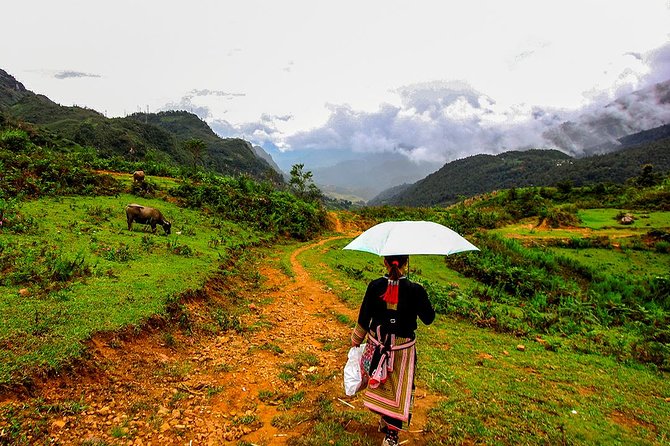
Rice terraces reward every step. This 5.5-hour Sapa trek links Suoi Ho, Ma Tra, and Ta Phin, with mountain views, village paths, buffalo, and a visit to Ta Phin Cave. I like the chance to meet both Black Hmong and Red Dao communities, and I like that the tour keeps the group tiny, with a maximum of two people. The main catch is the word easy: at roughly 11 kilometers, with steep and slippery sections, this is not a gentle stroll.
I also like that a local guide leads the walk and shares personal insight into life in the area. Pang and Zhu have earned especially warm praise for their guiding, with Pang noted for sharing her experience as a Hmong woman. You should still bring sensible shoes and expect a proper mountain trek, not a flat walk between viewpoints.
In This Review
- Key Points
- What This Sapa Trek Really Offers
- Starting at Sapa Church at 9:00 am
- Suoi Ho and the First Rice Terrace Views
- Ma Tra, Small Roads, and Mountain Farming
- Reaching Ta Phin and Meeting Red Dao Culture
- Ta Phin Cave: A Change of Scene
- Lunch, Water, and What You Pay For
- A Small Group Makes the Day More Personal
- Who Should Book This Route?
- Practical Details Before You Go
- Should You Book the Sapa Easy Trekking Tour?
- FAQ
- Where does the Sapa trekking tour start?
- What time does the tour begin?
- How long does the experience last?
- Which villages does the route visit?
- Is Ta Phin Cave included?
- How far is the trek?
- What is included in the price?
- Are drinks included?
- What fitness level is needed?
Key Points
- Two minority villages in one outing: Visit communities connected with the Black Hmong and Red Dao peoples.
- About 11 kilometers on foot: The route includes small trails, village roads, rice terraces, and mountain paths.
- Ta Phin Cave included: The cave gives the day a natural attraction beyond the terraces and villages.
- Small-group format: The tour accepts a maximum of two people, which can make the pace and conversation more personal.
- Lunch and return transport included: Vegetarian food is available, while drinks cost extra.
- Easy means moderate fitness: Slippery slopes and uneven ground make sturdy footwear important.
What This Sapa Trek Really Offers
This tour is a compact way to see the countryside around Sapa without spending a night away from town. You meet at 9:00 am at Sapa Church or at your hotel in Sapa town, then set out toward a string of villages and mountain scenery.
The route is not built around one grand attraction. Its appeal comes from the changes underfoot and around you: a small trail, cardamom plants, old village homes, rice terraces, working animals, mountain views, and local communities. I like this kind of outing because the countryside is not treated as a backdrop. You walk through places where daily work continues around you.
The tour is priced at $40 per person. That includes a local guide, village entry fees, lunch, one small bottle of water, and transport back to Sapa. For a small-group outing of around five and a half hours, that is a reasonable package, especially because the guide and return ride remove some of the planning work. You still need to budget for extra drinks and a tip.
A booking pattern of about 39 days in advance suggests that you should not leave this until the last minute if your Sapa dates are fixed. The maximum group size is two, so availability can be tighter than on larger coach excursions.
More Countryside and Village Tours in Sapa
- Sa Pa: Muong Hoa Valley Trek and Local Ethnic Villages
★ 4.6 · 864 reviews - Sapa: Fansipan Cable, Cat Cat Village & Moana Instagram Tour
★ 5.0 · 777 reviews - Sapa: Eco Adventure Terrace Fields and Local Villages Trek
★ 4.9 · 636 reviews
Starting at Sapa Church at 9:00 am
The meeting point is Sapa Church in the center of town, though pickup from your Sapa hotel is offered. That is useful if the morning is cold, wet, or you are still finding your way around town.
After a short introduction, you walk for about five minutes to a smaller trail. This quick transition matters. You do not spend the morning sitting in a vehicle and then stepping out at a prepared viewpoint. The walk begins close to town and gradually moves into quieter valleys and village areas.
The route heading toward Suoi Ho brings you past cardamom trees. Cardamom is described as one of Sapa’s valuable local crops, so this is a small but worthwhile detail to notice. The plant helps connect the scenery with local agriculture rather than presenting the hills as empty wilderness.
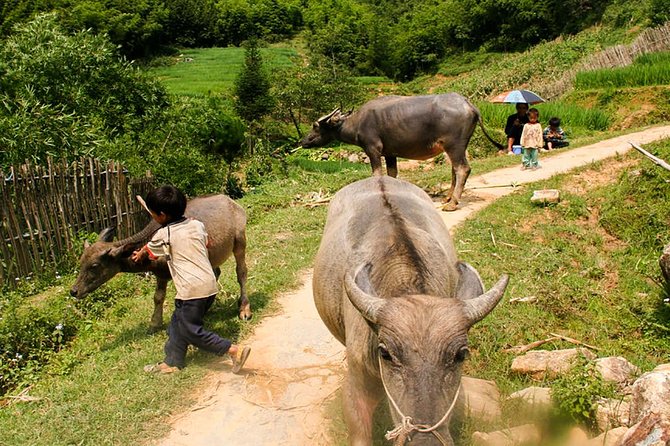
You then hike down toward Suoi Ho, a small Black Hmong village. The houses are described as old and small, and you can expect to see animals used in everyday village life, including water buffalo, chickens, dogs, and pigs. The water buffalo is especially tied to the farming scenes here. It is not just a photo subject, but part of the working countryside you are walking through.
Suoi Ho and the First Rice Terrace Views
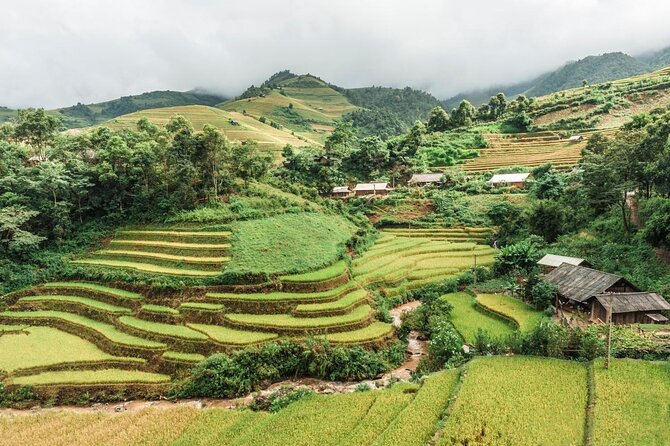
Suoi Ho is where the trek begins to feel more rural. The route gives you views of rice terraces and mountains while you move along smaller roads and paths. Depending on the season and weather, the terraces may look very different, but the basic appeal remains: you see how farming has shaped the hillsides.
I would not expect a polished cultural show. The value is in seeing homes, animals, paths, and fields in their normal setting. Your guide can help explain what you are seeing, and a local guide is particularly useful when you want context about village life rather than just directions to the next stop.
This part also sets the physical tone for the day. A downhill section can be harder than it sounds, especially on damp ground. One poor experience associated with the tour described difficulty on slippery slopes and repeated requests to slow down. The operator disputed whether that person had taken this tour, so the complaint is not enough to judge the guide service on its own. Still, the practical warning is sound: tell your guide early if you need a slower pace, and do not treat the word easy as a promise of level paths.
Ma Tra, Small Roads, and Mountain Farming
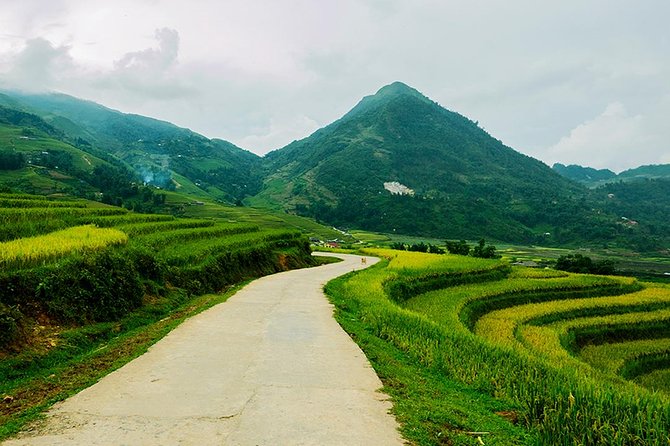
From Suoi Ho, the route continues toward Ma Tra. The provided plan describes small roads, rice terraces, and mountain scenery rather than a single formal attraction at this point. That is good news if you want a walking day with changing views, but less ideal if you prefer a tightly scheduled list of monuments.
Ma Tra helps make the tour feel like a route through the area rather than a quick stop at one famous village. You see the connection between the communities and the fields around them. The rice terraces are the visual star, but the smaller details give the views meaning: animals, homes, crops, and the paths linking one settlement to another.
The route is often described as roughly 11 kilometers in total. At around five and a half hours, that distance allows for pauses, lunch, and time to look around, but you should still expect steady walking. A moderate level of physical fitness is required. Good shoes are more important than stylish clothes here, and shoes with reliable grip will make the day more comfortable.
More Hiking and Trekking Tours in Sapa
- Number one top rated ethical cultural trekking and homestay by ETHOS
★ 5.0 · 456 reviews - From Sapa: 1-Day Guided Trek to Lao Chai & Ta Van with Lunch
★ 4.9 · 416 reviews - Sa Pa Full Day Trekking Tour
★ 5.0 · 414 reviews - Sapa 1 Day Long Trek: Trek to Hau Thao and Sa Seng Villages
★ 4.6 · 344 reviews
Reaching Ta Phin and Meeting Red Dao Culture
Ta Phin is the main cultural and natural highlight of the route. The tour visits a Red Dao community after passing through areas associated with the Black Hmong, giving you a chance to see two distinct ethnic cultures in the same outing.
The Red Dao are one of the minority peoples associated with the Sapa area. The tour does not promise a staged performance or a long museum visit. Instead, the cultural value comes from walking into a village setting and listening to your guide explain local life.
This is where the guide can make a major difference. Pang received especially strong praise for sharing stories and information from her own life as a Hmong woman. That kind of personal connection can turn a view of a house or field into something more meaningful. Zhu was also praised for explaining nature and local traditions clearly.
Because the tour is limited to two people, you should have more room to ask questions than you would on a large group walk. You can ask about farming, village customs, crops, and the differences between the Black Hmong and Red Dao communities. The experience will depend partly on your guide, so it is worth being curious and respectful rather than rushing from one photo stop to the next.
Ta Phin Cave: A Change of Scene
Ta Phin Cave gives the route a welcome change from open terraces and village paths. It is described as a well-known cave in Sapa and is included in the village itinerary.
The information provided does not give the cave’s length, lighting, or exact walking conditions inside, so you should not expect a detailed underground tour based on the advertised material. The safe expectation is a short natural attraction visited as part of the Ta Phin section.
What I like about including the cave is the variety. A day made only of rice terraces can begin to feel repetitive, even when the views are beautiful. The cave breaks up the walk and gives you another setting to explore before the return journey.
Lunch, Water, and What You Pay For
Lunch is included, and vegetarian food can be provided. Drinks at the restaurant or homestay are not included, so keep some money available if you want bottled water, beer, or another beverage.
One small bottle of water is supplied. For a walk of this length, I would not rely on that alone. The tour information specifically says extra bottled water is not included, so ask about carrying more before you start or plan to buy drinks along the way if available.
The $40 price makes the most sense if you value a local guide and a small group. You are paying for more than transport to a viewpoint. The package includes village entry fees, lunch, and the ride back to Sapa, while the maximum of two people gives the outing a private or near-private feel.
It is less attractive if you only want a short photo stop among the terraces. In that case, the distance and moderate fitness requirement may feel like too much work. For someone who wants a guided walk through villages, the price is easier to justify.
A Small Group Makes the Day More Personal
With a maximum of two participants, this is very different from a large bus tour. You can ask questions, discuss the pace, and spend more time listening when something interests you.
There is also a practical side. Small groups do not always mean the guide will automatically match your preferred speed. Speak up before a steep or slippery section, especially if you are less confident on uneven ground. The tour’s own fitness guidance is clear enough: you need a moderate level of fitness.
The strongest praise focuses on the guides and the scenery. Pang was valued not only for information but also for stories about her life. Zhu was praised for explaining the region’s natural features and traditions. Those details point to the best version of this tour: a walk where conversation adds meaning to the views.
The rating is 4.8 from 57 reviews, with 98 percent recommending it. That is a strong record, but it does not erase the route’s physical demands. Think of the tour as accessible to a reasonably active person, not as a casual walk for every age and fitness level.
Who Should Book This Route?
I would choose this tour if you want to:
- See rice terraces without committing to a multi-day trek
- Visit both Black Hmong and Red Dao communities
- Have a local guide rather than follow a self-guided route
- Keep the group very small
- Combine villages, farming scenery, animals, and a cave
- Return to Sapa on the same day
You may want another option if you need a flat path, dislike muddy or slippery ground, or want a shorter outing. The title suggests an easy experience, but the distance and terrain deserve more attention than the title does.
This is also a good fit if cultural explanation matters to you. The best part may not be the cave or even the most dramatic terrace view. It may be the chance to hear a guide such as Pang explain local life from personal experience.
Practical Details Before You Go
Pickup is offered from hotels in Sapa town, and the listed meeting point is in front of Sapa’s main church. The activity ends back at the meeting point after transport returns you to Sapa.
Confirmation is provided at booking, and the tour is near public transportation. Personal travel insurance is not included, and tips are also separate. Free cancellation is available until 24 hours before the 9:00 am start time. Changes or cancellations inside that window are not accepted for a refund.
Weather matters. If poor weather causes cancellation, you are offered another date or a full refund. The tour also requires a minimum number of participants, so a cancellation for that reason comes with the choice of another date or experience, or a refund.
Wear shoes suited to uneven ground. Bring extra drinking water money, protect your phone from rain, and leave enough room in your schedule for a walk that may feel more demanding than the word easy suggests.
Should You Book the Sapa Easy Trekking Tour?
Yes, if you want a small, culture-focused walk with rice terraces, two minority villages, Ta Phin Cave, lunch, and a local guide. The $40 price is fair for the inclusions, particularly with only two people allowed on the tour.
I would book it for the guide contact and the variety of the route, not simply for a quick view of the terraces. Just prepare for roughly 11 kilometers, uneven trails, and possible slippery slopes. If you bring the right shoes and communicate clearly about pace, this offers a useful and personal introduction to the countryside around Sapa.
FAQ
Where does the Sapa trekking tour start?
It starts at Sapa Church on P. Hàm Rồng, TT. Sa Pa, or pickup can be arranged from a hotel in Sapa town.
What time does the tour begin?
The tour begins at 9:00 am.
How long does the experience last?
The approximate duration is 5 hours and 30 minutes.
Which villages does the route visit?
The route includes Suoi Ho, Ma Tra, and Ta Phin. It provides contact with Black Hmong and Red Dao communities.
Is Ta Phin Cave included?
Yes. Visiting Ta Phin Cave is part of the Ta Phin section of the route.
How far is the trek?
The route is described in the tour information as roughly 11 kilometers. The exact walking distance can vary by the path used.
What is included in the price?
The price includes lunch, vegetarian food if requested, transport back to Sapa, village entry fees, one small bottle of water, and a local guide.
Are drinks included?
No. Extra drinks such as bottled water or beer at the restaurant or homestay are not included.
What fitness level is needed?
A moderate level of physical fitness is required. The route includes mountain trails and can have slippery sections, so it is not simply an easy flat walk.
More Countryside and Village Tours
- Motorbike 1 Day Off The Beaten Track, Hidden Villages, rice field
★ 5.0 · 203 reviews - Sapa 1 day trek with local guide to the village by Comlam
★ 5.0 · 148 reviews - Sapa Muong Hoa Valley & Ta Van Eco Village Scenic Tour (No Trek)
★ 5.0 · 144 reviews - Sapa: Motorbike Tour 1 Day Visit Waterfalls & Local Villages
★ 5.0 · 112 reviews
More Sapa Trips and Treks
- Cat Cat Village, Moana, Fansipan Cable Car, Alpine Coaster – Sapa
★ 5.0 · 420 reviews - Sapa: Fansipan Cable, Cat Cat Village, Moana Instagram Tour
★ 4.8 · 294 reviews - From Sapa: 3-Day Ha Giang Loop with Safe Rider (max 8 pax)
★ 4.9 · 285 reviews - Sapa Motorbike Tour With Local Guide 1 Day – Waterfalls, Villages
★ 5.0 · 254 reviews
Just added around Sapa
- Sapa trekking 2 days small group★ 5.0 · 32 reviews
- From Sapa: 3 Day Ha Giang Loop Guided Motorbike Tour With Rider★ 5.0 · 33 reviews
- Vietnamese Spring Rolls Cooking Class★ 5.0 · 34 reviews
- Sapa: 3-Day Ha Giang Loop Motorbike Tour★ 4.9 · 34 reviews
- 2 Day Trekking Experience: Explore with knowledgeable local guide★ 5.0 · 34 reviews
- Trek Adventure in Ta Van Village, Lao Chai★ 5.0 · 36 reviews
- Sapa Trekking & Cooking with H’Mong Locals –Local Culture★ 5.0 · 36 reviews
- Sapa Private Car Rental–Half & Full Day & English Speaking Driver★ 5.0 · 37 reviews
Sapa Trips and Treks, compared.

Sapa 2 Days 1 Night From Hanoi – Overnight in Ta Van Village
Read our review →

Muong Hoa Valley Trek and Local Ethnic Villages
Read our review →
Fansipan Cable, Cat Cat Village & Moana Instagram Tour
Read our review →

Sapa 3 Days 2 Nights Trekking Tour (1 Night In Ta Van Village, 1 Night In Hotel)
Read our review →
Eco Adventure Terrace Fields and Local Villages Trek
Read our review →