
Reviewed · SAPA TRIPS AND TREKS
Sa Pa: 6-Hours Muong Hoa Valley Trek with Local Ethnic guide
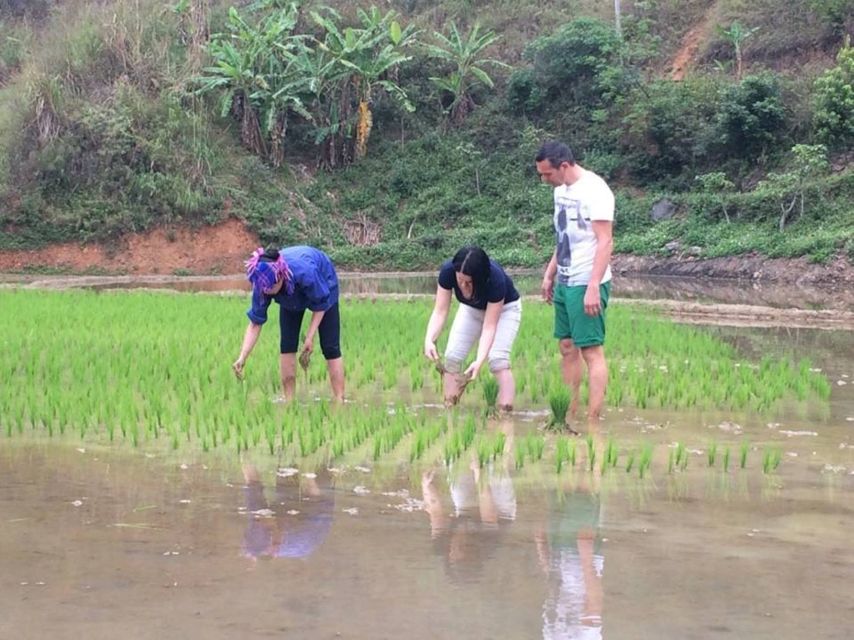
Mud, mountains, and village paths make this trek memorable. This six-hour outing from Sa Pa takes you through the beautiful Muong Hoa Valley, with terraced rice fields and local guides who explain daily life among the Black Hmong and Dzay communities. I like the small-group size, limited to 11 people, and the low $18 price, which includes transport, an English-speaking guide, entrance fees, and water.
I also like the cultural focus. You are not just looking at rice paddies from a roadside viewpoint. You visit villages, see traditional homes, and learn about indigo dyeing, batik, hemp weaving, and rice cultivation. The main caution is physical: this is a 10-kilometer trek with steep, uneven, and sometimes slippery paths. Wet weather can turn the trail into a real test.
The route is best for active visitors who want a full half-day outside Sa Pa. Guides such as Sang, Sai, Su, Bao, and Dong have received special praise for their English, humor, patience, and help on difficult sections. Expect a genuine village experience, but also expect some selling of handmade goods along the way.
In This Review
- Key points to know before you book
- Why this Muong Hoa Valley route is worth your time
- Starting with Y Linh Ho and the Black Hmong
- Lao Chai delivers the big rice terrace views
- Traditional crafts give the walk more meaning
- Lunch is local, simple, and not included
- Ta Van brings in the Dzay perspective
- How difficult is the 10-kilometer trek?
- Guide quality and group size
- Is $18 good value?
- Who should book this Sa Pa trek?
- Should you book it?
- FAQ
- How long is the Muong Hoa Valley trek?
- Which villages does the route visit?
- Which ethnic communities can I learn about?
- Is lunch included in the price?
- What does the $18 price include?
- Is hotel pickup available?
- Is the trek suitable for children and people with limited mobility?
Key points to know before you book
- A one-way 10-kilometer trek: You walk from Sa Pa toward Y Linh Ho, Lao Chai, and Ta Van, then return by bus.
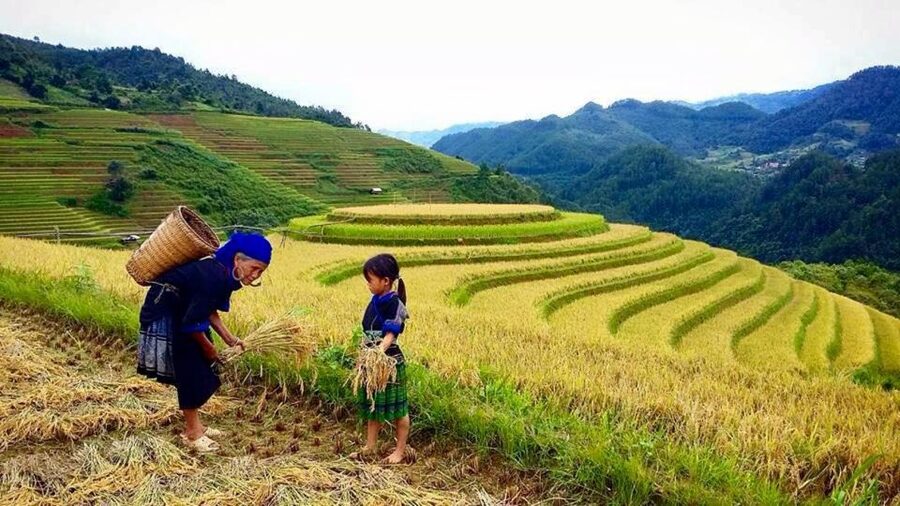
- The rice terraces are the star: Lao Chai gives you broad views over some of northern Vietnam’s most striking cultivated hillsides.
- Local help is part of the experience: Hmong women may assist you across muddy or steep ground, then offer handmade products for sale.
- Culture comes through practical crafts: Expect discussion and demonstrations connected with indigo, batik, hemp, weaving, and rice growing.
- The $18 price is strong value: Transport, guide, entry tickets, and one 500-milliliter bottle of water are included, while food costs extra.
- Fitness matters more than age alone: The trek is not suitable for wheelchair users, people with mobility impairments, pregnant women, or children under six.
Why this Muong Hoa Valley route is worth your time
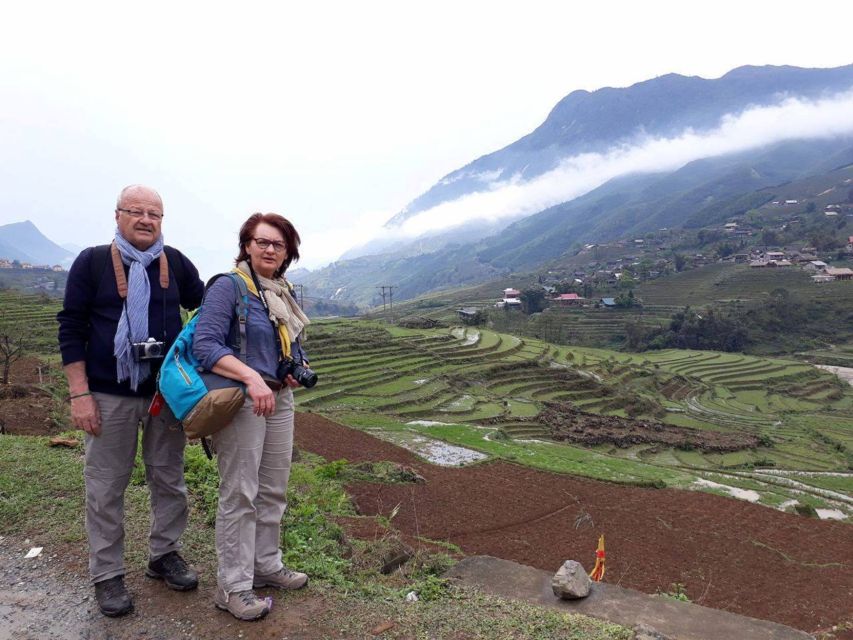
Sa Pa is surrounded by dramatic mountains, but the best way to understand the area is to leave the town’s busy streets. Muong Hoa Valley gives you a closer look at the farms and villages that shape local life.
The route combines scenery with contact. You walk through rice terraces, bamboo and forested sections, village lanes, and uneven rural paths. Along the way, your guide explains the Black Hmong and Dzay communities, including differences in clothing, customs, homes, and farming traditions.
That combination gives the trip more purpose than a simple photo stop. You see how the valley works as a lived-in place, not just as a pretty backdrop.
The tour is also practical for a short visit. Six hours is long enough to reach several villages and cover a substantial section of the valley, but short enough to fit into a compact Sa Pa itinerary. You return by bus rather than retracing the route, which matters after a downhill walk.
More Hiking and Trekking Tours in Sapa
- Sa Pa: Muong Hoa Valley Trek and Local Ethnic Villages
★ 4.6 · 864 reviews - Sapa: Eco Adventure Terrace Fields and Local Villages Trek
★ 4.9 · 636 reviews - Number one top rated ethical cultural trekking and homestay by ETHOS
★ 5.0 · 456 reviews
Starting with Y Linh Ho and the Black Hmong
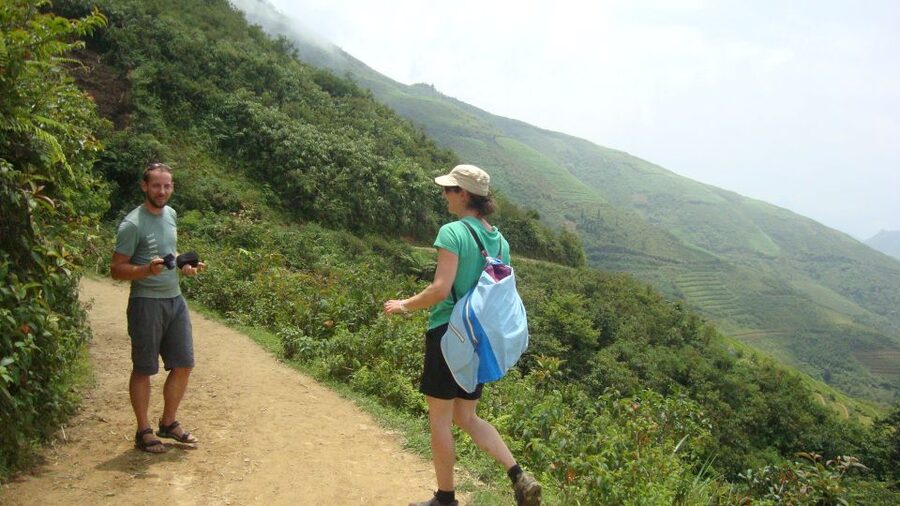
The day begins with a roughly 20-minute walk along a scenic road toward Y Linh Ho village. This first section helps you leave Sa Pa behind and settle into the walking pace.
Y Linh Ho is associated with the Black Hmong community. Your guide provides context about local life, and you may have a chance to meet residents around the village center. The experience is less formal than a museum visit. You are seeing a working community and learning through conversation and observation.
This is also where respectful behavior matters. Ask before photographing children, and do not touch children’s heads. Those small actions help keep the encounter friendly rather than intrusive.
Local Hmong women sometimes accompany the group on difficult parts of the route. Their knowledge of the paths can be extremely useful, especially when the ground is muddy or steep. Several guides have been praised for bringing help and keeping an eye on less confident walkers.
There is a social and commercial side to this arrangement. The women may later offer embroidered or handmade goods for sale. You should not feel required to buy something, but it is wise to understand the pattern before you go. Assistance on the trail and shopping requests can feel closely linked, particularly at lunch or near the end of the trek.
Lao Chai delivers the big rice terrace views
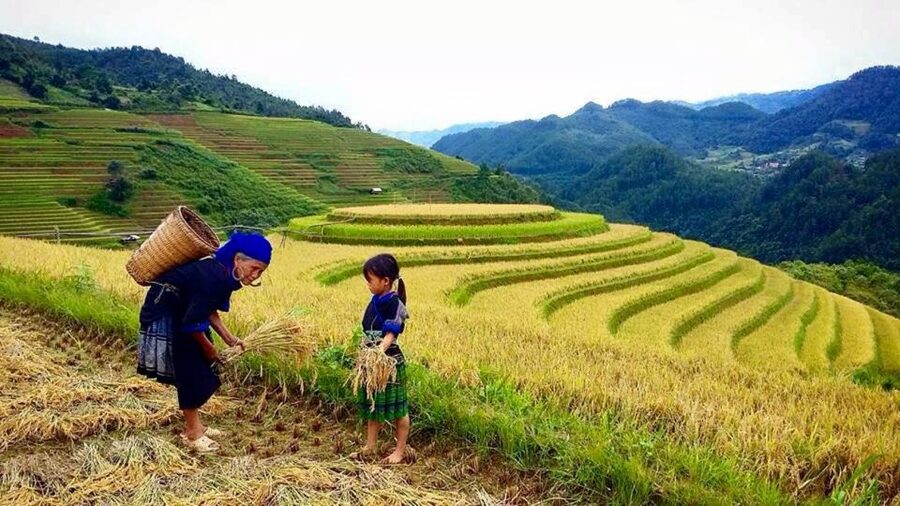
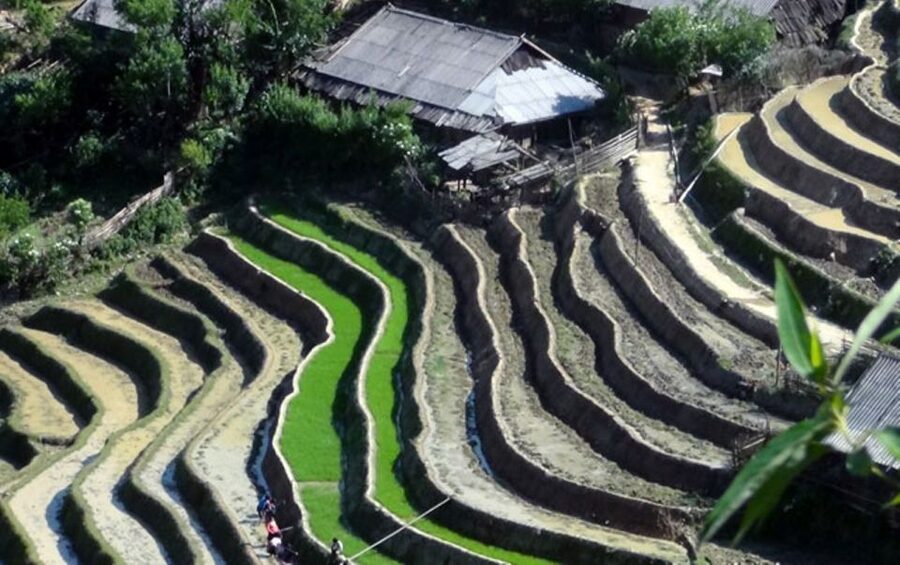
The route continues to Lao Chai, where the scenery opens onto wide views of the Muong Hoa Valley. This is the section for classic Sa Pa photographs, with rice terraces stepping across the hillsides.
The exact look changes with the season and weather. Summer heat can make exposed paths tiring. Rain can bring low cloud, slick earth, and reduced views. Winter may bring thick fog, so you could see less of the distant mountains even though the village walk remains worthwhile.
You should bring shoes with real grip. Ordinary trainers may manage dry sections, but muddy slopes are another matter. One useful tip is to pack an extra pair of shoes if you can. Thick mud can cover your footwear, especially during the wetter months.
Some parts are concrete or stone, but other sections follow dirt tracks, narrow paths, fields, and uneven roads. The route is mainly downhill for a good portion of the day, according to the detailed trip accounts. Downhill walking sounds easy until your legs are working to control every step on a slippery slope.
The guides often set a manageable pace and offer a hand on difficult ground. That help is valuable, but it does not turn the walk into an easy stroll. You need reasonable fitness and steady footing.
Traditional crafts give the walk more meaning
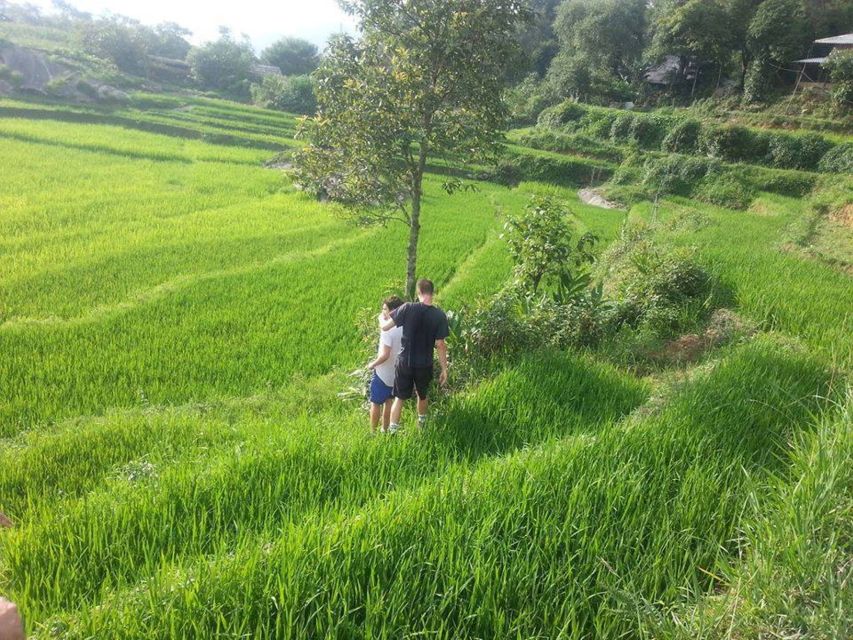
At Lao Chai, the cultural side of the trip becomes more specific. You learn about indigo dyeing, batik making, and hemp weaving, crafts connected with Hmong clothing and daily life.
These activities help explain what you see people wearing and selling. Indigo-dyed fabric is not merely a souvenir color. It reflects time-consuming work and a local textile tradition. Batik and hemp weaving also show how clothing can be made from natural materials and shaped by community practice.
The value here depends partly on your guide. Sang was praised for clear English, humor, and careful explanations. Sai was also noted for strong English and detailed stories about the villages. Guides may vary, but the tour’s local guiding format gives you a better chance of hearing about ordinary life than you would get from visiting the valley alone.
Do not expect a long formal workshop unless the day’s arrangements specifically confirm one. The supplied details describe opportunities to experience and learn about these crafts, so think of this as a cultural stop within a walking route rather than a full craft course.
More Sapa Trips and Treks:
- Sapa: Fansipan Cable, Cat Cat Village & Moana Instagram Tour
★ 5.0 · 777 reviews - Cat Cat Village, Moana, Fansipan Cable Car, Alpine Coaster – Sapa
★ 5.0 · 420 reviews - From Sapa: 1-Day Guided Trek to Lao Chai & Ta Van with Lunch
★ 4.9 · 416 reviews - Sa Pa Full Day Trekking Tour
★ 5.0 · 414 reviews
Lunch is local, simple, and not included
Lunch takes place at a local restaurant and costs extra. The food has been described as tasty and generous, with one meal offering a good variety of local dishes. Another meal was considered bland, so expectations should stay practical rather than gourmet.
Fresh local produce is part of the appeal. After walking through farming communities, eating local food adds a useful connection to the valley. You are also supporting a local business rather than carrying the entire meal plan from Sa Pa.
The lunch stop can be the least relaxed part of the day. Local women and children may approach the table to sell handmade goods. Some people find this manageable and appreciate the chance to buy directly from artisans. Others dislike feeling pressured, especially when sellers refer to the help given on the trail.
My advice is simple: decide in advance what you are comfortable spending. You can thank people for their help without buying every item. If you do want a souvenir, inspect the workmanship and agree on a price before paying. A calm, polite response usually works better than feeling cornered.
Bring extra money for lunch, drinks, and personal purchases. Soft drinks and food are not included, and the tour supplies only one 500-milliliter bottle of water per person.
Ta Van brings in the Dzay perspective
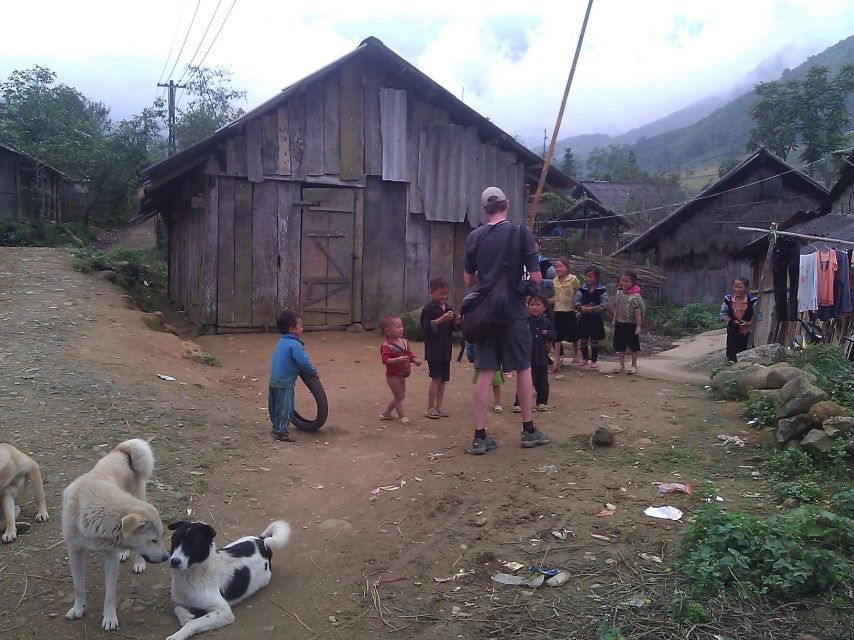
After lunch, the trek continues to Ta Van village. Here you visit traditional homes and learn more about local crafts, weaving, and rice cultivation.
Ta Van is also where the Dzay community adds a useful contrast. The tour highlights differences in customs and clothing between the groups you meet. That comparison helps you avoid treating every ethnic community around Sa Pa as the same.
The village visits are valuable because they connect culture with place. A home, a textile, or a rice field makes more sense when your guide explains how it fits into daily routines. You may also see tropical plants and local wildlife along the route, although the exact fauna is not specified and sightings cannot be guaranteed.
The path continues to change. You could walk on village roads, field edges, stone or concrete sections, and rougher forest paths. Bamboo and jungle areas add shade but can also make footing harder, particularly after rain.
This is not a loop. Once you reach the final village, a bus carries you back to the operator’s office in central Sa Pa. That arrangement saves you from walking the same route twice and gives the trek a satisfying point-to-point shape.
How difficult is the 10-kilometer trek?
The tour description calls the route challenging in wet weather, and that warning deserves attention. The distance is about 10 kilometers, with steep sections, uneven ground, slippery slopes, and some downhill walking.
You do not need to be an athlete. People in their 50s have completed it, and families with older children have enjoyed the route. But you should be comfortable walking for several hours and managing rough ground without wheelchair or mobility support.
The hardest conditions are likely to be:
- Rainy days, when mud covers rice-field paths
- Hot days, when exposed slopes become tiring
- Uneven descents, where balance matters more than speed
- Wet bridges, stones, and narrow paths
- Winter days when warm clothing is needed
The tour is not suitable for pregnant women, wheelchair users, people with mobility impairments, or children under six. Senior citizens are specifically advised not to take the trek because of the distance and wet-weather risk.
Wear trekking shoes, not sandals. Add sunglasses, sunscreen, and insect repellent. From October through March, bring warm clothes. A light rain layer and spare socks would also be sensible, although the stated requirements do not list them.
Guide quality and group size
The small-group limit is 11 people. That is a useful size for a path where the group may need to slow down, cross narrow sections, or wait for help.
A good local guide makes a major difference. Guides named Sang, Sai, Su, Bao, and Dong have been singled out for being friendly, funny, attentive, and clear in English. Sang in particular was praised for making sure everyone understood the explanations, while Su was appreciated for setting a comfortable pace.
English may not be grammatically perfect in every case, but communication is generally described as understandable. The real benefit is local knowledge: your guide can explain customs, introduce the communities, and help you move through the route safely.
The local women who assist on the path can be just as important on a wet day. Their familiarity with muddy slopes is obvious, and several people credited them with preventing falls. Still, use your own judgment. Accept a steadying hand if you need it, but do not walk beyond your ability simply because others make the trail look easy.
Is $18 good value?
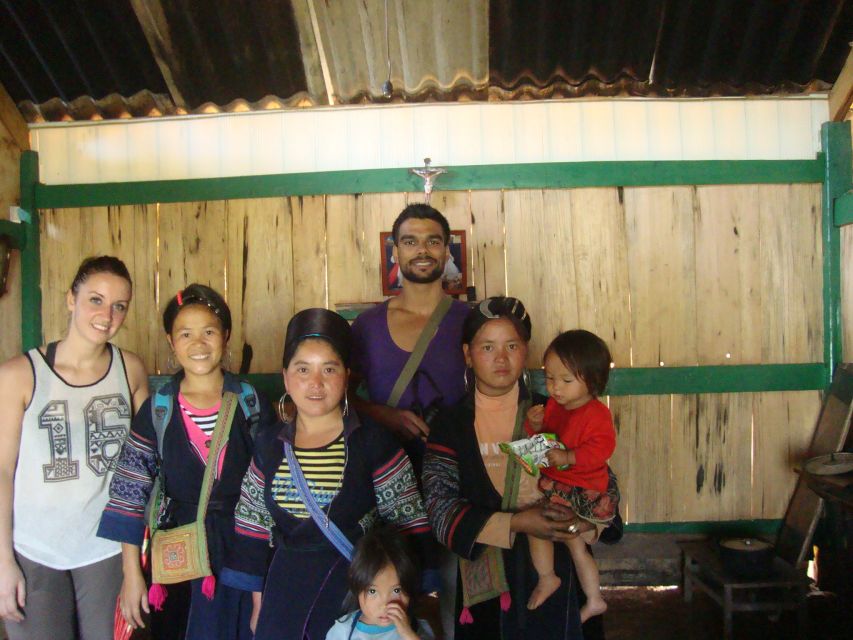
At $18 per person, this is a strong-value activity. The price includes bus transportation, an English-speaking guide, entrance tickets, and one bottle of water. For six hours of guided walking through several villages, that is a good deal.
You still need to budget for lunch, soft drinks, and personal purchases. Travel insurance and VAT are excluded. The cost of handmade items is separate, and you should treat shopping as optional rather than part of the admission price.
The main value comes from combining transport and guiding with a point-to-point route. Hiring separate transport to the valley, finding the correct paths, and arranging village visits would take more effort and could cost more.
There is one booking detail to check carefully. The supplied information lists a $20 per-person Lunar New Year surcharge for February 14 to 21, 2025. It also carries an older $30 notice for February 9 to 14, 2024. Since these notices conflict by year and amount, confirm the current surcharge before you go. A French-speaking guide costs an additional $20 per person, paid directly on the trip.
Pickup is available from hotels in Sa Pa town only, and you need to provide your hotel name and address. Some hotels may require you to meet at the operator’s office instead. Confirming this early can prevent the kind of transport confusion that has occasionally caused a late start.
Who should book this Sa Pa trek?
I would choose this tour if you have limited time in Sa Pa and want scenery plus cultural contact in one outing. It suits couples, active families with children over six, solo visitors comfortable in a small group, and people who prefer a local guide to walking independently.
It is especially good for you if:
- You want rice terrace views without committing to a multi-day hike
- You are interested in Hmong and Dzay customs
- You are willing to walk on rough paths
- You enjoy village encounters and local crafts
- You can accept a simple lunch and some sales activity
- You want a low-cost guided day outside town
I would hesitate if you dislike uneven ground, cannot walk downhill comfortably, or want a quiet, no-shopping cultural visit. I would also avoid booking it during a period of heavy rain unless you are prepared for mud and reduced views.
Should you book it?
Yes, if you want an active and affordable way to see Muong Hoa Valley. The scenery is excellent, the route reaches several villages, and the local guides add context that a viewpoint visit cannot provide.
Book it with the right expectations. This is not a gentle countryside stroll. It is a serious half-day walk that can become slippery, hot, or tiring. Bring proper shoes, keep some flexibility for weather, carry extra cash for lunch, and be polite but firm about shopping.
For $18, the mix of rice terraces, village life, transport, and local guiding is hard to beat. If your fitness is suitable, this is one of the better short ways to get beyond Sa Pa town.
FAQ
How long is the Muong Hoa Valley trek?
The trek lasts about six hours and covers approximately 10 kilometers.
Which villages does the route visit?
The route includes Y Linh Ho, Lao Chai, and Ta Van villages.
Which ethnic communities can I learn about?
The tour focuses on the Black Hmong and Dzay communities, including differences in customs, clothing, crafts, and daily life.
Is lunch included in the price?
No. Lunch, food, soft drinks, and personal expenses are not included. You can eat at a local restaurant during the trek.
What does the $18 price include?
The price includes bus transportation, an English-speaking guide, entrance tickets to indicated sites, and one 500-milliliter bottle of water per person.
Is hotel pickup available?
Pickup is available from hotels in Sa Pa town only. You need to provide your hotel name and address so the operator can confirm pickup or direct you to a meeting point.
Is the trek suitable for children and people with limited mobility?
The trek is not suitable for children under six, pregnant women, wheelchair users, or people with mobility impairments. Senior citizens are advised not to take the 10-kilometer route because it can be challenging and dangerous in wet weather.
More Hiking and Trekking Tours
- Sapa 1 Day Long Trek: Trek to Hau Thao and Sa Seng Villages
★ 4.6 · 344 reviews - EXPLORE SAPA: 2D1N TREKKING & HMONG CULTURE WITH DINH
★ 4.9 · 191 reviews - 1-day Authentik trek & Panorama valley views
★ 5.0 · 189 reviews - 1 day Fansipan Trekking
★ 5.0 · 180 reviews
Just added around Sapa
- Sapa trekking 2 days small group★ 5.0 · 32 reviews
- From Sapa: 3 Day Ha Giang Loop Guided Motorbike Tour With Rider★ 5.0 · 33 reviews
- Vietnamese Spring Rolls Cooking Class★ 5.0 · 34 reviews
- Sapa: 3-Day Ha Giang Loop Motorbike Tour★ 4.9 · 34 reviews
- 2 Day Trekking Experience: Explore with knowledgeable local guide★ 5.0 · 34 reviews
- Trek Adventure in Ta Van Village, Lao Chai★ 5.0 · 36 reviews
- Sapa Trekking & Cooking with H’Mong Locals –Local Culture★ 5.0 · 36 reviews
- Sapa Private Car Rental–Half & Full Day & English Speaking Driver★ 5.0 · 37 reviews
Sapa Trips and Treks, compared.

Sapa 2 Days 1 Night From Hanoi – Overnight in Ta Van Village
Read our review →

Muong Hoa Valley Trek and Local Ethnic Villages
Read our review →
Fansipan Cable, Cat Cat Village & Moana Instagram Tour
Read our review →

Sapa 3 Days 2 Nights Trekking Tour (1 Night In Ta Van Village, 1 Night In Hotel)
Read our review →
Eco Adventure Terrace Fields and Local Villages Trek
Read our review →
3-Day Trekking Adventure of Sapa from Hanoi – Stay Ta Van Village
Read our review →Browse the lists this tour appears in