
Reviewed · HIKING & TREKKING
2D1N Buffalo trek by Hmong Sister House and Trekking
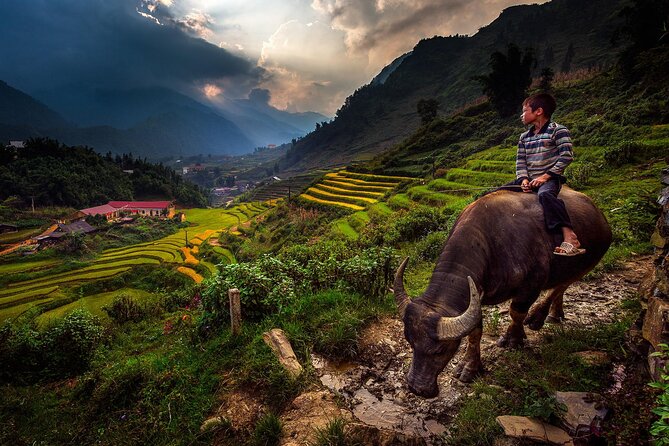
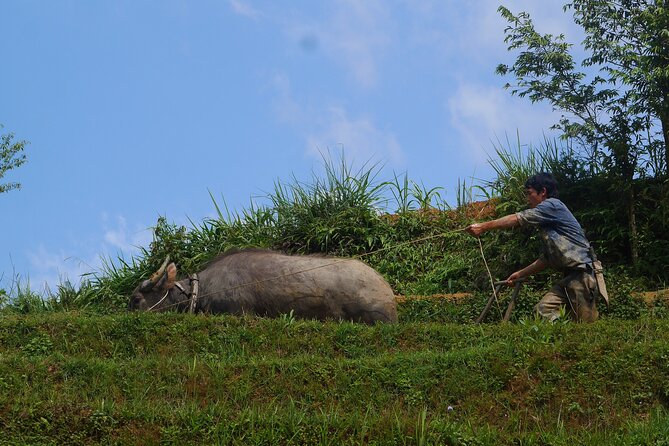
Follow the buffalo uphill. This two-day Sapa trek takes you beyond the usual village stops, through Hmong communities, terraced rice fields, forest paths, and the mountain home where Zizi’s mother looks after the family livestock. I like the off-the-beaten-path route and the chance to spend the night in an authentic Hmong family house rather than simply passing through for a quick photo.
I also like the personal side of the experience. Your local English-speaking Hmong guide leads you through places tied to Hmong daily life, and one highly praised guide, Li, shared stories about her childhood and how local families live today. The main consideration is physical effort: this is a real mountain trek, and the operator asks for a moderate fitness level. Weather can also force a change of date.
In This Review
- Five things to know before you go
- Why this Sapa trek feels different
- Day 1: From the Sapa bus station to Hau Thao village
- Rice terraces, forest paths, and the climb to the buffalo house
- The value of an English-speaking Hmong guide
- Day 2: Sunrise, Red Dao culture, and the waterfall
- How hard is the 2D1N route?
- Is $110 per person good value?
- Who should book this trek?
- Booking and cancellation advice
- Should you book the Buffalo Trek?
- FAQ
- How long does the Buffalo Trek last?
- How much does the trek cost?
- Is pickup available?
- Where does the trek start?
- Where does the experience end?
- Is this a private tour?
- What level of fitness is required?
- Is the guide English-speaking?
- What happens if the weather is poor?
Five things to know before you go
- The buffalo house is the centerpiece: You spend the night at the mountain home of Zizi’s mother, where the family’s livestock and rural routines are part of the setting.
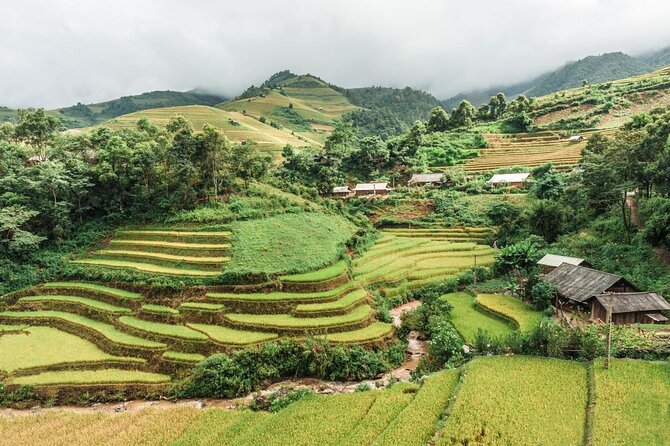
- The trail links several kinds of scenery: Expect Hmong villages, rice paddies, forest, high mountain paths, a Red Dao village, and a waterfall.
- You get a local Hmong guide: The guide speaks English and can explain the area through local experience, not just prepared facts.
- The trip is private: Only your own group takes part, which allows a more personal pace and a quieter day on the trail.
- The price is $110 per person: That covers a two-day experience with pickup offered, meals described in the route, guiding, and a family overnight stay.
- The route needs decent weather: Poor conditions can lead to a new date or a full refund, so keep some flexibility in your Sapa plans.
Why this Sapa trek feels different
Many Sapa walks are built around a short visit to a village, a viewpoint, or a market. This one is more connected to work and family life. The route follows the kind of mountain paths Hmong people use to reach livestock and homes higher in the hills, with the buffalo house giving the trip a clear purpose.
That detail matters. You are not only walking through scenery. You are heading toward a working family place where animals, farming, and household life belong together. The experience is still arranged for visitors, but its focus is closer to local routine than to a standard sightseeing circuit.
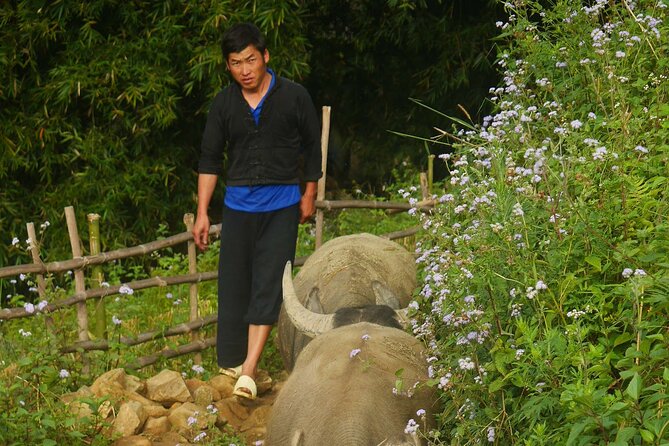
The route passes through ethnic villages and rice paddies before reaching forest and higher ground. You may see animals living alongside local families, an ordinary part of village life that can be more revealing than a formal cultural presentation.
I would choose this trip if you want a two-day walk with a strong sense of place. I would not choose it if your main goal is an easy stroll near Sapa town or a polished hotel-style overnight.
More Hiking and Trekking Tours in Sapa
- Sa Pa: Muong Hoa Valley Trek and Local Ethnic Villages
★ 4.6 · 864 reviews - Sapa: Eco Adventure Terrace Fields and Local Villages Trek
★ 4.9 · 636 reviews - Number one top rated ethical cultural trekking and homestay by ETHOS
★ 5.0 · 456 reviews
Day 1: From the Sapa bus station to Hau Thao village
Pickup is offered from the bus station at around 7 a.m. The car takes you to Zizi’s homestay, where you can leave your luggage before the trek begins. This is a useful arrangement, especially if you arrive in Sapa with a larger bag or are connecting from an overnight bus.
You can also take a hot shower and eat breakfast prepared by Zizi. That early reset is practical. After a bus ride, a warm shower and a proper meal can make the first uphill stretch much easier.
From there, the trek starts around Hau Thao village. The first section introduces you to Hmong communities in the mountainous area. The point is not simply to walk through a pretty village. You are looking at how people and animals share the same rural setting, with livestock forming part of daily household life.
The exact walking time and distance are not specified, so you should ask for those details before departure if they matter to you. The route is described as a mountain trek through villages, paddies, and forest, so plan for uneven ground and sustained walking rather than a flat village ramble.
Rice terraces, forest paths, and the climb to the buffalo house
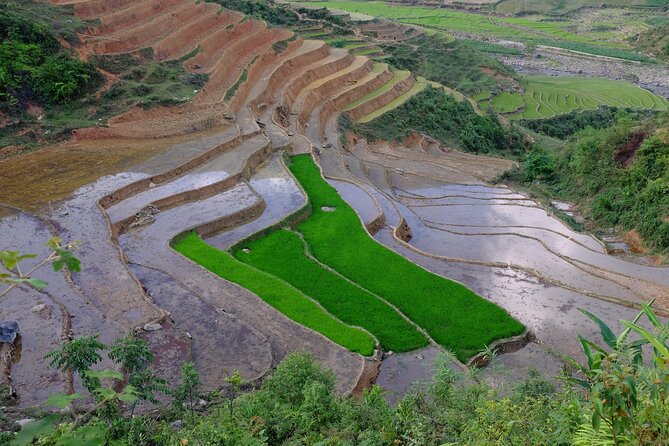
The day continues through terraced rice paddies and forest. Sapa’s terraces are often the visual highlight, but the setting changes as you climb. Fields show the work of farming, while the forest section gives the walk a more remote feel.
The route takes you higher into the mountains, toward the buffalo house where Zizi’s mother lives. This is the most distinctive part of the trip. Instead of returning to town after lunch, you continue toward a family home connected to the livestock that gives the trek its name.
Lunch is prepared by the guide. That makes the meal part of the day rather than a separate restaurant stop, although the available information does not specify the menu. If you have dietary needs, tell Hmong Sister House and Trekking before setting out so they can confirm what can be provided.
The overnight stay is in an authentic family Hmong house. You should think of this as a cultural homestay, not as a hotel room. The appeal is the chance to stay in a working family setting in the mountains. The tradeoff is that the experience may feel simple and close to everyday life rather than designed around resort comforts.
That is precisely why this night will suit some people and not others. If you enjoy hearing about family routines, seeing how a rural home functions, and waking near the mountain paths, it should be memorable. If you need privacy, hotel services, or a predictable room setup, ask for more details before booking.
The value of an English-speaking Hmong guide
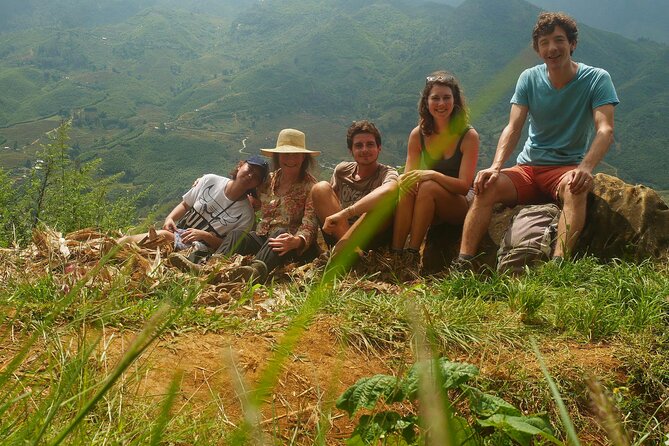
The guide is a major part of the experience. Hmong Sister House and Trekking provides a local English-speaking Hmong guide, and that local connection gives the walk more meaning than a route map alone.
A guide can point out village life as it happens, explain the role of livestock, and help you understand why the path leads toward a buffalo house. One account gives special praise to Li, describing her as a guide who walked through her own lands and spoke about her childhood and the way people, including herself, lived in the past and live now.
If Li is important to you, ask whether she is available for your date. The supplied details identify her through a personal account, but they do not promise that she leads every departure.
The private format is another advantage. Only your group participates, so you are not sharing the trek with a large mixed party. That can make it easier to ask questions, stop for views, or discuss the village life you are seeing without worrying about keeping up with strangers.
A private tour does not remove the physical demands. It simply gives the experience a more personal setting.
More Hiking and Trekking Tours:
- From Sapa: 1-Day Guided Trek to Lao Chai & Ta Van with Lunch
★ 4.9 · 416 reviews - Sa Pa Full Day Trekking Tour
★ 5.0 · 414 reviews - Sapa 1 Day Long Trek: Trek to Hau Thao and Sa Seng Villages
★ 4.6 · 344 reviews - EXPLORE SAPA: 2D1N TREKKING & HMONG CULTURE WITH DINH
★ 4.9 · 191 reviews
Day 2: Sunrise, Red Dao culture, and the waterfall
The second morning begins slowly with sunrise and breakfast. That gentle start is one of the pleasant contrasts of the trip. You are not rushing back to a bus or racing through a checklist of sights.
After breakfast, you say goodbye to the family and trek down. The route offers views of farmers working early in the morning among the rice fields. This is a useful time to see the paddies as working farmland, not only as a scenic backdrop.
The descent reaches a Red Dao village, introducing you to another ethnic community in the Sapa area. The route therefore gives you more than one cultural setting during the two days. Hmong life shapes the first day and overnight stay, while the Red Dao village adds another perspective on the region.
The final listed highlight is a waterfall. The available route details do not give its name, walking time, or swimming arrangements, so do not assume it is a long stop or a place where swimming is allowed. Still, ending with a natural feature gives the second day a satisfying change from the high mountain paths and village fields.
The trek then returns to the meeting point at Hmong Sister House and Trekking in Ta Van, Muong Hoa, Sa Pa. The activity ends back at that meeting point, so confirm how this fits with your onward transport.
How hard is the 2D1N route?
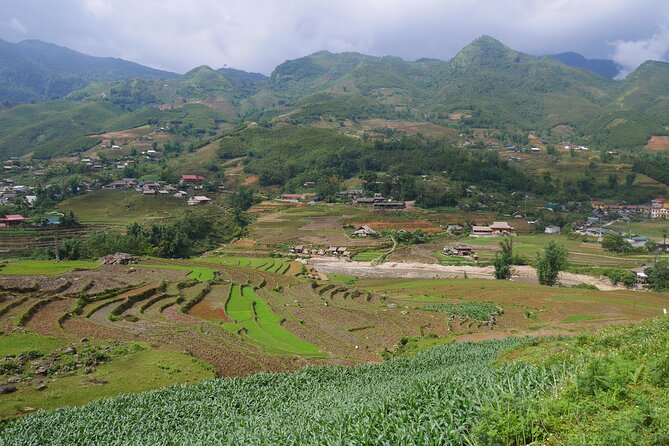
The operator recommends a moderate physical fitness level. That is the most important practical warning in the description. This is not presented as a short, easy walk. You climb into the mountains on the first day and trek down on the second.
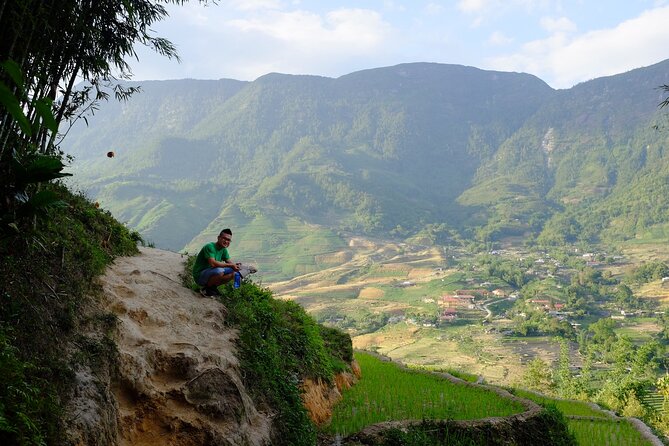
You should be comfortable walking on mountain paths for much of a day. The route includes forest, rice terraces, village trails, and higher ground. The details do not provide a total distance, elevation gain, or exact walking hours, so ask before booking if you need a precise difficulty rating.
Good weather also matters. Rain can make mountain paths more demanding, and the operator requires suitable weather for the experience. If poor weather cancels the trip, you are offered another date or a full refund.
Pack as lightly as you can. Your larger luggage can be left at Zizi’s homestay, but you still need a small overnight bag for the mountain stay. Wear shoes suited to uneven paths, and bring clothing that works for changing mountain conditions. These are sensible preparations for any trek, not promises about specific conditions on your date.
Is $110 per person good value?
At $110 per person, this is not the cheapest way to see Sapa. The price makes more sense when you consider what the two days include: pickup from the bus station is offered, luggage can be left at the homestay, breakfast is provided at the start, lunch is prepared by the guide, and you spend the night with a Hmong family.
You are also paying for a private experience rather than joining a large group. The local guide is central to the value, especially if you want cultural explanation and personal stories instead of simply following a marked route.
The price is harder to justify if you only want a basic village walk and a place to sleep. It is easier to justify if you value the overnight stay, a less conventional route, and time with a local guide.
The experience is commonly booked well ahead, with an average booking lead time of about 85 days. That suggests you should not leave it until the last moment if your Sapa dates are fixed. At the same time, the booking data does not guarantee that every date will sell out, so you can still ask about late availability.
Who should book this trek?
I would recommend it to you if you want:
- A two-day mountain walk rather than a short Sapa excursion
- A private trip with only your own group
- Hmong-led cultural interpretation
- An overnight stay in a family home
- Village life, farming, forest, and livestock in one route
- A less polished experience with more local connection
I would be cautious if you have limited walking ability, dislike uneven mountain routes, or need a detailed timetable. The route information does not state the total distance or exact walking hours, so anyone with mobility concerns should ask direct questions before paying.
Families may also want to discuss the fitness requirement carefully. Service animals are allowed, but the data does not explain how suitable the mountain trail or homestay is for a particular animal. Confirm those details in advance.
The trek is customizable on request. That gives you room to ask about a different route or arrangement, but customization should be confirmed before the trip rather than assumed.
Booking and cancellation advice
Confirmation is provided at the time of booking. The meeting point is Hmong Sister House and Trekking in Ta Van, Muong Hoa, Sa Pa, while pickup can be arranged from the bus station around 7 a.m.
Free cancellation is available up to 24 hours before the start time for a full refund. Changes or cancellations made less than 24 hours before departure are not accepted or refunded. The cut-off follows local time, so do not rely on your home time zone when calculating the deadline.
Because the experience depends on good weather, a weather cancellation gives you the choice of another date or a full refund. That policy is helpful, but you should still avoid scheduling an important flight or bus immediately after the trek unless you have plenty of time.
Should you book the Buffalo Trek?
Yes, if you want Sapa at a walking pace and are happy to trade hotel comfort for a family homestay in the mountains. The overnight buffalo house, the Hmong guide, and the route through villages, terraces, forest, a Red Dao community, and a waterfall give this trip more substance than a quick scenic outing.
Book with care if you need exact mileage, a gentle route, or a guaranteed guide. Ask about the walking distance, the overnight facilities, available food, and whether Li will lead your date.
For a fit visitor who values local contact and a private route, $110 is a fair price. For someone seeking a simple, easy introduction to Sapa, a shorter day walk will likely be a better match.
FAQ
How long does the Buffalo Trek last?
The experience lasts approximately two days and includes one overnight stay in an authentic Hmong family house.
How much does the trek cost?
The listed price is $110 per person.
Is pickup available?
Yes. Pickup is offered from the bus station at around 7 a.m. on the first day.
Where does the trek start?
The activity begins with transport to Zizi’s homestay, followed by the trek from Hau Thao village. The listed meeting point is Hmong Sister House and Trekking in Ta Van, Muong Hoa, Sa Pa.
Where does the experience end?
The activity ends back at the meeting point.
Is this a private tour?
Yes. Only your own group participates in the activity.
What level of fitness is required?
A moderate level of physical fitness is recommended. The route includes mountain paths, villages, rice paddies, forest, and a descent on the second day.
Is the guide English-speaking?
Yes. The trek includes a local English-speaking Hmong guide. Li is named in a highly positive account, but availability of a particular guide should be confirmed for your date.
What happens if the weather is poor?
If the experience is canceled because of poor weather, you can choose a different date or receive a full refund. You can also cancel up to 24 hours before the start time for a full refund.
More 2-Day Experiences
- Sa Pa: 2-Day Trekking Trip with Ethnic Minority Homestay
★ 4.7 · 145 reviews - Sapa : 2-Day Trek & Heartwarming Homestay with an Ethnic Family
★ 5.0 · 143 reviews - Rice Terraced Fields & Homestay Experience– 2D 1N
★ 5.0 · 118 reviews - Mountain views & Rice Terraced Fields Hiking – 2D 1N
★ 5.0 · 99 reviews
Just added around Sapa
- Sapa trekking 2 days small group★ 5.0 · 32 reviews
- From Sapa: 3 Day Ha Giang Loop Guided Motorbike Tour With Rider★ 5.0 · 33 reviews
- Vietnamese Spring Rolls Cooking Class★ 5.0 · 34 reviews
- Sapa: 3-Day Ha Giang Loop Motorbike Tour★ 4.9 · 34 reviews
- 2 Day Trekking Experience: Explore with knowledgeable local guide★ 5.0 · 34 reviews
- Trek Adventure in Ta Van Village, Lao Chai★ 5.0 · 36 reviews
- Sapa Trekking & Cooking with H’Mong Locals –Local Culture★ 5.0 · 36 reviews
- Sapa Private Car Rental–Half & Full Day & English Speaking Driver★ 5.0 · 37 reviews
Hiking & Trekking, compared.

Halong Bay Full Day with Kayaking, Hiking viewpoint, Cave – Deluxe To Luxury
Read our review →
Muong Hoa Valley Trek and Local Ethnic Villages
Read our review →

Sapa 3 Days 2 Nights Trekking Tour (1 Night In Ta Van Village, 1 Night In Hotel)
Read our review →
Eco Adventure Terrace Fields and Local Villages Trek
Read our review →
3-Day Trekking Adventure of Sapa from Hanoi – Stay Ta Van Village
Read our review →
3D and 2N Lan Ha Bay Cat Ba Island Kayaking & Trekking with Vega
Read our review →
Number one top rated ethical cultural trekking and homestay by ETHOS
Read our review →Browse the lists this tour appears in